
Parviz Umarbaev is a rare case in Tajik football: a player who has spent almost a decade in a European top division outside the CIS, building a long-term career in Bulgaria. At 31, he wears the captain’s armband for both Tajikistan and Lokomotiv Plovdiv, underlining his status as a leader at club and international level.
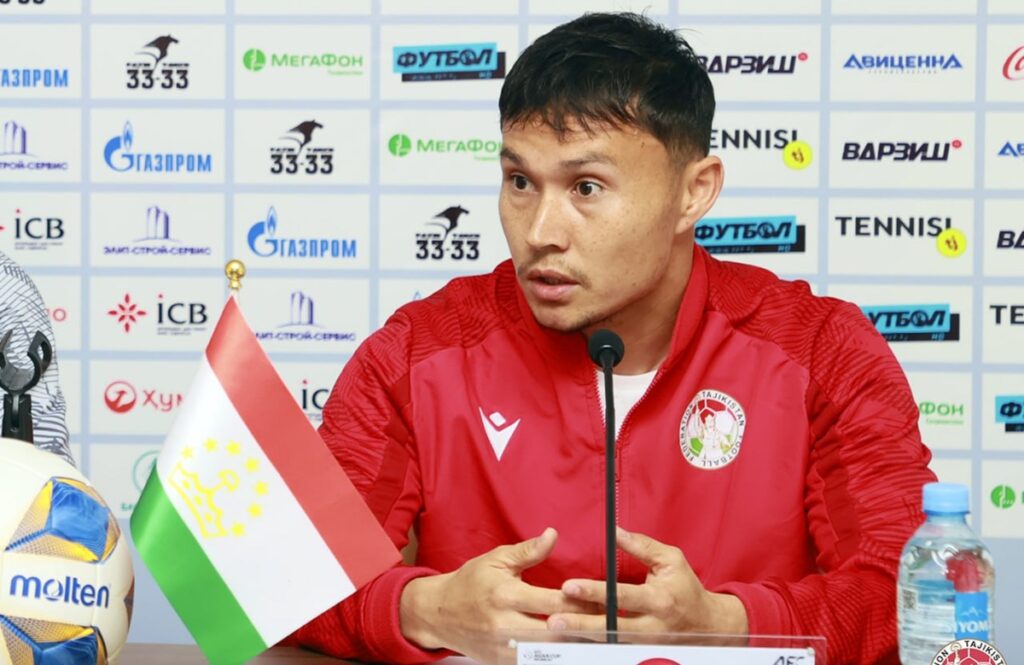
Recently, Umarbaev answered questions from fans collected by Goal.tj — Tajikistan’s leading football platform and a partner of Eurasia Football. Eurasia Football presents his story and key takeaways with additional context for international readers.
From Russia’s youth teams to senior leadership
Umarbaev’s early development came through the Russian system. He represented Russia at youth level and, at 17, made his senior debut for Rubin Kazan, one of Russia’s strongest clubs of that era. But like many young players in highly competitive environments, he struggled to turn early promise into regular first-team minutes.
His route to Europe eventually ran through Istiqlol in Dushanbe — a move he credits as decisive. From there, Lokomotiv Plovdiv brought him to Bulgaria in 2016, after he impressed at the CIS Cup.
“I’m still a simple guy — I don’t think of myself as a star,” Umarbaev says. “But I always had one dream: to become a professional footballer and play in Europe.”
A decade in Bulgaria — and a record at Lokomotiv
Staying relevant as a foreign player in one European league for nearly ten years is rare. Umarbaev attributes his longevity to discipline and daily standards.
“As a foreigner you’re expected to deliver more,” he explains. “You have to work harder and prove yourself every time you step onto the pitch.”
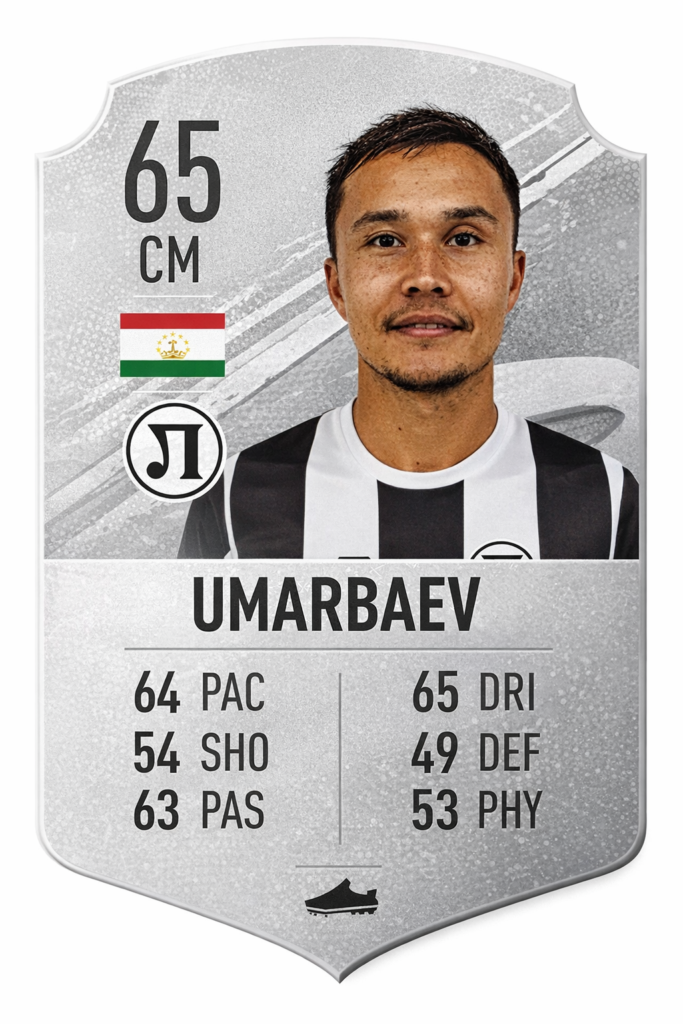
He is Lokomotiv Plovdiv’s all-time appearance leader among foreign players (245 matches as of early March 2026). Over that period he became a defining figure of the club’s modern era, winning two Bulgarian Cups and the Bulgarian Super Cup.
Umarbaev’s Bulgarian career also includes three seasons at CSKA 1948, where he made 78 appearances in all competitions, adding more top-flight experience and another dressing room culture to his development.
Learning from Bulgarian football royalty
A key part of Umarbaev’s journey in Bulgaria has been working under coaches with genuine national-team pedigree. He speaks with particular respect about Lyuboslav Penev and Ilian Iliev — major figures in Bulgarian football and former internationals from the era that included Hristo Stoichkov.
At Lokomotiv, Umarbaev has shared the pitch with some of Bulgaria’s most recognisable names. Among the strongest teammates he has named are Dimitar Iliev, Dinis Almeida, and Birsent Karagaren — a mix of club icon status, decorated league experience and national-team pedigree.
European nights — and a Tottenham near-upset
Umarbaev has UEFA competition experience, including one of Lokomotiv’s most memorable modern European nights.
In 2020, Lokomotiv Plovdiv came close to a major upset in the UEFA Europa League qualifiers against Tottenham Hotspur. The Bulgarian side led the match, but two red cards shifted the balance. Tottenham equalised in the 80th minute and scored the winner five minutes later.
It was a painful exit — but it also showed the level Umarbaev and Lokomotiv could reach on a good night.
Tajikistan’s rise and the “Asian Croats” quote
For Tajikistan, Umarbaev is a reference point in midfield and a leader in the dressing room. He has 67 caps, 11 goals and 9 assists for the national team, and wore the captain’s armband in the team’s most recent match.
He was part of Tajikistan’s historic breakthrough at the AFC Asian Cup 2023, where the team reached the quarterfinals in its debut appearance at the tournament. The run came under Croatian head coach Petar Šegrt, who famously referred to his players as “Asian Croats,” praising their discipline and fighting spirit. Interestingly, Umarbaev himself names Luka Modrić as his football role model.
Tajikistan is now one step away from qualifying for the AFC Asian Cup 2027, currently led by Serbian coach Dragan Stevanović.
Offers, loyalty — and why he stayed
Umarbaev says he received interest from clubs in Poland, Belgium and the Czech Republic, as well as from strong Asian leagues. Negotiations, he adds, were often complicated by contract situations and transfer fee demands.
One of the clearest examples of his loyalty came four years ago, when he turned down an offer from BATE Borisov — a club with a regular European track record and stronger financial terms at the time.
He links the decision to a personal principle:
“My grandfather told me: ‘A tree grows in one place.’ Lokomotiv had become my home.”
World Cup hope — and what must change
Umarbaev believes Tajikistan can one day reach the World Cup, but only if the country’s football ecosystem continues to evolve.
He points to three priorities:
- a stronger and more competitive domestic league,
- improved infrastructure and club resources,
- more players moving abroad into demanding environments.
He also returns to the idea of mentality — the willingness to live with pressure.
“As a foreigner, you’re paid more and you’re judged more,” he says. “To survive, you have to be better than the local players.”
What’s next
Umarbaev says he is fully focused on football and not yet thinking about coaching. If possible, he would like to finish his career either at Lokomotiv Plovdiv or back home at Istiqlol.
His football role model is Luka Modrić, a symbol of longevity and elite standards.
“At 40, he still performs at the highest level,” Umarbaev says. “That’s something to respect.”
