
After the start of the strikes on Iran by the United States and Israel, foreign footballers in the local league began leaving the country through different routes — via Turkey, Azerbaijan and Turkmenistan. Some managed to leave with the help of their clubs, while others had to find transport on their own, deal with visa issues and wait for hours at border crossings. Eurasia Football explains how foreign players of the Iranian league managed to leave the country in the first days of the crisis.
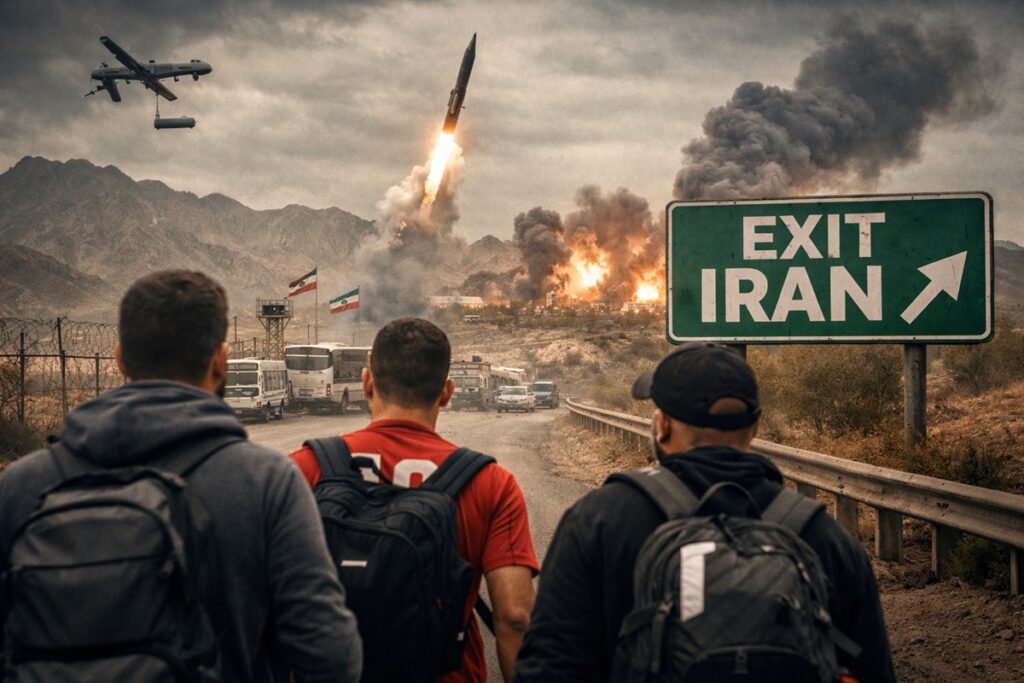
Strict limits on foreign players — and the reluctance of many Iranian clubs to sign them — unexpectedly played a positive role in this situation. Out of 16 clubs in the league, only seven have foreign players. In total, there are 41 foreign footballers in the championship, plus several foreign coaches.
Most players and coaches experienced serious stress but were eventually evacuated in a relatively organized manner. However, in several cases foreign players had to make decisions entirely on their own.
It is also important to note that internet access in Iran was shut down on the very first day of the bombing. Mobile networks, however, continued to operate. Some footballers — especially those who had been in Iran for a longer period — had local SIM cards and were able to coordinate their actions with club officials or with each other. But that was not the case for everyone, as the story of North Macedonian defender Stefan Ashkovski shows.
A motorcycle ride to retrieve a passport
The story of 33-year-old North Macedonia international Stefan Ashkovski, which he told in an interview with the Football Federation, could easily serve as the script for a Hollywood movie. Ashkovski joined Mes Rafsanjan earlier this year. According to agent Kova Tilavpur, the player initially arrived in Istanbul but had to delay his move because of unrest in Tehran. Ashkovski even considered abandoning the transfer, but eventually decided to sign the contract — the financial terms were too attractive.
Rafsanjan is located in central Iran, about 800 kilometers from Tehran. However, the team trains in the capital and the players live in one of the hotels in Tehran, travelling to Rafsanjan only for home matches. On February 28 Mes Rafsanjan were scheduled to host Aluminium, which is why the squad was already in the city.
According to Ashkovski, early that morning he received a call from his former teammate at Vardar and the North Macedonia youth national team, Jasir Asani — an Albanian winger who now plays for Esteghlal in Tehran. Asani told him that the bombing had begun.
Later the players were informed that the match had been cancelled. The head coach told them the team would return to Tehran, from where foreign players could attempt to leave the country.
Mes Rafsanjan had two foreign players: Ashkovski and South Korean defender Ki Ji Lee, who immediately headed to his country’s embassy in Tehran and later left Iran with other Korean citizens via the border with Turkmenistan.
Ashkovski could not rely on similar assistance and had to deal with the situation himself. Soon he encountered several problems.
A few days before the attacks Ashkovski’s visa had expired. He had not been able to extend it because government offices were closed for holidays. He was advised to remain in Rafsanjan for another day, but he decided to travel back to Tehran with the team. During the trip the club doctor promised to help resolve the visa issue and took Ashkovski’s passport.
After arriving in Tehran the player packed his belongings and tried to board a bus organized by Persepolis to evacuate foreign players. He travelled without his passport, hoping it would be brought to the border later — “after all, there was a war,” he later said. However, he was refused boarding. Without documents it was impossible.
At that moment Ashkovski truly panicked: alone in a foreign country at war, without documents.
Unexpected help came from Asani’s driver, Merdar. Asani himself had already left Iran with Esteghlal but asked the driver to assist Ashkovski. However, another obstacle emerged: the passport was still with the club doctor at the team hotel, located near the residence where Ayatollah Khamenei had been killed. The area was sealed off by soldiers and crowds mourning the spiritual leader, making it impossible to reach the hotel by car.
Asani rented a motorcycle and, together with Merdar, rode through back streets to reach the hotel. Ashkovski recovered his passport — although the visa was still expired.
Now he still had to reach the border.
Merdar picked up his wife and child and together with Ashkovski they drove toward the Turkish border. The journey lasted nearly 17 hours. Ashkovski even took turns driving. Explosions could be heard along the road.
At the border they encountered yet another problem: the guards refused to let him leave because of the expired visa.
“They told me: ‘We don’t care about the war. Go back to Tehran and renew your visa.’ That was the hardest moment for me. Fortunately, my wife contacted our diplomat in Ankara, Umit. After three phone calls and serious efforts he managed to convince them to let me go after paying a fine,” the footballer recalled.
Ashkovski is currently in Skopje and awaiting FIFA’s decision regarding the possibility of suspending or terminating his contract with the Iranian club.
Flights cancelled
The day before the strikes began, Sepahan played Paykan in Qods near Tehran, while Esteghlal hosted Fajr in the capital. Some foreign players decided to travel to Dubai during the short break. Some had tickets for 6 a.m., others for 9.
Former Real Madrid goalkeeper Antonio Adán managed to leave the country. Uzbek defender Rustam Ashurmatov appears to have taken the same flight. However, Esteghlal player Munir and Sepahan footballer Ivan Sánchez were removed from their flight shortly before departure.
According to Sánchez, the players were already seated when the crew suddenly announced that Iranian airspace had been closed.
“We found out about everything on the plane. We had a flight to Dubai for the weekend. I was travelling with Munir. We were relaxed and chatting when ten minutes later we were told to get off the plane because the airspace had been closed,” Sánchez said in an interview with Carrusel Deportivo on Cadena SER radio from Istanbul airport, as reported by El País.
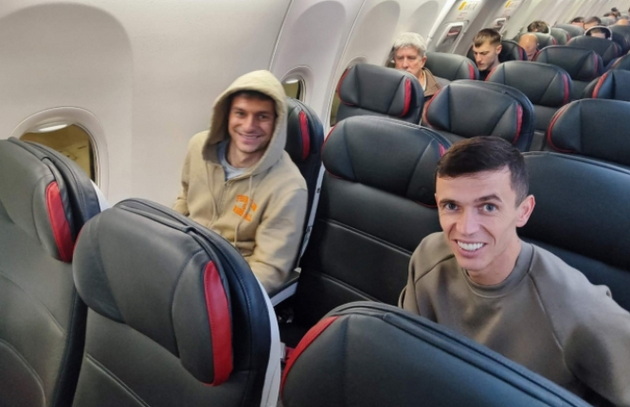
Munir confirmed the story and said the flight was cancelled minutes before take-off. Soon afterward a friend messaged him saying Iran had come under attack. Esteghlal provided him with a car to reach the Turkish border, while Sánchez hired a taxi. They travelled together.
“We saw rockets hitting Iranian defense facilities, but they were far away. It took us about 12 hours to reach the Turkish border, and we had no problems because we had Spanish passports,” Sánchez said.
The biggest concern, Munir added, was that their families were worried while they had no way to contact them. The first thing the players did after reaching Turkey was send messages to their relatives.
The Haitian and the Azerbaijani border guards
Another Esteghlal player removed from a flight was Haiti national team striker Duckens Nazon. He was supposed to fly to Istanbul, but while already on the runway the crew announced that Iranian airspace had been closed and passengers had to leave the plane.
After the cancellation the club arranged a taxi so he could leave the country by land. Nazon headed toward the Azerbaijani border. Why he chose Azerbaijan instead of the more common route through Turkey was not explained. Since Haitian citizens require visas for both Turkey and Azerbaijan, it is likely that he already had an Azerbaijani visa.
The journey took about 11 hours, during which explosions could be heard nearby.
“It felt like a war movie. I saw a missile in the sky, there was an explosion near the car, smoke everywhere. That’s when I realized the situation was far more serious than I thought,” Nazon told The Sun.
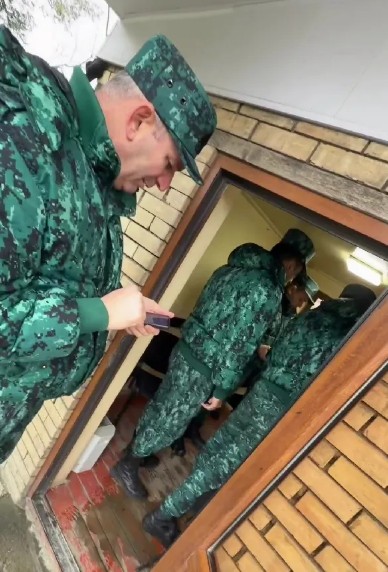
When he reached the border it seemed safety was finally close. However, new problems arose. Without a special code required by Azerbaijani authorities he was not allowed to cross. Nazon spent 32 hours at the checkpoint with almost no sleep.
Eventually he managed to leave the country thanks to the intervention of the French embassy. Nazon said that for most of the journey he had no internet connection, which made it impossible to contact his family in Paris.
Tajiks cannot enter Turkey
Gol Gohar from Sirjan arranged a bus transfer with Persepolis — the same bus Ashkovski had hoped to board. One of the passengers was midfielder Amadoni Kamolov.
After the internet shutdown his relatives and friends — including agent Kova Tilavpur — had no information about his whereabouts. Tilavpur later told Eurasia Football that he was overwhelmed with calls.
The last time Kamolov contacted him was from a stranger’s phone near the Turkish border, saying he was approaching the crossing. After that he disappeared again.
It later turned out that Turkish border guards refused entry because Tajik citizens require visas to enter Turkey. Kamolov therefore travelled to the Azerbaijani border.
There he contacted another Tajik player, Vahdat Khononov of Sepahan, who had faced the same problem. Khononov travelled from Isfahan to meet him, and the two crossed the border together after being added to a special list by border officials. They later reached Baku and returned home.
Leshchuk: 27 hours to safety
Another long journey was made by the foreign contingent of Foolad Ahvaz: Argentine striker Gustavo Blanco Leschuk, Brazilian player Mateus Costa and goalkeeping coach Neneca.
The team was in Qazvin near Tehran on February 28, where they had played Shams the day before the strikes. The following day they were supposed to fly out, but the flight was cancelled after the bombing began.
“The last two days before we left were very tense. At night we could hear explosions. Two nights in a row I was woken up by bombs — one fell very close and I was really scared. That’s when I told the Brazilians we had to leave and not wait,” Leshchuk told diariauno.com.
The players rented a minivan and drove toward the Turkish border. The trip lasted about 27 hours.
The South American group
Chadormalu also has a large group of South American players from Paraguay, Colombia and Brazil. Many joined the team at the beginning of 2026, attracted by high salaries.
The crisis caught them in Khorramabad, where the team had played Kheybar the day before. The airport there was also bombed.
The players were moved closer to central Iran and placed in a safer location. Paraguayan Mario Otazú said explosions could clearly be heard. The next day the squad travelled toward the Turkish border “with explosions around and rockets in the sky,” as Otazú told abc.com.
Conclusion
Persepolis appeared to act most effectively during the crisis. The club not only evacuated its own foreign players — including Uzbek internationals Igor Sergeev and Oston Urunov — but also helped players from Gol Gohar.
Some players, however, left later than others. Several initially planned to leave by plane and only later headed toward land borders.
The situation was easier for players of Tractor from Tabriz, where Uzbek midfielder Odil Khamrobekov plays. The city is located only a few hundred kilometers from both the Turkish and Azerbaijani borders.
Shortly before the bombing began Eurasia Football published an article titled “They won’t bomb the stadiums: why foreign players continue to move to Iran.”
Despite the risks, high salaries remain the main reason many foreign players agree to play in the Iranian league. And for many of them, the financial factor still outweighs the danger.
