
Kyrgyzstan is becoming one of the most dynamic football markets in Central Asia. New clubs are appearing, foreign coaches are arriving, and agents from different countries are paying closer attention to the league. One of them is Bosnian FIFA-licensed agent Amil Šukalo, whose players have already left a visible mark on Kyrgyz football.
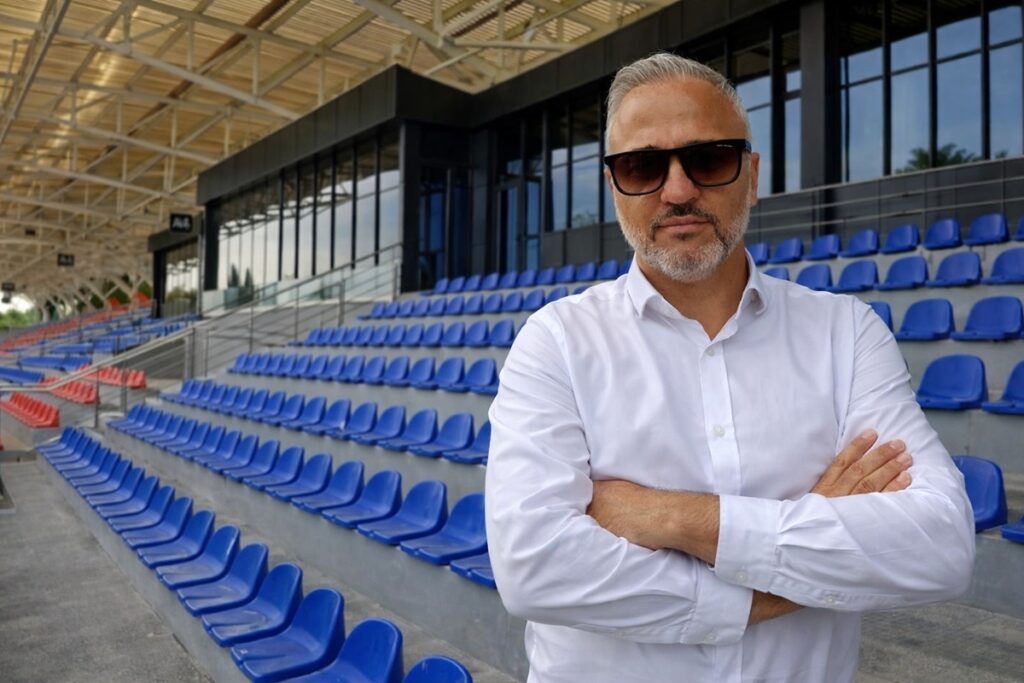
More than 20 footballers linked to Šukalo have passed through Kyrgyz clubs, with many becoming key players for their teams. In an interview with Eurasia Football, the Bosnian agent spoke about his Sparta academy, his growing involvement in Central Asia, work with Abdysh-Ata and Bishkek City, the realities of the Kosovo and Maltese markets, and why he sees Kyrgyz players as “Central Asian Bosnians.”
In Bosnia and Herzegovina, Šukalo is known not only as an agent, but also as the founder of Sparta, one of the country’s most prominent football academies. “We have more than 400 children. Even Red Star, Vojvodina and Dinamo don’t have those numbers,” he said in an interview with Faktor.
Sparta Academy and the Road Into Agency Work
— Tell us more about your football academy. Who works there as coaches? How did you come up with the idea of working with children?
First of all, I would like to greet your readers and say that I really appreciate the project you are doing by connecting European and Central Asian football.
The Sparta Academy has existed for 13 years. I created it as a place where young footballers could take their first serious steps toward a professional career — in quality conditions, under the guidance of specialists, and with a clear development path.
The main motivation was my love for football and my desire to give talented players — those who have not only ability, but also the right attitude — a real chance to unlock their potential.
Over the years, we have developed our own methods and kept improving them. Today, the results are visible: in recent years our teams have regularly ranked among the best at tournaments across the Balkans and Europe.
We pay special attention to selecting coaches. For us, priority goes to specialists with UEFA licenses and a deep understanding of youth development — not only in technical and tactical terms, but also in physical and psychological preparation.
— Did you become an agent first, or did agency work come later, after your work in youth football?
Agency work came as a natural continuation of what I was already doing in the academy. When you help develop young players and see that some of them have real potential, you begin to feel responsible for their next step.
Over the years, I built a wide network of contacts with clubs around the world and realized that I could truly help these footballers only if I formally entered the agency side as well. That is why I obtained the necessary FIFA licenses and founded an agency.
This allowed us to combine two essential directions — player development and professional career management.
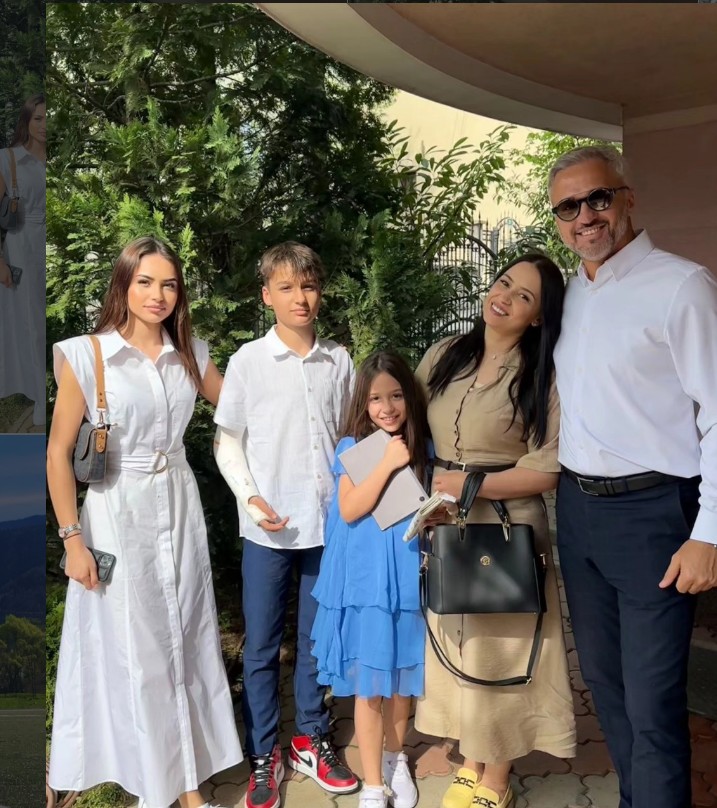
— In an interview with the Bosnian outlet SCsport, you said your wife Afrodita is involved in your work. Was it you who brought her into football, or did she have a connection with sport before?
Yes, my wife Afrodita is very actively involved in the work of both the academy and the agency. She heads the Sparta football academy, which today is considered one of the highest-quality structures for youth development not only in our country, but in the wider Balkan region. Within the agency, she is also responsible for legal matters, helping players and clubs deal with the legal side of professional football.
Of course, her love for football makes my life much easier. If you take this business seriously, it requires major sacrifices: constant travel, time away from home, and work without any clear schedule. So having someone next to you who understands the nature of this profession is a huge advantage.
Her path into football began through her work at the academy, and over time that involvement became a full and essential part of our shared football project.
Results, Graduates and a Possible Central Asian Pathway
— The academy has been operating for a long time. What concrete results would you highlight? Which graduates have achieved the most?
You could say the academy has now been around long enough to move beyond the foundation stage and reach the point where we are truly ready to produce high-quality players.
In recent years, we have started to reap the rewards of this long and consistent work.
At team level, we are proud of the large number of trophies won at international tournaments across Europe. Our players have beaten clubs such as Fiorentina, Atalanta, Como, Ferencváros, Dinamo Zagreb, Hajduk, Red Star, Partizan, Sarajevo and Željezničar.
On the individual side, many players who passed through our academy now play for clubs across Europe. In fact, almost every Bosnia and Herzegovina national team category includes players who spent part of their development with us.
Some of them have moved to MLS, the Croatian top flight, the Premier League of Bosnia and Herzegovina, the Kosovo Superleague and other European competitions.
One player who came through our system and also showed himself in the Central Asian market is young centre-back Haris Ibrišagić. Last season he played in the Kyrgyz Premier League, and this winter he signed a three-and-a-half-year contract with a club in the Kosovo Superleague.
— Do you see any possibility of inviting young players from Central Asia to your academy?
To be honest, I have been thinking about that for a long time. I am interested in a model in which talented players from Central Asia could get the chance to train in our academy and make their first step toward European football.
At the first stage, the most realistic option seems to be working with players from Kyrgyzstan. During my time there, I saw many young footballers with strong potential and considerable room for growth, especially if they receive quality coaching and proper development at an early stage of their careers.
Of course, European football is extremely demanding, especially in tactical terms, and that is precisely where many such players still have room for improvement. But with the right work and a systematic approach, that can absolutely be developed.
How the Agency Works
— You have said that you have an office in Finland and a scouting network in different countries. How does that process work?
In addition to Bosnia and Herzegovina, we have offices in Finland, Kosovo and Brazil. On top of that, we cooperate with a large number of scouts and external partners in different parts of the world.
From the outside, scouting may look simple, but in practice it is a complex system that requires huge amounts of analysis, evaluation and responsibility. Usually, scouts are the first to notice an interesting player and recommend him to our team. After that, he is assessed by a separate group of specialists, who evaluate his technical, physical and tactical qualities, with each of them giving an independent opinion.
Based on all that information, I make the final decision on whether we bring the player into our system or not. The key point is that an agency must truly believe in the level of the footballer it represents.
Besides playing qualities, we pay very close attention to character and professional ethics. Clubs we work with need to be confident they are getting not just a good player, but a professional who will represent both the club and the agency in the right way.
— Do you work more often in response to a specific club request, or do you first identify a player and then look for the right market for him?
In practice, it happens in parallel. Clubs often come to us with a very specific request and a player profile they need, and our task is to determine whether we already have someone in our database who fits those parameters.
But an important part of our approach is that we carry out very detailed analysis before making any recommendation. Before we offer a player to a club, we study the team’s playing style, formation, coaching philosophy and overall squad structure. Only then do we reassess our players to understand who truly fits that system.
I believe that this is one of the main reasons why our players usually make an impact in the clubs they join.
Of course, football always produces situations in which adaptation does not go according to plan, but in our case such situations are rare.
On average, our agency completes between 20 and 30 transfers per transfer window — the result of long-term, systematic work in scouting and analysis across all segments.
Why Kyrgyzstan Became Important
— You entered the Kyrgyz market rather unexpectedly, and on a large scale right away — with players, coaches and specialists. How did that happen?
We work across many European and Asian markets, including Kyrgyzstan. We have a wide network of contacts, and I speak every day with many presidents, sporting directors and coaches — from more than 400 clubs around the world.
But if we are speaking specifically about Kyrgyz football, I have to admit that I developed a certain emotional attachment to it as well. After my first contacts with local clubs, I immediately felt a strong energy and a genuine desire to develop football, and that inspired me greatly.
The clubs trusted us, and we tried to respond with professionalism and maximum commitment in order to help them find quality solutions.
Last season was especially active: our players were involved with five clubs, while two clubs hired coaches we work with. Players associated with our agency scored more than 50 goals and delivered nearly 40 assists.
On top of that, they took part in winning every domestic trophy in Kyrgyzstan: our players became champions with Bars, won the Super Cup with Abdysh-Ata and lifted the Cup with Dordoi.
Abdysh-Ata, Rebuilds and Missed Potential
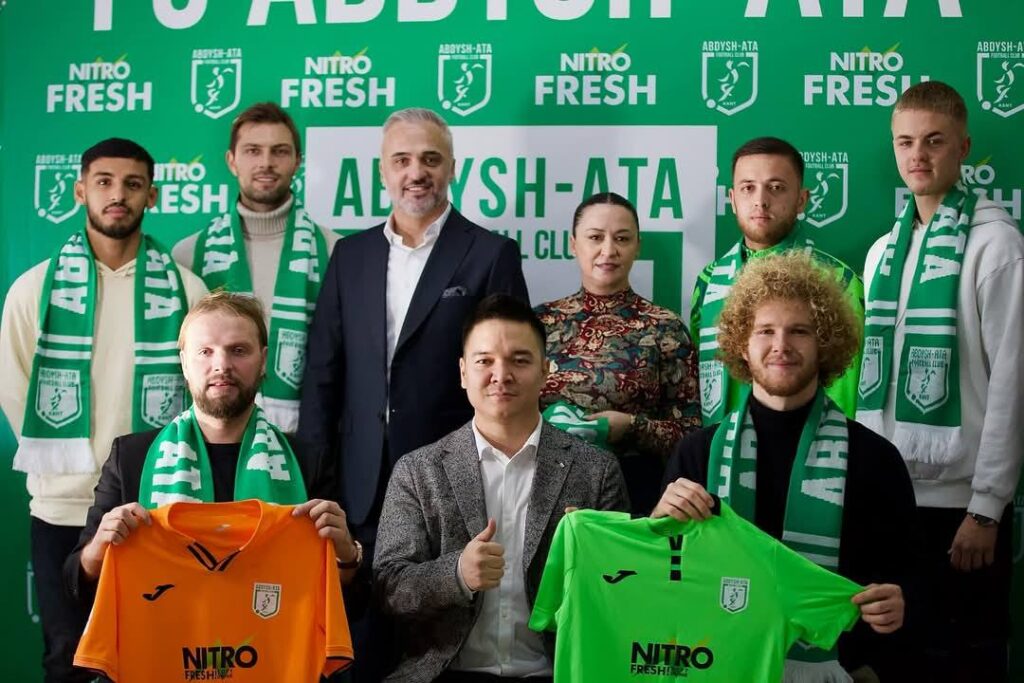
— Tell us about your work with Abdysh-Ata. As I understand it, you helped both with squad building and with the choice of head coach. What did that look like in practice?
I see the president of Abdysh-Ata first of all as a friend, and only then as a business partner. I have great respect for the energy and commitment that he and his family invest in the development of the club.
At the start of last season, the club was going through a major rebuilding phase because almost 80 percent of the squad had left after the previous championship. During that period, I was involved in the squad-building process in a consulting role. In a relatively short time, we managed to assemble a quality team, and I believe that with a little more patience in certain decisions, Abdysh-Ata could quite realistically have won all three trophies last season.
The season began with victory in the Super Cup, which was an important result in the middle of a rebuild. But later some changes and decisions affected the stability of the project.
Football is about systems, and a system cannot be built without time, patience and consistency. When there is a clear vision and quality work, results eventually come.
Knowing football in Kyrgyzstan as I do now, I am still convinced that a club capable of building a strong system and implementing modern tactical principles can compete for major results, including the league title, even without the biggest budget.
— More broadly, how would you compare the financial level of top clubs in Kyrgyzstan and in the Balkans?
A lot depends on the specific Balkan country, but in general there is still a clear gap compared to Kyrgyz football — both financially and in terms of organization.
Leading Balkan clubs usually have larger budgets and more stable systems. That is the result of a longer football tradition, more developed infrastructure and stronger backing from sponsors and institutions.
At the same time, Kyrgyz football is clearly in a growth phase, and progress is visible year after year. Budgets are still smaller than those of the leading Balkan clubs, but the ambition and the effort to improve both the organization and the quality of the league are obvious.
I believe that if the current course and investment continue, that gap can shrink significantly over the next few years.
— How do you assess what happened at Abdysh-Ata after Islam Akhmedov? Why did the later stories with Vladimir Vujović and then Ivan Kurtušić not really work?
In general, I try not to comment on the work of individual coaches, because it is a sensitive subject and every specialist has his own professional path and methods. Coaching changes are a normal part of football. They are usually the result of several factors at once: results, long-term strategy and the level of understanding between management and the coaching staff.
Balkan coaches enjoy a very good reputation in international football, and the school of the former Yugoslavia is still associated with strong tactical preparation and discipline.
At the same time, each club has the right to choose its own path. Sometimes expectations or approaches simply do not align, and that leads to a change in direction.
It is also important to consider the broader context: since 2023, Kyrgyz football has made a noticeable step forward. The league is developing, standards are rising, and with that the expectations of clubs and coaching staffs are changing.
Kdouh, Squad Changes and a Different Strategy
— What happened with Kdouh? Based on the numbers, it seemed he could become one of the leaders of the league.
Kdouh is undoubtedly a very high-quality player. He has serious international experience, nearly 30 caps for Lebanon, a league title in Lebanon and an AFC Cup title. That alone says a lot about his level.
After leaving Kyrgyzstan, he continued to play at a good level in his new club, which also confirms his quality.
Sometimes in football things simply do not come together the way everyone expected — because of tactical decisions, internal changes within a club or other circumstances. I think that was the case with him.
Personally, I was convinced that he could have had a much more important role at Abdysh-Ata and become one of the leaders of the team — he simply needed a little more trust and support.
And I still believe that if Abdysh-Ata had kept the squad it had at the start of the season, with Karić, Kamolov, Kdouh, Talović and perhaps one or two more additions in the summer, it could have won both the league and the Cup.
— In 2025, Abdysh-Ata finished third and then changed strategy, effectively moving on from most of your players. Why did that happen?
The 2025 season for Abdysh-Ata began with a Super Cup victory and ended with bronze medals in the league. In my opinion, the club had the potential for more, but as the season went on certain circumstances affected the team’s stability.
As for the change in strategy, that was a decision made by the club’s leadership. As far as I know, the club chose to move toward a model based on younger players and a more rational budget.
In such a situation, it was logical that some of the more experienced footballers began looking for other options, because they no longer fit the planned spending structure. Most of them had offers and continued their careers in other markets.
At the moment, among our players only Manzhi Williams remains at Abdysh-Ata, while the others have moved to stronger leagues, which in itself says a lot about the quality of that squad.
Still, I am convinced that Abdysh-Ata can return to the top of Kyrgyz football. The club has a stable structure and people who are genuinely devoted to its development.
Bishkek City and Building From the Middle of the Season
— In the summer of 2025, you started working with Bishkek City, which was in a difficult situation at the time. Why did the project run into difficulties so quickly?
Our cooperation with Bishkek City began in the summer of 2025. The club’s president is a very ambitious person who truly loves football and wants to build a stable and competitive project. People like that are genuinely important for the development of Kyrgyz football.
When we joined, the team was in a difficult position in the table. In the first part of the season there had been some good matches, but there was a lack of consistency — both in performances and in results. One reason was the composition of the squad itself: there were quite a lot of older players, which made it difficult to maintain the required energy and intensity throughout the season.
Costantino took over the team at a very difficult moment — in the middle of the season and with a squad he had neither assembled nor prepared himself. In that kind of situation it is hard to make major changes, but he still managed to stabilize the team and add energy and discipline.
When we talk about new clubs like Bishkek City or Aziagol, it is important to understand that building a professional structure takes time. You have to create a system, appoint the right people and establish the organization — and that is usually a process of years, not months.
— How would you evaluate Costantino’s work?
Costantino is a coach with serious international experience and a very strong résumé. He spent three years in the Hungary national team staff together with Marco Rossi, and also worked in the top leagues of Hungary, Romania, Slovakia, Moldova and Cyprus. In addition, he is one of the younger Italian coaches holding a UEFA Pro license.
When he arrived in Kyrgyzstan, the tasks were very clearly defined: stabilize the team, refresh the squad in the summer and lay the foundations for a group that would be able to challenge in the upper part of the table the following season.
In my view, a significant part of those tasks was achieved. The club found an interesting balance between youth and experience, and in football patience is often the decisive factor in building a team.
Coaches, Kosovo and European Choices
— Staying with coaches: you work with German specialist Thomas Brdarić. How open is he to working in Central Asia?
Thomas Brdarić is another coach with whom we have a very close relationship. He is a well-known name in European football: a former Germany international who has built a successful coaching career in different leagues for nearly 15 years.
Interestingly, both at the start of 2025 and again at the start of 2026 he held serious talks about working in Kyrgyzstan, though it has not yet resulted in an appointment. He likes new challenges and unconventional projects, so I think that if there is a serious sporting idea and the right structure behind it, he would be open to working in Central Asia.
More broadly, European coaches are paying growing attention to the region. Central Asia is an emerging market that can offer interesting projects to specialists ready to work in an ambitious environment.
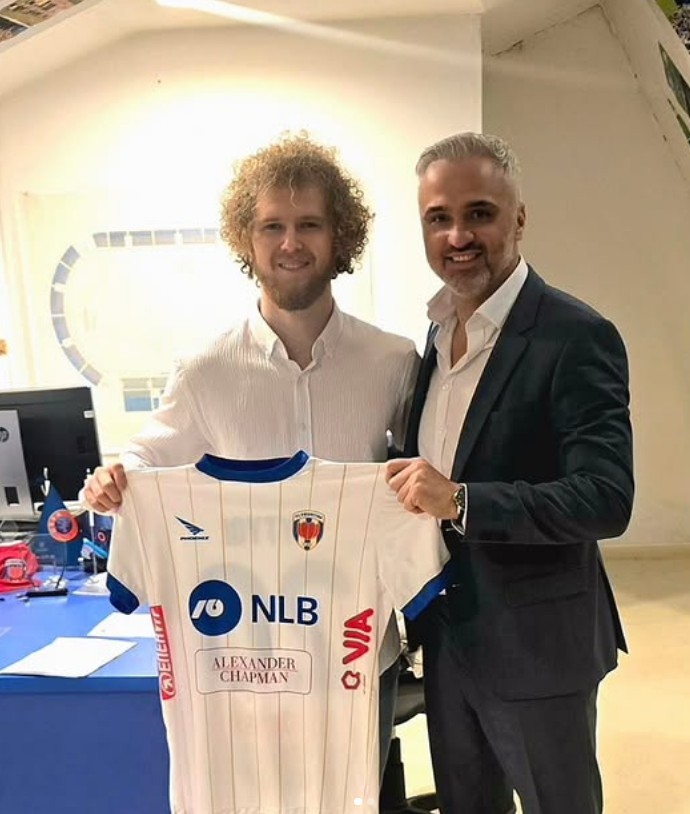
— Harun Karić moved to Priština in the winter, although many expected him to end up in Uzbekistan or Kazakhstan. What drove that decision?
During the winter transfer window, Harun Karić was one of the most sought-after players on the market. We had concrete offers from Ukraine, Bulgaria, Hungary, Uzbekistan, Kazakhstan, Indonesia, Slovenia, Georgia, Malta and Kosovo.
The decision was not easy, because we looked at every option from three angles: sporting, financial and long-term. In the end, the deciding factor was the player’s own wish to continue his career in Europe.
Priština is the biggest club in Kosovo, with clear ambitions to fight for titles and to play regularly in UEFA competitions. For a footballer, that is a very important showcase.
Kamolov, Kosovo Salaries and the European Market
— It was reported that Abdugani Kamolov had joined Kosovo’s Ferizaj, but there was no official announcement and he did not appear in matchday squads. What is happening with that transfer?
Abdugani Kamolov signed with a Kosovo Superleague club back in January and is officially registered as a player of that team.
However, citizens of Uzbekistan must go through a visa procedure in order to obtain a work permit in Kosovo, and for administrative reasons that process has taken much longer than expected. That is why the player has not yet joined the team.
At one point, we even considered terminating the contract by mutual agreement, but by then the transfer windows in most countries had already closed, so that was not a realistic option.
His contract expires in the summer, and at that point he will have the opportunity to consider new options and decide on his next career step.
— How would you assess the level of the Kosovo league?
I know the Kosovo market very well, because we have worked there for many years. To be honest, this is the first time I have heard about salaries of €800 in the Superleague, unless we are talking about a very young local player on a scholarship-type contract. In the professional segment, the figures are clearly higher.
Even clubs in the second division often offer more than that minimum. In the Superleague, salaries naturally depend on the ambition of the club and the level of the player. In some clubs, leading footballers can earn more than €10,000 per month.
At the same time, some Central Asian clubs do indeed have larger budgets and are able to offer higher salaries. But the European market, including Kosovo, remains attractive because of sporting prospects, stable competition and the chance to use good performances as a springboard into stronger European leagues.
Malta, European Competitions and Why Visibility Matters
— Kurtalić and Dervišagić moved to Malta’s Floriana and quickly became first-team players. Did they have options to stay in Kyrgyzstan?
After half a season in Kyrgyzstan, Kurtalić and Dervišagić received a very good and concrete offer from a club that regularly competes near the top of Maltese football. I believe they made the right decision, and I am glad they recognized the right moment for that step.
Since they arrived, the team has remained unbeaten and is at the top of the table. Both players have an important role: Dervišagić through productivity in attack, and Kurtalić through reliability in defence.
As for Kyrgyzstan, there was an option to extend their time with Bishkek City through clauses that existed in the contracts, but the club did not use them. To be honest, that decision surprised me.
— Can the Maltese league be compared with the Kyrgyz championship? Which one is stronger?
In my opinion, the Maltese league is currently a little stronger, especially if we compare the leading clubs in the two competitions.
In Malta, clubs have been working for years in a more stable and better organized environment. A key step forward came with the increase in the number of foreign players, combined with the requirement to have local players on the pitch.
That model has helped both the development of domestic players and the overall growth of the league.
— How much do European competitions influence players’ decisions?
A lot. UEFA tournaments bring serious money to clubs, and that naturally affects player contracts as well.
For a footballer, the chance to play in European competitions often matters a great deal — not only financially, but also as an opportunity to make the next step in his career.
— Can one or two strong matches in Europe really change a player’s career?
Absolutely. European competitions are one of football’s main shop windows.
These matches are attended by many scouts and club representatives, and sometimes one really strong performance is enough to make people take notice.
Especially in the later stages of a competition, a player’s visibility becomes very high, and those matches can directly affect both his market value and his next transfer.
Why Central Asia Makes Sense for Balkan Players
— How difficult is adaptation when players move abroad?
Adaptation depends greatly on the market and the environment the player is moving into.
For example, Arab markets often suit African players better because of climate, while countries such as Indonesia and Thailand more often prefer South Americans, partly because the adaptation process is easier.
Central Asia, meanwhile, has shown itself to be a very suitable environment for Balkan and European players.
But every case is individual. For some players, social life matters most; for others, it is living conditions, food or club infrastructure. That is why before any transfer it is crucial to carry out a detailed assessment and have honest conversations with both the player and the club.
Balkans and Central Asia: Similarities and Potential
— Do you see similarities in the mentality and football culture of the Balkans and Central Asia?
There are quite a few similarities between the Balkans and Central Asia, although of course there are differences as well. In the Balkans, fan culture is much more developed and emotional, while in Central Asia that segment is still in a growth phase.
If we speak about players, in both places there is fighting spirit, a desire to prove oneself and a good technical base. Balkan football still has an advantage in systematic work and tactical discipline, but the potential of Central Asia is absolutely obvious.
— What recommendations would you give to the football authorities in Kyrgyzstan?
My main advice would be to keep investing in infrastructure and youth development, because that is the foundation of long-term success.
I would also underline the importance of coach education and exchange with European football. Modern training processes, proper periodization and the constant improvement of specialists are key factors for further growth.
Prosinečki, Kyrgyz Players and the Region’s Future
— The Kyrgyz national team was recently appointed a famous Croatian coach, Robert Prosinečki. What do you expect from that appointment?
Robert Prosinečki is a huge name in world football. He is one of the few players to have represented both Real Madrid and Barcelona, and he comes from one of the strongest football schools in the world — that of the former Yugoslavia.
He also has substantial experience as a national-team coach, having worked with Azerbaijan, Bosnia and Herzegovina, and Montenegro. The key question is how successfully he can transfer that knowledge to the Kyrgyz national team.
What matters most is continuity, a clear strategy and a system that gives players stability and development. In the end, results decide everything.
— Former Kyrgyzstan coach Petar Šegrt once said Tajiks are the “Central Asian Croats.” Could Kyrgyz players be described as “Central Asian Bosnians”?
It is an interesting comparison, and to a certain degree I can understand the parallel. Bosnians are known for their character, pride and inner strength, especially in sport. When stubbornness and motivation kick in, they become highly competitive.
I saw something similar in Kyrgyz players: they have potential, work ethic and a desire to grow. With the right development and systematic work, they can absolutely make a major step forward.
So yes, I would be willing to draw that parallel as well: Kyrgyz players as “Central Asian Bosnians.”
— Do you offer Central Asian players to European clubs? How highly do you rate the region’s potential?
Our agency already has several players from Central Asia, and we are definitely working on opening the doors of the European market to them.
The region’s potential is beyond doubt. But what many players still lack is tactical education, and that is crucial for European football.
At the same time, we are actively monitoring several other players and I would not rule out expanding our work with talents from this region in the future.
— Who do you consider the most talented Central Asian footballer of recent years?
Abdukodir Khusanov is one of the brightest names in Central Asia right now, if we speak about his current career stage and the level at which he is playing.
But there are other very talented footballers in the region who are capable of reaching a similar level or even going beyond it. I would especially single out the young Kazakh player Dastan Satpaev — I think he could become one of the key figures of the future.
As for Kyrgyzstan, beyond Alykulov, who is already playing abroad, there are also several young footballers within the domestic league who have very serious potential.
