
Prosinečki and the Kyrgyzstan national team may seem an unusual pairing, but their cooperation reflects a deeper strategic logic rather than an exotic experiment.
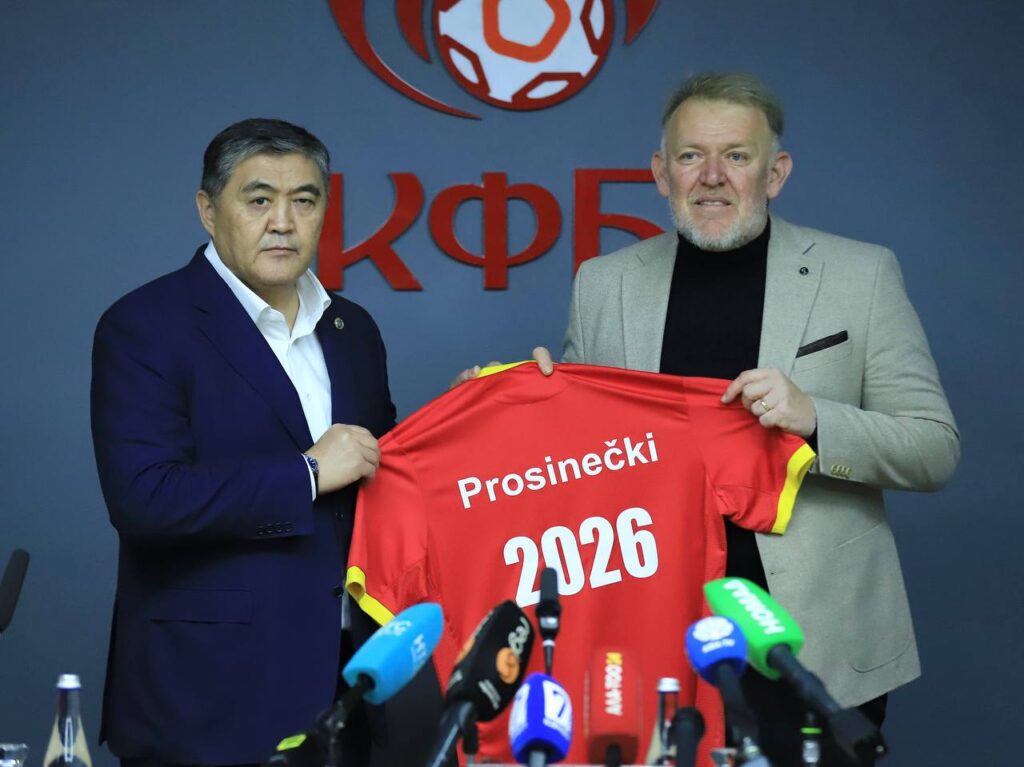
On the one hand, there is a legend of Balkan football, a coach with a big name and experience at the highest level. On the other, there is a team of “anonimni igrači” (anonymous players), as some Croatian media described them. Such labels, however, reflect a superficial, external view typical of a European outsider.
In reality, Kyrgyz football has been in a phase of restructuring for several years. Robert Prosinečki and the Kyrgyzstan national team project is not an impulsive decision, but rather another logical step within a longer and more deliberate strategy. It is a clear example of football globalization — something that often goes unnoticed in Europe.
There is little point in retelling Robert Prosinečki’s biography in detail. A great footballer in the past, a solid coach today. He has worked with the national teams of Azerbaijan, Bosnia and Herzegovina, and Montenegro, and coached clubs in different countries. His résumé includes a league title with Red Star Belgrade, participation in international qualification campaigns, and experience in demanding football environments. Including the post-Soviet space: three years in Azerbaijan effectively make Prosinečki “one of our own” in Central Asia as well, where Baku has long been part of discussions about shared cultural platforms, history, and joint projects. In the context of the Robert Prosinečki and the Kyrgyzstan national team appointment, his experience in Azerbaijan becomes especially relevant.
It must be acknowledged that Prosinečki is not a coach of instant impact and not a builder of sensations. His main strengths are structure, control, the ability to stabilize teams, and work with limited resources. That is precisely why he should be of interest to Kyrgyzstan as a long-term specialist rather than a one-off “miracle worker”.
Parallels with Azerbaijan naturally arise. Prosinečki took over a team stuck in a prolonged slump and gradually made it more competitive. Azerbaijan began to pick up points and take them off stronger opponents, but eventually hit a ceiling set by the competitive environment within UEFA. The team never qualified for a major tournament. Similar outcomes followed with Bosnia and later Montenegro, for roughly the same reasons. With Kyrgyzstan, however, Prosinečki is already guaranteed participation at the Asian Cup, and he has more than enough time — a full year — to reshape the team according to his ideas.
Predecessors
Prosinečki is not the first European coach to lead the Kyrgyz national team. The team has already gone down this path — and not without success. A separate mention should be made of Stefan Tarkovič. The Slovak specialist arrived at a difficult moment and received mixed assessments. He was criticized for cautious football, lack of flair, and pragmatism. He was tasked with rejuvenating the national team, a process that coincided with the 2023 Asian Cup, which proved unsuccessful for Kyrgyzstan. Yet it was under Tarkovič that Kyrgyzstan, albeit with difficulty, reached the third round of World Cup qualification for the first time in its history. He left his post after completing that task.
A different vector followed with the appointment of Russian coach Maksim Lisitsyn. Under him, Kyrgyzstan seriously competed with the UAE and Qatar for a place in the fourth qualifying round, but ultimately fell short. The team played on equal terms with World Cup participants Iran and Uzbekistan. Lisitsyn also departed at the end of the cycle.
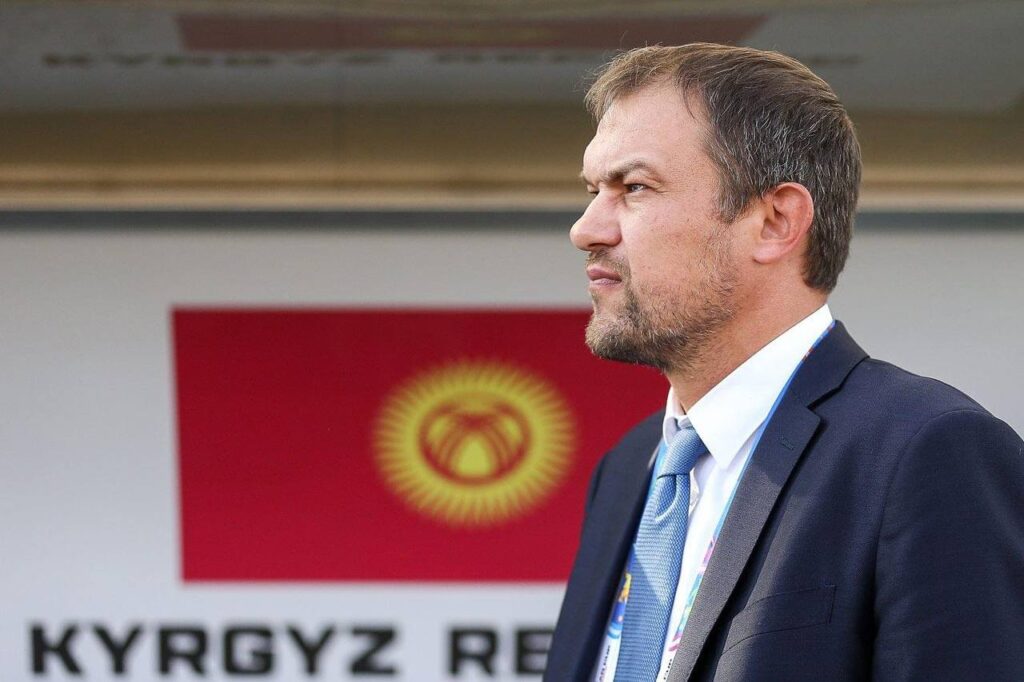
The key role in shaping the Kyrgyzstan team that Asia now has to reckon with belongs to another Russian — Aleksandr Krestinin. He is a crucial figure for understanding the current choice made by Kyrgyz football. Krestinin worked with the national team for almost nine years, received a de facto carte blanche, and became the architect of the first major breakthrough. Under him, the team gained identity, character, and stability, climbed sharply in the FIFA rankings, qualified for the Asian Cup for the first time, and immediately reached the knockout stage.
What matters is not only that Krestinin delivered results, but how he did so. He was given trust, time, and influence beyond tactics and squad selection. This included personnel decisions, work with players who had roots outside the country, and building communication with the federation. This experience showed that in Kyrgyzstan the system works only when a strong specialist is at the helm — one who is trusted domestically and respected abroad. In this context, cooperation between Prosinečki and the Kyrgyzstan team looks logical
Naturalisation
One of the key factors — rarely stated openly — is the naturalisation of players with Kyrgyz roots. For the national team, this is not an emergency measure, but an important development tool. Under Krestinin, German-born players with Kyrgyz roots became eligible to represent Kyrgyzstan, including Edgar Bernhardt. Bernhardt built a solid career in Poland and also played in Germany, the Netherlands, and Finland. The federation also managed to naturalise Ghanaian forward Joel Kojo, who has no Kyrgyz roots but fulfilled all FIFA requirements.
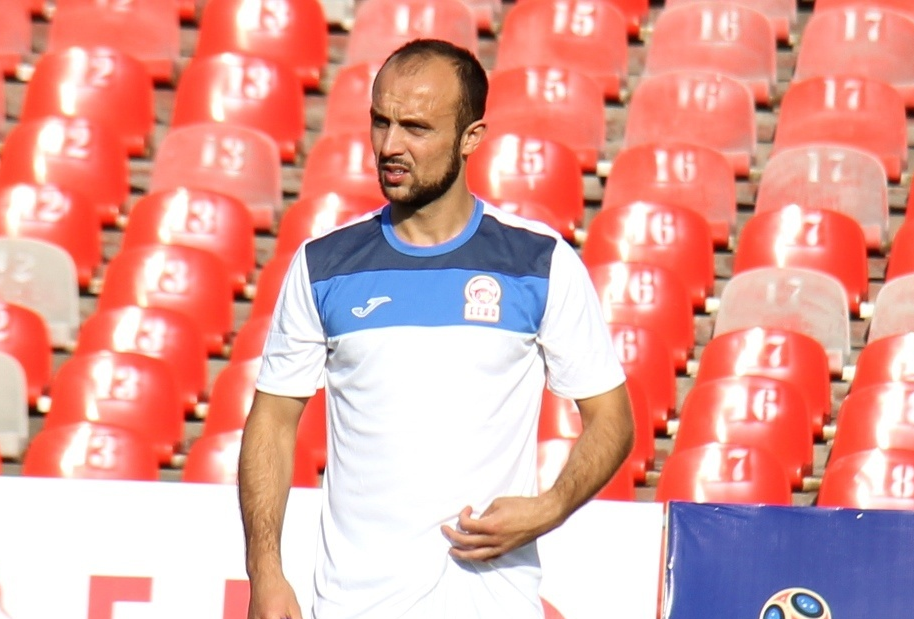
Such processes, however, were traditionally slowed down by bureaucracy. For example, the paperwork for the Merk brothers dragged on for years, despite the fact that they are now an integral part of Kyrgyz football. The most well-known footballer born in Kyrgyzstan, Sergei Evlyushkin — a former captain of Germany’s youth national team of the Boateng–Höwedes–Özil generation and the author of an autobiographical book — never managed to play for the Kyrgyz national team in official matches for the same reason.
Bernhardt has also said that he could have started playing for Kyrgyzstan much earlier, at the peak of his career, but his letters to the federation went unanswered. The situation changed with Krestinin’s arrival.
At present, there are players performing at a good level in European clubs who are willing and eligible to represent Kyrgyzstan and are capable of strengthening the team immediately. However, their registration requires meticulous paperwork, which is not always a priority for football officials.
In the Kyrgyz context, naturalisation is neither romance nor “project appeal”. It is paperwork. There are few candidates with roots, and the issue usually comes down not to willingness, but to timing and federation priorities.
Prosinečki and the Kyrgyzstan national team`s deanonymisation
Croatian media, when referring to Kyrgyzstan players as “unknown”, largely rely on Transfermarkt data, where Joel Kojo is currently listed as the most valuable player in the squad. The real picture is far more complex.
According to the same Transfermarkt data, the most valuable Kyrgyz player at his peak was 33-year-old captain Valeriy Kichin, who played in the Russian Premier League — he was valued at €1.5 million. He is now a veteran, but still an important part of the national team.
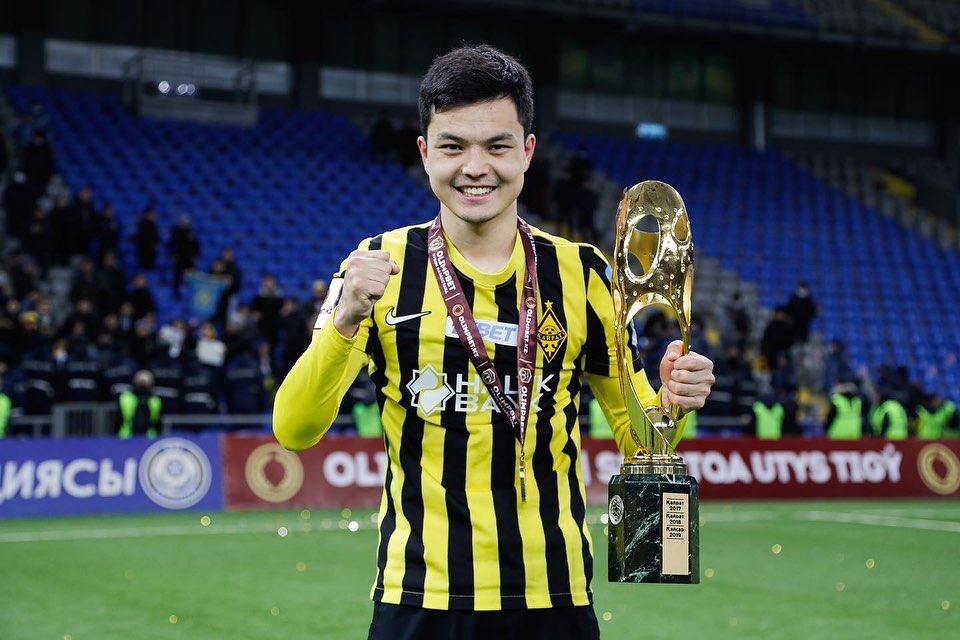
There is also a younger player — 25-year-old Gulzhigit Alykulov (often referred to in the media as the “Kyrgyz Messi”), whose value once reached €1 million. His career has repeatedly attracted European interest. At various times, Kyrgyz and foreign media reported attention from Poland’s Lech Poznań and Czech side Slavia Prague. His European competition experience with Kazakhstan’s Kairat, including the 2–1 win over Red Star Belgrade in the 2021 Champions League qualifiers, adds important context. In that match, Alykulov initiated the attack that led to the winning goal.
In fact, the current Kyrgyzstan squad includes an entire layer of players with European backgrounds, even if not always formalised through contracts. Last summer, 20-year-old Kimi Merk had trials with Czech club Zlín and later with Iran’s Tractor, then coached by Dragan Skočić. According to the player, fans even contacted him on social media, but the move collapsed at the last moment.
Alimardon Shukurov was a key player at Belarusian club Neman for several seasons and scored in European competitions, including against Slovenia’s Celje. He later moved to Torpedo-BelAZ. Last summer, he was set to join a Czech club, but, according to his agent, failed to secure a visa in time due to European bureaucracy. He remained in Belarus and then suffered an injury before a Conference League match against North Macedonian side Rabotnički. Torpedo later terminated his contract. The 24-year-old is currently recovering at home.
Goalkeeper Erzhan Tokotaev, who previously played in Turkey, attracted interest from Italian and French scouts after strong performances against Uzbekistan, where he notably saved a penalty from Eldor Shomurodov, according to Kyrgyz media. A potential move was initially postponed. Last autumn, the 25-year-old joined Uzbek club Andijan and kept a clean sheet throughout the AFC Champions League Two group stage. He later suffered an injury, delaying a European move once again.
Beknaz Almazbekov is a Galatasaray academy graduate, captain of their U-19 side, and scored in official UEFA Youth League matches against Bayern Munich and Manchester United. He played in Kosovo and is now, at the age of 20, in the Ukrainian Premier League.
Twenty-two-year-old centre-back Kristian Brauzman considered options in the Russian Premier League and Slovenia last year, but consciously chose to stay at home to gain experience.
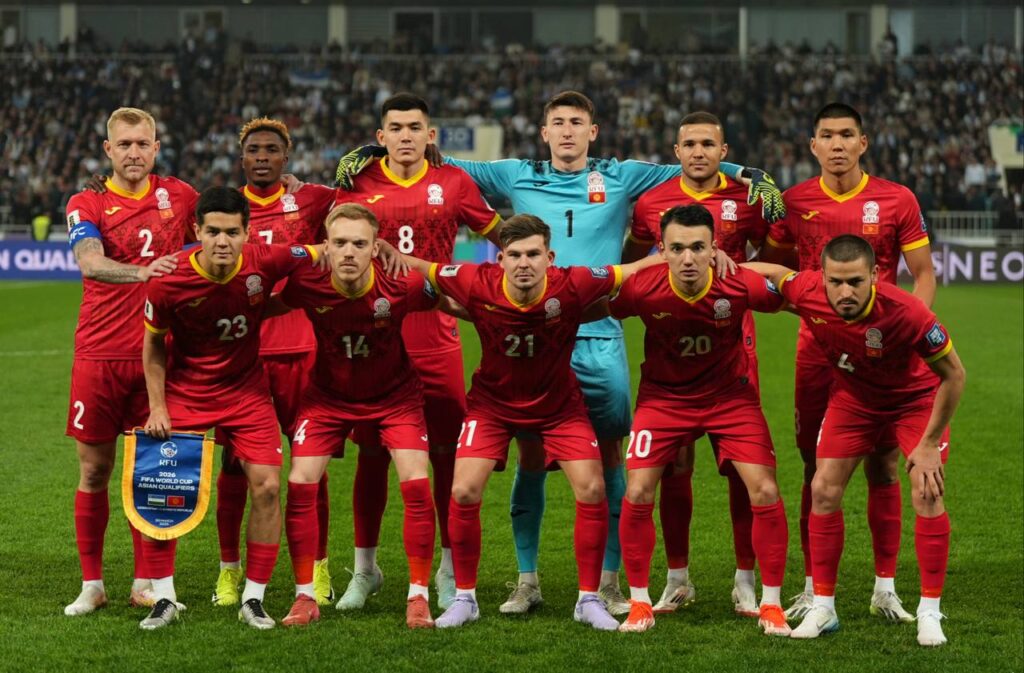
These are not “anonymous” players. They are transitional-level footballers, each capable of taking a significant step forward — exactly the type Prosinečki is accustomed to working with. Most importantly, almost all of them are young. They have time, opportunity, and motivation to develop.
System Development
Football in Kyrgyzstan has become an object of systematic investment. All clubs are formally private — a rarity in the post-Soviet space. The head of the Kyrgyz Football Union, Kamchybek Tashiev, has turned football into a political and economic trend.
Over the past three years, several new professional clubs have emerged: Muras United, Bishkek City, Bars, Asyagol, Uzgen, and Asia. Almost half of the top division consists of relatively new projects. The league is expanding, infrastructure is improving, and international cooperation is strengthening.
The logic of the football market in Kyrgyzstan has also changed in recent years. An increasing number of transfers are linked to foreign agent networks: for example, Ukrainian agent Dmytro Kotyk, the Belarusian agency Playsport led by Vladimir Osipov, and the Balkan agency Pro Talent Sport Management run by Amil Šukalo. Some clubs work systematically with their own scouts.
Agents not only bring foreign players to Kyrgyzstan, but also help promote local footballers abroad. Experience in the Kyrgyz Premier League (Zhogorku League) is no longer seen as a dead end, but as a viable platform — at least in Asia and in certain European markets.
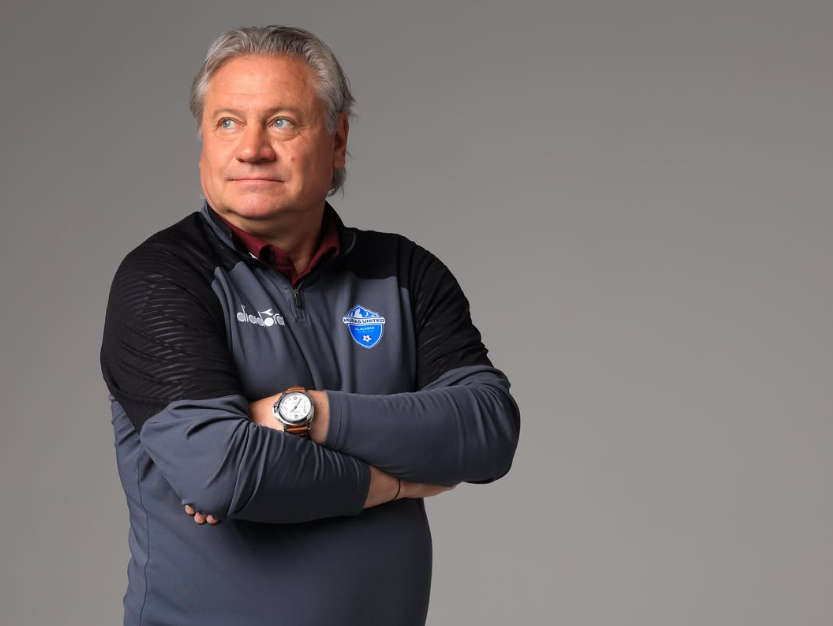
Foreign coaches have also arrived. Muras United were coached by former Manchester United winger Andrei Kanchelskis. The new club Asia was taken over by former Dynamo Kyiv striker Maksim Shatskikh. The Kyrgyz U-21 national team and Muras United are coached by Ukrainian-Brazilian specialist Edmar Lacerda. There are also examples of upward mobility: Serbian coach Ivan Kurtušić moved from Abdish-Ata to Slovenia’s Mura, while Italian coach Giovanni Costantino remains a sought-after specialist after his work with Bishkek City.
Kyrgyz football officials are actively cooperating with Barcelona, whose academy has opened in Kyrgyzstan, as well as with Slovakia’s Trenčín and England’s Aston Villa. Plans are also in place to develop international internship programmes for coaches and players. Not long ago, the Kyrgyz Football Union held a working meeting with a Croatian delegation and Serbian investor.
Risks and Expectations
On the pitch, Kyrgyzstan has long ceased to be a mere extra. It is a team with character, one that rarely collapses and knows how to extract the maximum from limited resources. It also has concrete results that already serve as benchmarks.
As shown above, Prosinečki’s appointment is not just a PR move, but a hope that a high-level specialist can help the team reach a new level. Prosinečki himself is extremely cautious. He has already stressed that success will depend on how well the players fulfil his requirements. He has made no bold statements — an entirely correct approach. Although there is still plenty of time before the 2027 Asian Cup, this will be Prosinečki’s first major international tournament. For the Prosinečki and the Kyrgyzstan national team, the key risk right now isn’t results, but expectations.
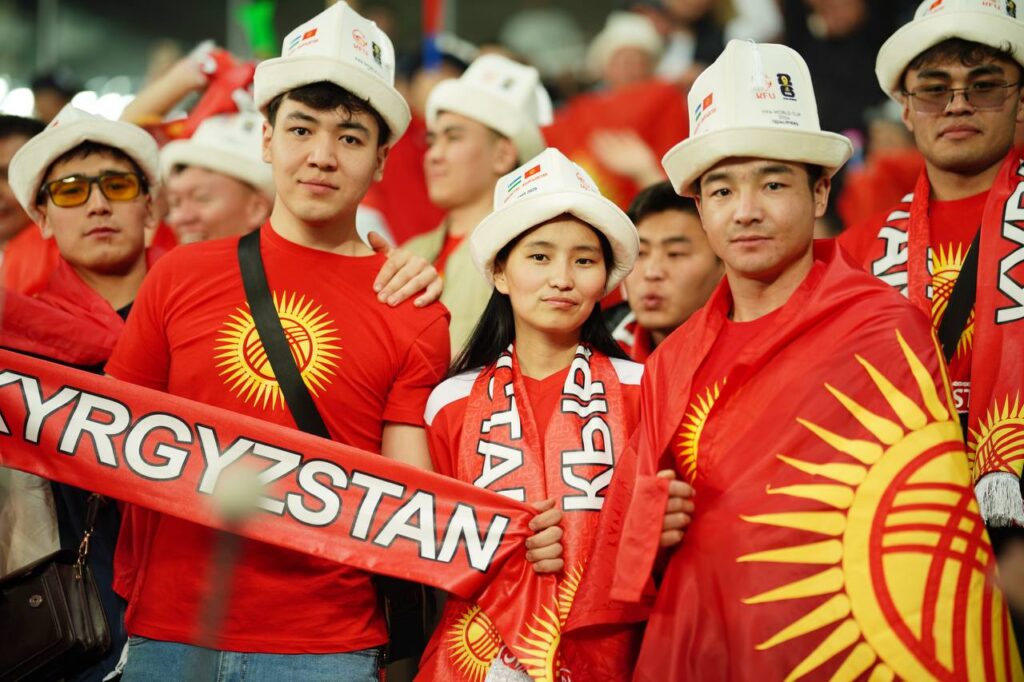
It is also unclear what result the Kyrgyz side will consider successful, as this will determine whether cooperation continues. An additional challenge is the strategic goal of the 2030 World Cup. For Kyrgyzstan this is a crucial cycle. This is a long-term project. Ambitions are high: reaching the Asian Cup knockout stage or the third round of World Cup qualification will likely be treated as a minimum expectation.Even now, the Kyrgyzstan national team (104) is higher in the FIFA rankings than, for example, Azerbaijan (127). Kyrgyz fans are hoping for a long-term partnership between Prosinečki and the Kyrgyzstan national team.
