
Kazakhstan’s transfer market has taken on a striking new shape this year, with clubs increasingly drawn to high-profile veterans. Deals for Nani and Victor Moses have already been completed, developments closely tied to fresh private investment and the ongoing privatisation of several teams.
At least six clubs are now understood to be under private ownership, backed by businessmen willing to inject serious money into sporting projects.
Against that backdrop, supporters have been repeatedly surprised by talk of blockbuster signings — not just idle speculation, but approaches that, in some cases, appeared genuine. Aktobe were the first to grab attention, signalling interest in a host of famous names.
Ukraine winger Andriy Yarmolenko was among those mentioned before announcing his retirement. Thomas Müller later emerged as a candidate but reportedly declined after learning he would have to play on artificial turf. Miralem Pjanic’s agent subsequently said his client was not considering a move to Kazakhstan.
There were also reports linking clubs to James Rodríguez, Hulk, Lorenzo Insigne, Jesse Lingard and Kurt Zouma.
From rumours to reality
Some of that noise has now been followed by concrete deals.
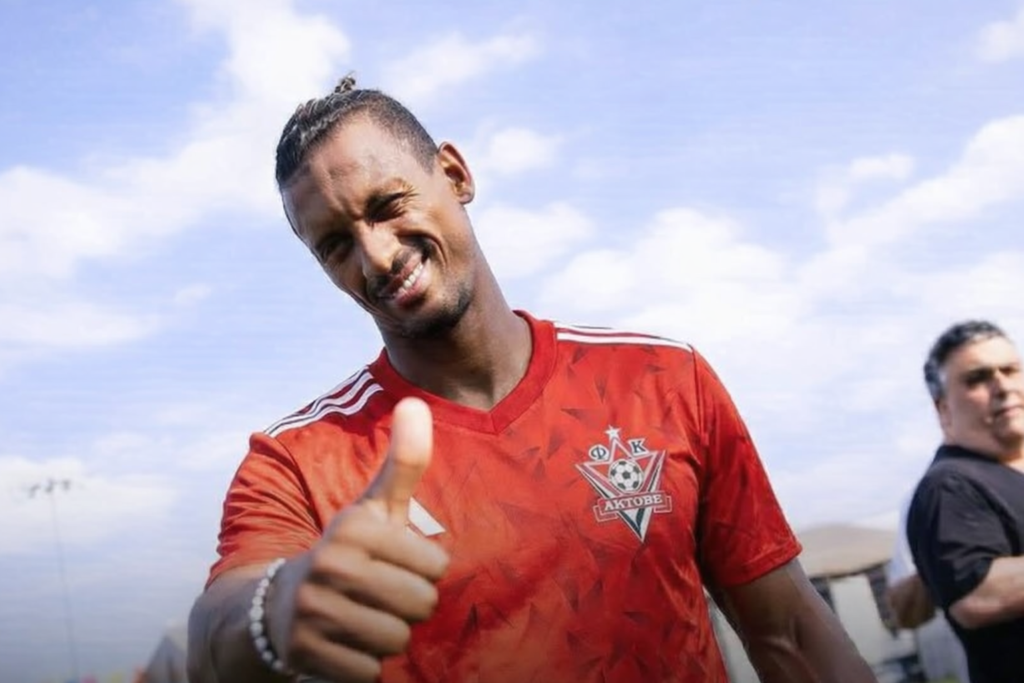
Aktobe signed Nani — the 39-year-old Portuguese winger who had stepped away from professional football a year earlier. He travelled to Kazakhstan for his unveiling and agreed to what were described as relatively modest personal terms, worth around €70,000 a month.
For a player of his pedigree, the figure is hardly prohibitive: comparable wages are paid to leading names in leagues such as Iran’s top flight, despite those competitions carrying far less international prestige.
Soon after, Kaisar — another recently privatised club — secured Victor Moses, the former Chelsea and Spartak Moscow winger and an Africa Cup of Nations winner with Nigeria. The 35-year-old had been without competitive football for six months but remains a high-profile name and has already scored on his debut.
Brand power as much as football
Kazakh outlet Vesti.kz used an intriguing phrase when covering Nani’s presentation, describing him as a “playing international brand ambassador” for the club.
The wording neatly captures the broader direction of travel: newly privatised teams are attempting to elevate their profile by attaching famous names to their projects while keeping spending within relatively controlled limits.
The market now feels increasingly driven by image and publicity, with club owners competing for attention, headlines and social-media reach.
Similar dynamics are emerging in neighbouring Kyrgyzstan, where several new projects are also seeking recognisable players and coaches. Kazakhstan, however, starts from a different base. The country has long sustained a respectable level of club football, operates within UEFA and has seen sides such as Astana and Kairat compete in Europe.
That contrast raises a strategic question: should new money be channelled into marquee signings, or would it be wiser to prioritise youth development and infrastructure?
Stars versus sustainability
In theory, the two approaches are not mutually exclusive. Recruiting a global name as the public face of a club does not prevent parallel investment in academies or training facilities — European football offers plenty of precedents.
Veteran stars will certainly attract attention at home. But expecting a handful of big names to transform European interest in the Kazakh league would be unrealistic.
Foreign-player quotas, finite budgets, infrastructure that still trails Middle Eastern mega-projects and concerns over artificial pitches all impose structural limits. Turning the league into a genuine international destination would require sustained progress over years rather than months.
What the stars are really for
That does not make foreign signings redundant. Experienced internationals can still serve as reference points for young players and magnets for local crowds.
Their job is to fill stadiums, inspire children to take up football and inject excitement into the domestic game. But long-term funding for academies and facilities must remain central.
Clubs also face delicate internal dynamics. Young players need clarity about why a star arrival has been sanctioned. When a teenager sees a veteran earning vastly more but featuring only sporadically, questions inevitably arise — and much depends on how executives and coaching staffs manage those relationships.
In an ideal outcome, the current wave of privatisation and spending would translate into systemic growth. In a few years, Kazakhstan’s national team could be shaped largely by players starring for strong foreign clubs or competitive domestic sides, while the league itself might edge towards UEFA’s top 20.
Whether that balance can be struck may define Kazakhstan’s next decade.
