
This winter, Iranian clubs signed several quality foreign footballers who found the offers attractive despite the country’s difficult political climate. Eurasia Football, with input from agent Kova Tilavpur, examined why legionnaires continue to choose Iran.
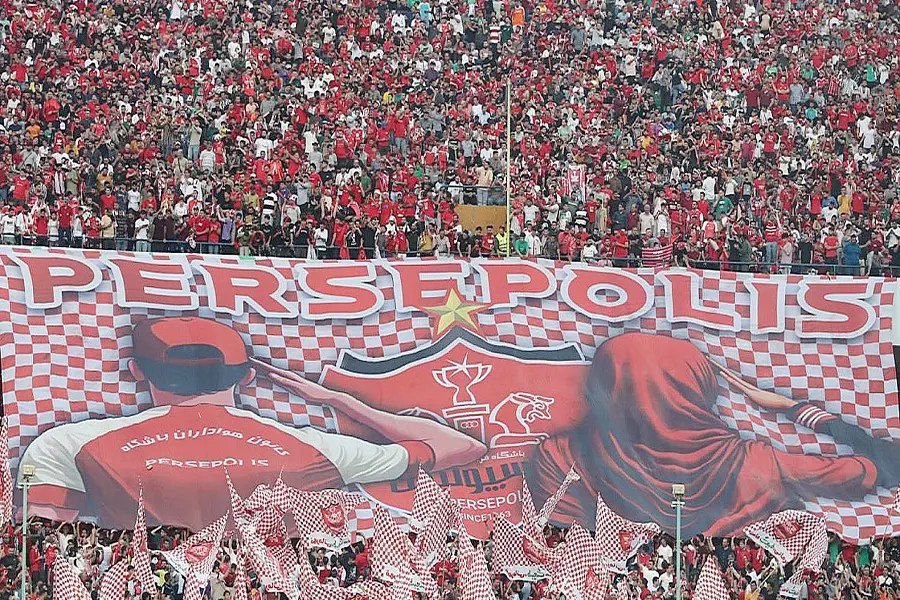
Uzbek striker Igor Sergeev’s decision to reject an offer from Russian club Krylya Sovetov in favour of Tehran giants Persepolis — one of the country’s most supported and decorated clubs — raised a broader question: can Iran’s top-flight league outweigh a move to Europe? The 32-year-old Uzbekistan international is preparing for the World Cup, which he is highly likely to attend barring unforeseen circumstances — and a transfer to Iran could, in theory, complicate that path.
Yet Sergeev is far from the first, and certainly not the last, foreigner to take what many regard as a risky route into a relatively unfamiliar competition. In previous years, Iran attracted genuine stars — often veterans with experience in Europe’s top leagues — such as Steven N’Zonzi, Manuel Fernandes, Serge Aurier and Wissam Ben Yedder. The main magnet for foreigners has traditionally been financial.
Right now, however, Iranian clubs no longer boast headline names. The publicity effect of those signings proved short-lived — if noticeable at all. Recruitment has therefore shifted towards more predictable and less demanding profiles. Alongside Sergeev, relatively little-known players from Paraguay, Brazil, South Korea and Gabon arrived this winter.
At present, 41 foreigners are registered across the league, including eight from Central Asia — five of them Uzbek — as well as eight players from the former Yugoslavia and two Albanians. The Balkans and Central Asia have become the main sources of imports, and even for them Iranian clubs are willing to pay very respectable sums.
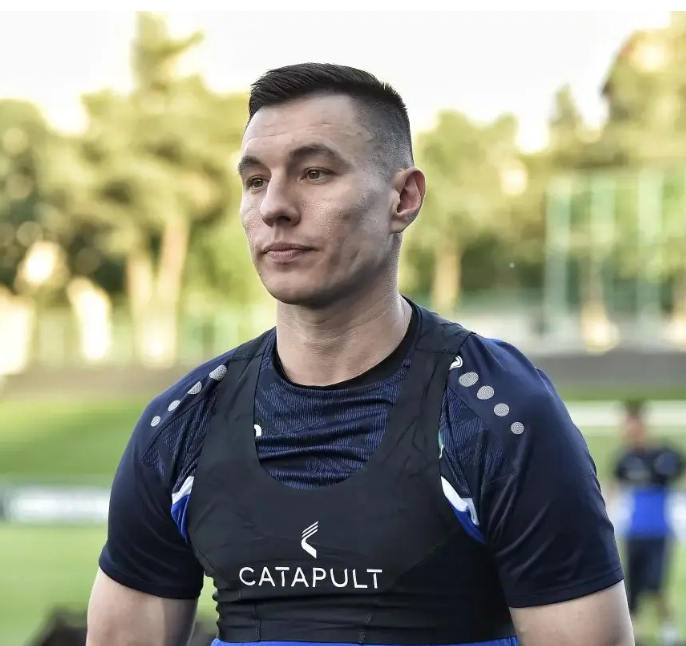
According to reports, Persepolis offered Sergeev more than $1 million for an 18-month contract — a figure the Russian side were unwilling to match for a relatively low-profile player. Similar arithmetic applied in the transfer of another Uzbek international, Rustam Ashurmatov. Last summer, Rubin Kazan sold the defender for €500,000 to Tehran powerhouse Esteghlal, Persepolis’ city rivals, where he is believed to earn up to $50,000 a month, compared to around $15,000 in Kazan.
Oston Urunov, currently regarded as the most expensive foreigner in the Iranian league, is said to earn even more. Not everyone, however, is tempted: Pakhtakor Tashkent defender Khojiakbar Alijonov turned down a $1 million offer from Persepolis, stating that he preferred to remain in Uzbekistan.
Outside Iran and Uzbekistan — where wages are rising due to strict foreign-player limits and a shortage of elite domestic talent — few leagues would be able to offer comparable terms to Urunov, Sergeev or Ashurmatov. The league’s wage structure as highly uneven. In smaller teams, local players may start on around $3,000 a month, while leaders at top clubs and national-team regulars earn more than $1 million per year. For foreigners, the entry threshold is higher, with offers typically beginning at $10,000 a month.
The financial model relies heavily on state-backed institutions and affiliated corporations in the oil, industrial and metallurgical sectors. One notable exception is Tractor Tabriz — a privately run project able to pursue a more independent recruitment policy. The club currently fields four Croatians, a Serb and an Albanian, and is coached by Croatian manager Dragan Skočić.
Iran’s foreign-player quota is strict — six non-Asian players plus one Asian — yet not all clubs even fill those slots. In many cases, teams have no foreigners at all, not so much because of financial limitations as for pragmatic reasons: clubs are reluctant to pay for players who do not clearly outperform domestic options, or avoid token signings for appearances’ sake.
In conservative Mashhad, strong religious influence complicates attitudes to professional sport, including football, more than in Tehran or Isfahan — particularly when it comes to women’s access to stadiums. Staging high-profile matches there is difficult, attendances fluctuate, and the city currently lacks a genuine elite-level club despite possessing a modern stadium that is only partially used.
Infrastructure remains the league’s most vulnerable area. Iran has relatively few top-class stadiums, pitch quality is frequently criticised, and Tehran’s main arena has been under renovation for an extended period. As a result, even marquee fixtures such as the Esteghlal–Persepolis derby have at times been relocated to other cities. Football commentator and television host Javad Kheibani has said the country has sufficient resources to address the situation, but progress is slowed by tensions between business interests and state authorities. Complaints persist about refereeing standards and the general quality of play.
Beyond finances and facilities, foreign players also weigh more fundamental concerns.
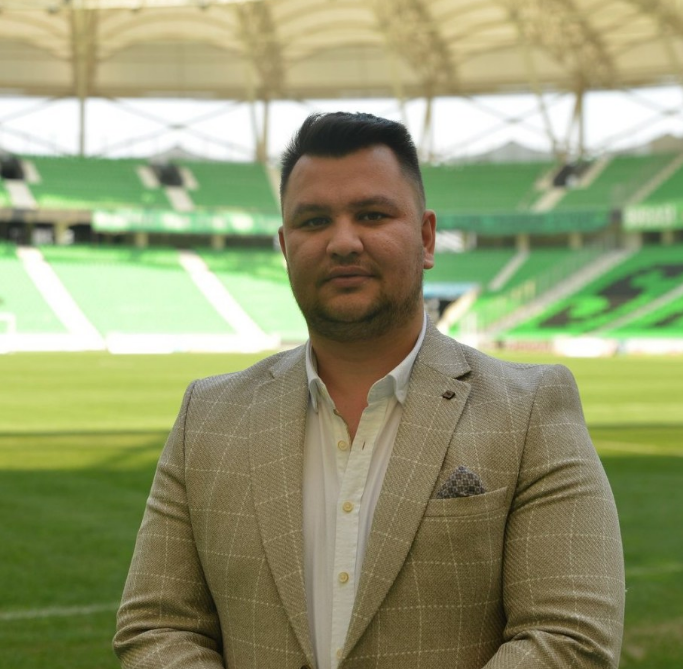
Agent Kova Tilavpur stresses that the Iranian league is rarely viewed as a springboard to Europe: upward moves require either personal connections or extraordinary efforts from agents. As a result, foreigners tend not to stay long and usually sign short-term deals. This produces high turnover, with many spending only half a season or a year in the country before seeking opportunities elsewhere. Those who remain longer often have to overlook a range of everyday and professional difficulties.
Security remains the most sensitive issue. According to Tilavpur, foreign footballers assume that in the event of a serious escalation they would not be directly affected:
“If the situation escalates, footballers believe the United States and Israel would strike only political and military targets. Nobody is going to bomb stadiums. Protests, if they happen, usually take place in the evenings and in city centres, while players are at their training bases — typically on the outskirts, behind closed gates.”
Risks are nevertheless acknowledged — above all the possibility of being unable to leave the country quickly if tensions spike, as has happened in previous periods of instability, when people, including athletes, attempted to exit via the Turkish border.
Tilavpur also argues that comparisons between Iran’s league and the Russian Premier League are misplaced. Levels of infrastructure, footballing quality and financial power are not comparable with Russian clubs, most of which boast modern stadiums and training complexes, strong sponsors and established fan cultures. It is difficult to imagine Persepolis spending €10–20 million on a single transfer and then paying several million per year in wages, as leading RPL sides do. Iran would have to overpay significantly simply to convince a genuine star to sign.
According to Transfermarkt data, the most expensive purchase in Iranian football history remains Esteghlal’s €2.2 million signing of Andranik Teymourian from Qatar’s Al-Kharitiyath in 2013. The record sale was Ali Karimi’s move to UAE side Al-Ahli: in 2001, Persepolis earned €2.5 million.
The overwhelming majority of Iranian players seek moves abroad — including to Russia, where clubs in recent years have closely monitored the Persian market in search of the “next Azmoun” — a rare Iranian export capable of thriving overseas — and where teams such as Orenburg have occasionally profited from reselling Iranian players.
As Tilavpur notes, Russian footballers, unlike Iranians heading in the opposite direction, have almost never appeared in the Iranian league:
“That is the clearest answer to those who try to compare the two competitions.”
