
Written by Thomas Bullock
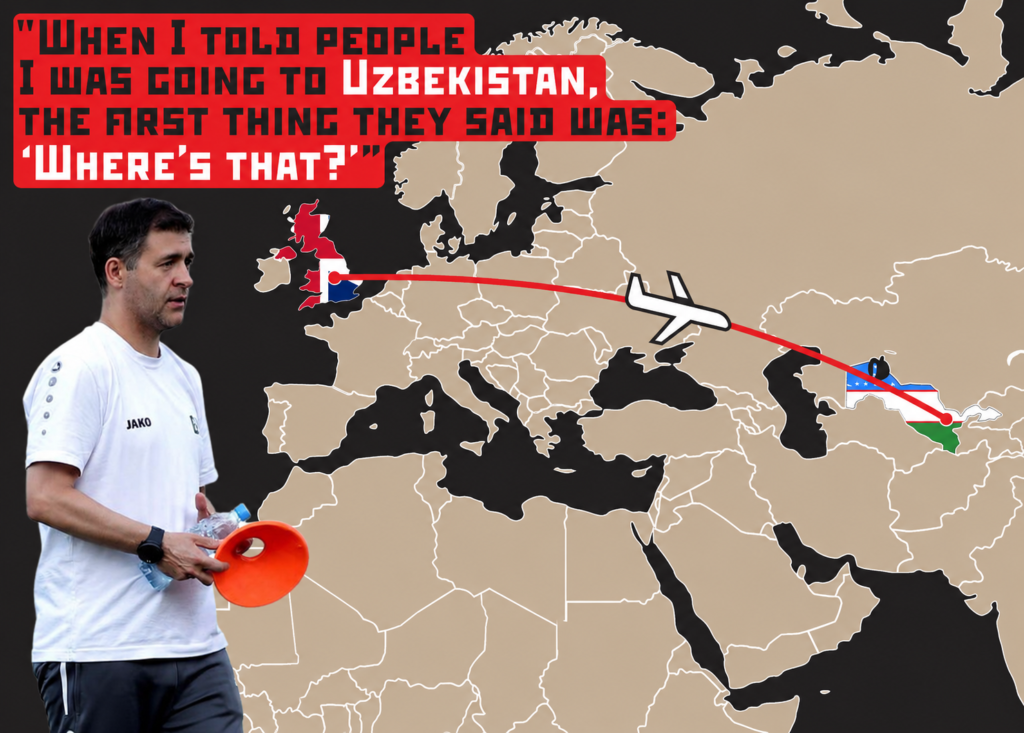
“Where’s That?”
That was the reaction Gregg Britton got when he told friends and family he was moving to Uzbekistan.
“To be honest, there’s not many people that know Central Asia or where Uzbekistan is,” he says.
In modern football, English coaches have travelled far and wide in search of opportunity. But very few have ventured into Central Asia, a region still shaped by Soviet football culture, language barriers and vast distances between Europe and Asia.
Gregg Britton became the first English coach in Uzbekistan’s top professional football league, taking an unlikely route from Birmingham to Sogdiana Jizzakh via long-haul flights, AFC coaching badges and a chance message from former Leicester City manager Micky Adams.
He is not the first Englishman to coach in Uzbek football entirely, journeyman manager Bob Houghton briefly took charge of the Uzbekistan national team in 2005 for only three matches but Britton’s move into the day-to-day reality of the Uzbek Super League offered a rare glimpse into one of football’s lesser-known worlds.
“There’s not many people that get offered the opportunity,” Britton says. “So, I jumped at it.”
Flights via Istanbul
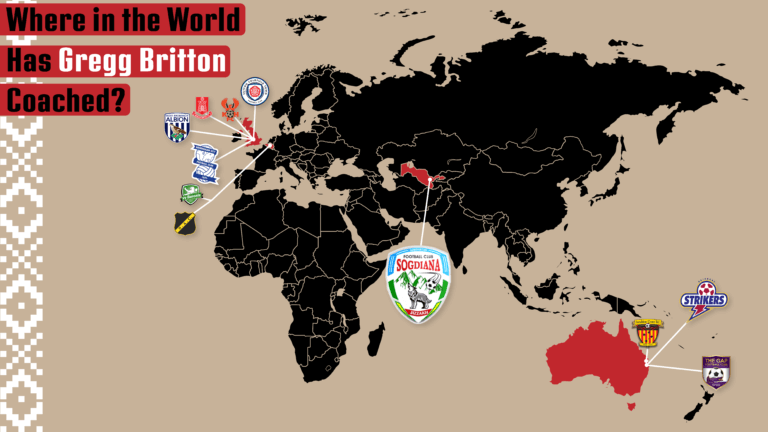
After spells coaching in the Netherlands, Australia, and back home with Birmingham City and West Brom, Britton received a message from former Leicester City manager Micky Adams about a role as Technical Director at an academy in Uzbekistan.
He took it.
The reaction back home was immediate and predictable. “It’s a bit of a worry, because people don’t know what to expect: laws, culture, food, health, all of that,” he explains. “But once I showed them where I’d be and what I’d be doing, they were open and happy… a bit reluctant, but happy.”
What was initially meant to be a short stint in his Technical Director role quickly became something much bigger.
“It was only supposed to be two or three months,” Britton says. “But while I was over there, a friend contacted me about doing the AFC Pro Diploma in Bangladesh or India.”
Instead, almost by chance, he discovered Uzbekistan was launching its own AFC Pro Diploma course within weeks.
“I looked and they were starting theirs in three weeks’ time,” he recalls. “So, I thought: ‘Okay, let’s try it.’ Long story short, I got on it.”
The decision would tie him to Central Asia long after his initial role ended. After returning to England and working with Kidderminster Harriers, Britton spent the next two years flying back and forth to Uzbekistan to complete the qualification.
“It’s not easy travel, trust me,” he laughs. “It’s a hell of a journey, especially going via Istanbul every time.”
But those repeated trips pulled Britton deeper into the region’s football world.
During the course, he met several influential figures, including Uzbekistan’s most-capped player Server Djeparov, former Uzbekistan national team manager Timur Kapadze and Montenegrin coach Ivan Bošković, who was working in Uzbekistan with Bunyodkor at the time.
“We got on really well straight away,” Britton says. “His English was very good, which helped massively.”
Bošković became an important figure for Britton, even helping translate during his final assessment.
“I needed a translator, which again was very challenging, but he helped me through it,” Britton recalls.
The relationship would eventually shape the next step of his career. When Bošković was appointed head coach of Sogdiana Jizzakh, he offered Britton the role of assistant manager in 2023.
Football Is a Universal Language
Coaching in Uzbekistan brought with it a very different rhythm of life and some steep learning curves. “Their language barrier is very limited in some sense,” Britton says. “They speak Uzbek first, Russian second and if you’re fortunate, English.”
“Football is a language in itself,” he adds. “On the pitch, you find ways. Off the pitch? Ordering a taxi, I can’t do that.”
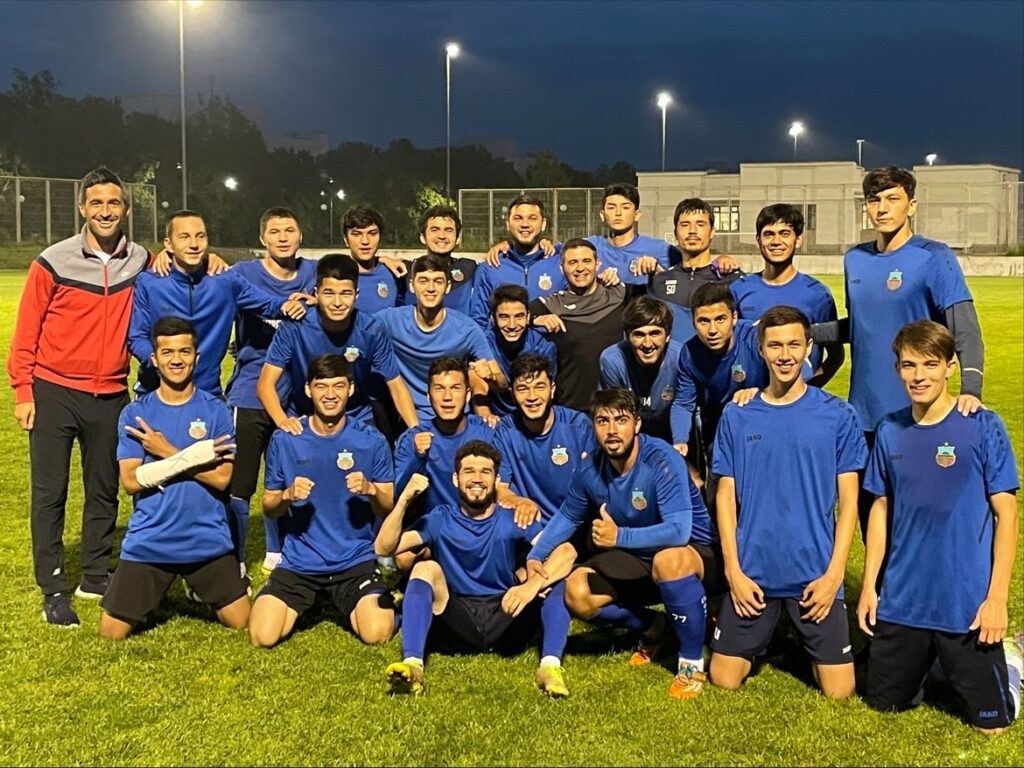
Communication inside the dressing room often became a balancing act between Uzbek, Russian and fragments of English. Older players generally spoke Russian because of the country’s Soviet legacy, while younger players leaned more towards Uzbek. Foreign players and staff from Serbia, Bosnia and North Macedonia frequently became informal translators during training sessions.
Even food became part of the adaptation process. “One of their main dishes is plov, which is lovely, very tasty, but it’s cooked in so much oil,” he laughs. “If you take out the oil, it’d be healthy.”
Britton says adapting to life in Central Asia meant abandoning preconceived ideas about what football abroad would look like. “You can’t go in thinking it’ll be like England or Europe,” he explains. “You have to immerse yourself in the culture and understand how people live.”
Britton quickly found Uzbek football to be a fascinating contradiction: physically demanding and deeply influenced by its Soviet roots, yet full of technical quality.
“They’re very driven by old-school mentality in a sense of speed, strength, physicality,” he explains. “However, there are a lot of very good technical players.”
He also believes language remains one of the biggest barriers preventing more Uzbek players from moving into Western Europe. “If more players spoke English, Spanish or German,” Britton says, “they’d probably have more opportunities abroad.”
A League of Contrasts
When asked where the Uzbek Super League sits compared to English football, Britton admits it is difficult to define because of the huge variation in quality across the division.
“At the top end, you’ve got players like Khusanov, who’s now at Man City, and Shomurodov, who’s played in Serie A and Turkey,” he says. “Then there are players who would maybe fit into League Two.”
“Overall, I’d say somewhere between League One and Championship level.”
That contrast was visible even inside his own dressing room.
“We had about six ex-internationals with over 100 caps between them. You could clearly see the difference,” Britton says. “Our left winger, Ljupco Doriev, and left back, Stanislav Andreev, were superb. Their left foot was just a wand.”
“But then you’ve got players who, honestly, would struggle in the English National League (Division 5).”
One of the people who recognised those same qualities was Spanish fitness coach Carlos Sánchez, now with Greek second-tier side Chania FC, who spent four years working in Uzbek football with Surkhon, Metallurg and Qizilqum.
“Uzbek football is a very physical, high-contact game, dominated by direct attack and rapid offensive transitions,” Sánchez says. “It still maintains its Soviet roots, where the Russian language and style still shape the organisation and development of players and clubs.”
Like Britton, Sánchez found language one of the biggest barriers.
“The predominant language in training is Russian; few players speak and understand English,” he explains. “In the end, it’s about adapting to the context and environment of the country where you work.”
Over time, he found his own way through it. “All these years, I’ve been learning the basic words of football in Russian with the help of foreign players,” he says. “They often understand English better, and then the Uzbek players translate for them into Russian. It becomes a chain.”
Police Escorts and 23-Pass Goals
But there were standout moments. An unforgettable 2-0 away win against Bunyodkor, a team Sogdiana had never beaten away, and a team goal built from 23 passes. “Everything just clicked. It summed up what we were trying to do.”
Another memory, more nerve wracking, came after a 0-0 draw away to Neftchi Fergana in front of 14,500 fans, where the atmosphere turned sour. “There were a few players that were antagonizing the home fans and some of their club officials,” he recalls. “We ended up needing a police escort out of the stadium.”
Some of his favourite moments came through working with younger players, particularly a then-16-year-old talent named Ollobergan Karimov, nicknamed “Guti” because of his flair and technical style.
“We recognised that Guti was a player we could realistically work with,” Britton says. “He helped me with Uzbek and Russian; I helped him on the football side.”
Later that year, Karimov starred at the U17 World Cup, earning Man of the Match in a 2-1 win over England.
“I told him through a translator, ‘Play well, but don’t win!’” Britton laughs. “When he did, I texted him saying I’m not happy with you.”
The Coaches in the Hotel Lobby
The AFC Pro Diploma course back in Tashkent became an unexpected melting pot of football cultures.
Britton stayed in the same hotel as several high-profile coaches, including former Kyrgyzstan national team manager Aleksandr Krestinin.
“We’d sit by the pool, have coffee, lunch, drinks, talk tactics,” Britton says. “The hotel even gave one of the staff the week off just to translate for us.”
Despite the language barrier, the two became close.
“His English wasn’t great then, but his daughter’s an English teacher, sometimes she’d translate for him over the phone,” Britton says, grinning. “He’d always show me photos of the fish he caught in Krasnodar. I don’t even like fishing, but he was so proud.”
Britton also formed a strong connection with Mirlan Eshenov, another coach on the course and the former Kyrgyz U20 and Ilbirs head coach.
“We still speak. He’s brilliant on youth development,” Britton says. “We’d talk about how to bridge the gap between national and club level, how systems like Ilbirs and Olympic help talent progression.”
For Eshenov, having an English coach immersed in Central Asian football culture stood out immediately.
“First of all, when we heard that in our course we would have a participant from England, we were very surprised,” Eshenov says.
Football Had Other Ideas
“English football is a very high level, and to have an Englishman with us was very interesting.”
When Britton eventually returned to England, he spent time working as a senior analyst, but the draw of coaching never disappeared. “I want that day-to-day football vibe again,” he says.
At the time, his future looked uncertain, caught between a difficult domestic coaching market and the possibility of heading abroad again.
“I’d love to stay in England, but it’s tough,” he admits. “Clubs don’t always value international experience. So yeah, I’d go abroad again, though I’d prefer a place with a bit more English spoken.”
A few months later, he was back in Central Asia anyway.
By July 2025, Britton was in Tajikistan, working as a FIFA Talent Coach. Helping strengthen youth development pathways, his role focuses on improving technical standards, supporting national team staff and helping build long-term player development structures across age groups.
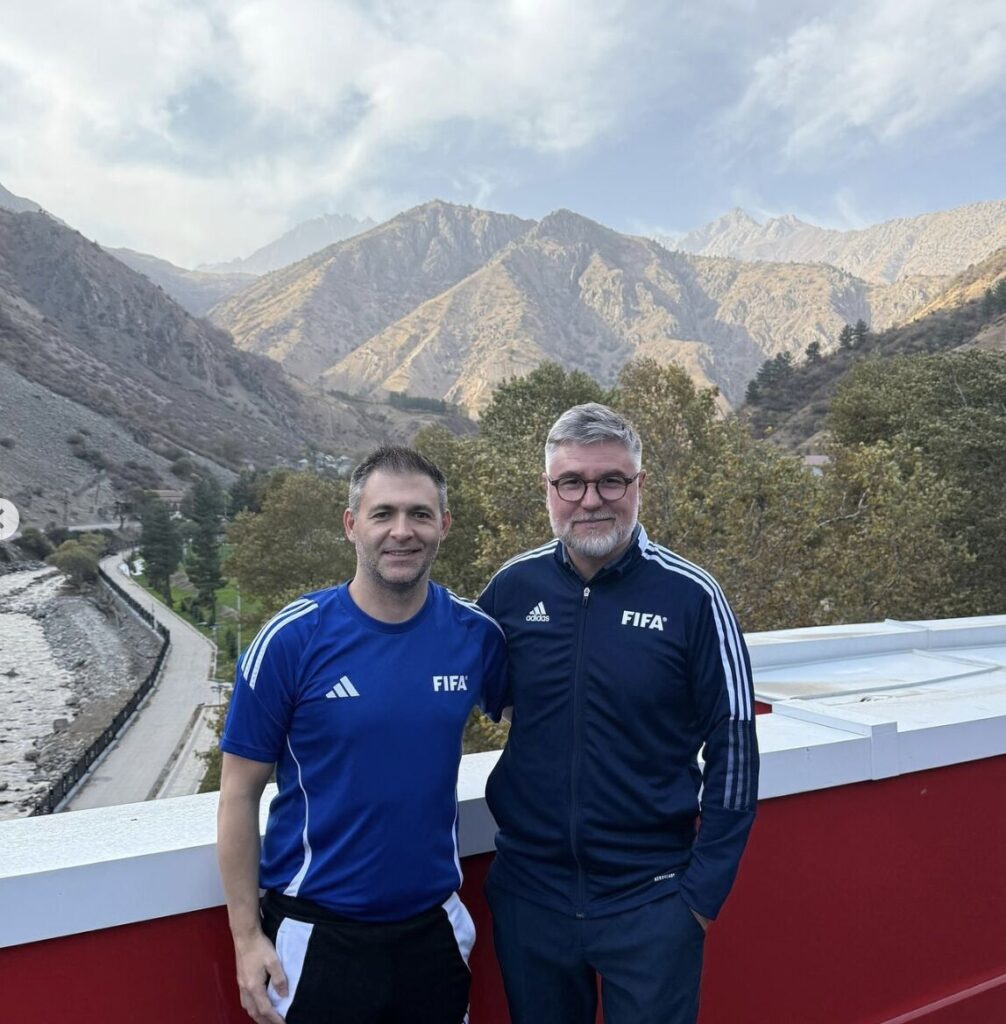
The progress has already been tangible. Last month, Tajikistan’s U17 side won the CAFA U17 Championship, before later securing qualification for the U17 World Cup last week.
For Britton, it feels like a natural continuation of a journey that never really left Central Asia behind.
“It wasn’t easy. The travel, the language, the food, it’s all hard,” he reflects. “But when you immerse yourself, the rewards are massive.”
“And when you’re coaching good players, in a system you believe in, those challenges fade away.”