
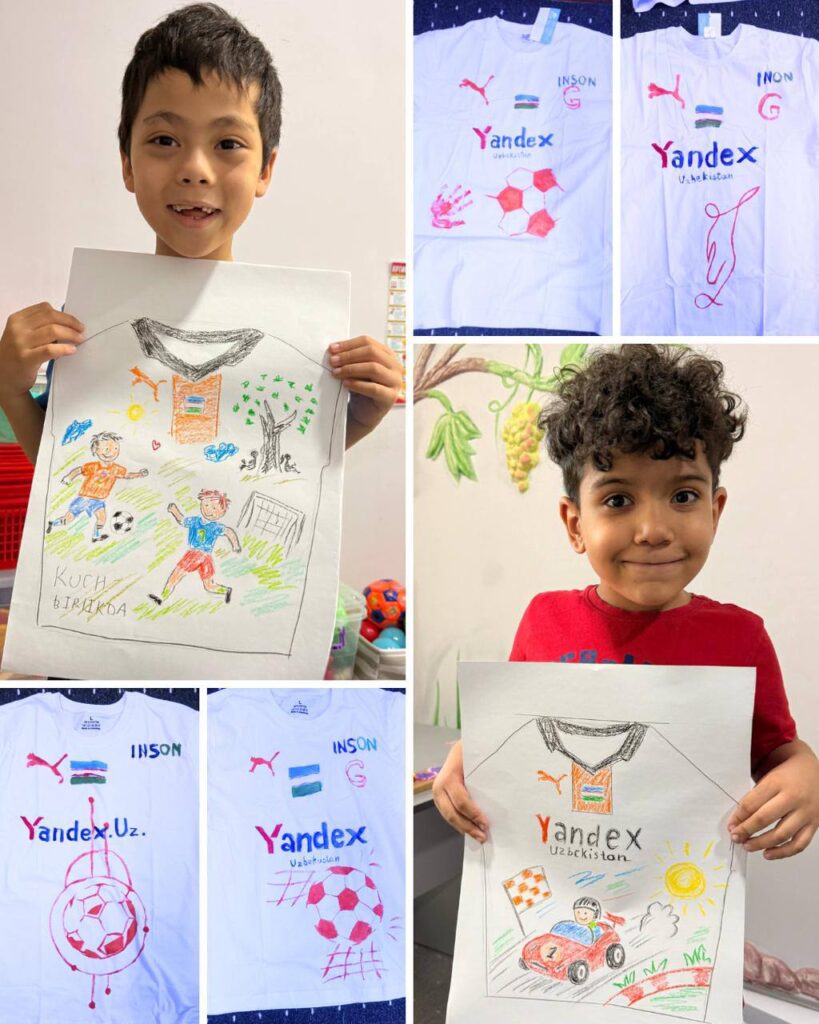
For their Uzbekistan Cup quarter-final against Navbahor, Gazalkent players walked onto the pitch in unusual shirts. The jerseys featured drawings made by children with autism. They were released as a limited edition, with proceeds going to a specialised educational centre to buy equipment and learning materials for the children.
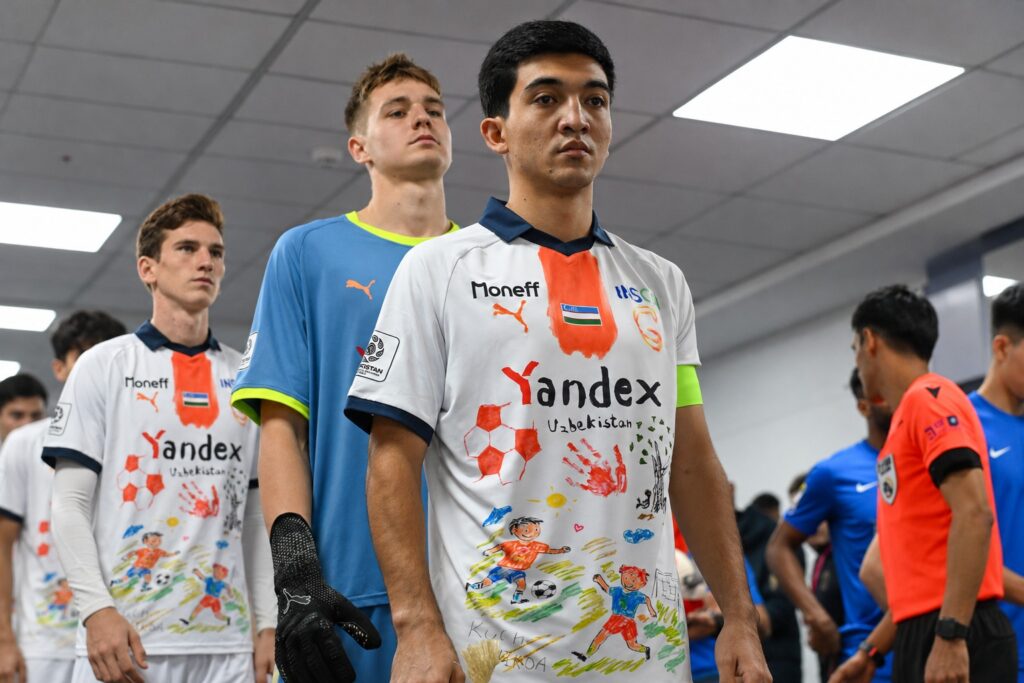
The team itself is remarkably young. The current Gazalkent project is not even a year old. The club, which disappeared from professional football a quarter of a century ago, was revived in December 2025, and the 2026 season became its first in the Pro League. It is a privately funded project with modest resources, built primarily around players at the very beginning of their careers. The average age of the squad is just over 18.
The club began its social programme in the summer. Representatives of Gazalkent and the Professional Football League visited children at the Nurafshon centre in Tashkent. Uzbekistan internationals Abdukodir Khusanov and Behruz Karimov took part in the visit alongside club director Gayrat Khasbiullin.
Charity initiatives are nothing new in Uzbek football. Pakhtakor, the PFL and other clubs have supported children with serious illnesses, raised funds and visited hospitals and oncology centres.
Gazalkent, however, operates on a very different financial scale. The club is privately funded, receives no state support and is still building its own infrastructure. Every such initiative therefore represents a tangible commitment of resources. Yet in its very first season after revival, Gazalkent visited children with autism and later brought the same cause directly onto its match shirts.
For a team made up almost entirely of 17-to-20-year-olds, such initiatives are also part of the culture being built around them. They are learning how to compete at professional level, but also to notice the people around them and feel responsibility towards those who need support.
The club chose one of the biggest matches of its debut season for the campaign — the Uzbekistan Cup quarter-final against Navbahor. And it chose Namangan, where football traditionally attracts huge crowds: almost 18,000 spectators watched the game at the Central Stadium.
Navbahor are among the top three in the Super League, while six of their players were included in Uzbekistan’s extended national-team squad in the autumn. The team is coached by Timur Kapadze, the man who first guided Uzbekistan to their maiden Olympic football appearance and later helped the senior national team qualify for their first-ever World Cup.
Gazalkent lost 3-1, bringing their first Cup run to an end. Before reaching Namangan, however, they had won their group, finishing above two Super League clubs — Lokomotiv Tashkent and Dinamo Samarkand — before knocking out another top-flight side, Kokand-1912, in the round of 16.
At the same time, Gazalkent remain among the promotion contenders. With only a few rounds left in the season, the club sits fourth in the Pro League and remains in the race for a place in the Super League.
When a 20-year-old is almost a veteran
Gazalkent was built around emerging players from the outset. They became the core of the first team and immediately found themselves competing in the Pro League, the Uzbekistan Cup and a promotion race.
The club’s leading scorer in the league is 20-year-old Abdurakhmon Abdullaev, with seven goals. By the standards of this squad, he is almost a veteran.
The leading assist provider is 17-year-old Sukhrob Sadirzhonov, who has five assists and three goals. A Pakhtakor academy graduate and Uzbekistan youth international, he is now a regular member of Gazalkent’s first team.
The players’ routes have already begun to stretch far beyond Uzbekistan.
Eighteen-year-old Vladislav Nabatov arrived from Russia. He scored more than 60 goals in youth football for Shinnik and attracted interest from Rostov, but his career then took a very different path. When Gazalkent were unable to register him for official matches because of his age, the club sent him to Argentina. He spent several weeks training with San Lorenzo’s first team.
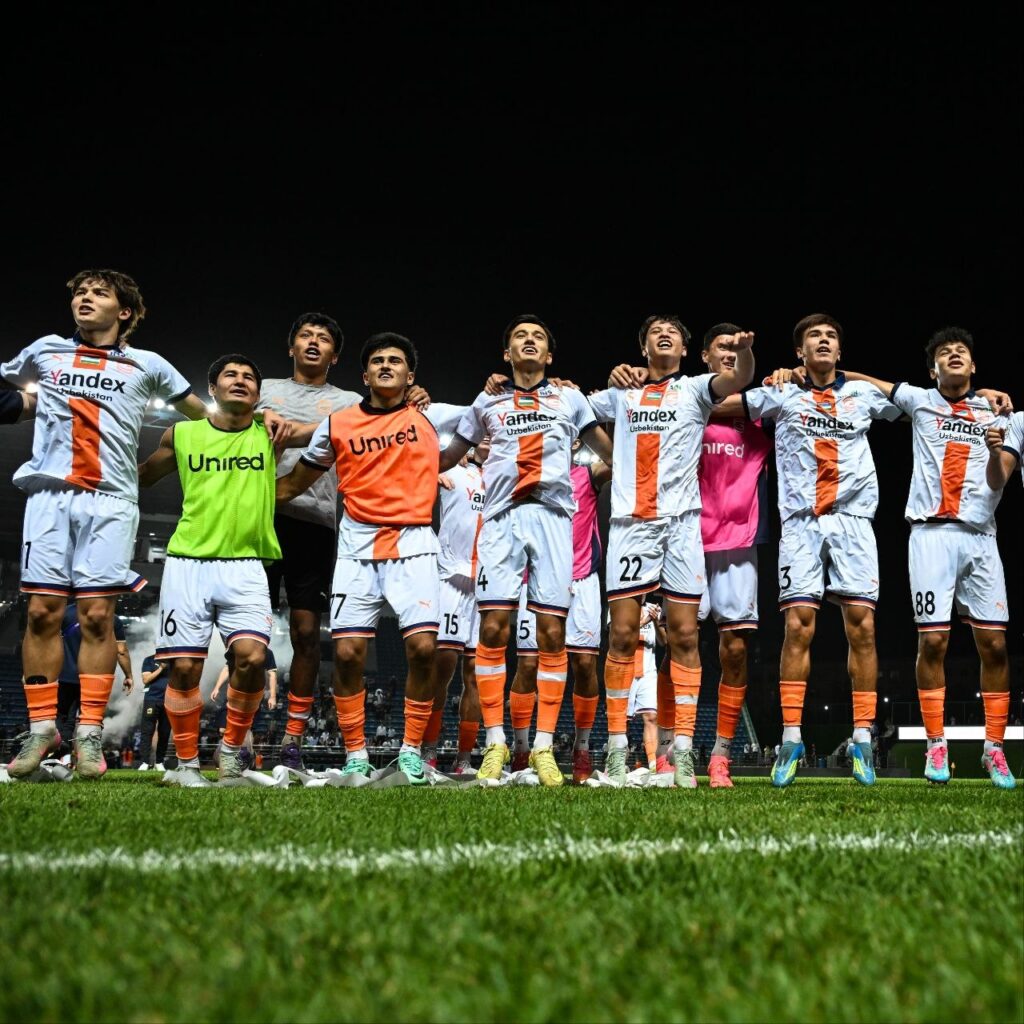
Nabatov returned to Uzbekistan in the autumn, began playing regularly in the Pro League, started scoring and was named in the starting XI for the quarter-final against Navbahor.
Nineteen-year-old Diyorbek Tadzhiev spent several weeks in Portugal during the season, training with a club from the country’s top division. The name of the club was not disclosed. The trip was regarded as preparation for a possible winter move, and the tall central midfielder is expected to have another opportunity in Europe soon.
A month later, 17-year-old centre-back Mukhammadaziz Ruziboev travelled to Spain. According to Uzbek sports media, he spent time with Villarreal. No transfer was completed; the visit was understood to be an introduction and trial. Whether he returns to Spain remains unclear, but Eurasia Football understands that clubs from several other strong European leagues are also monitoring him. For now, he is back with Gazalkent.
There have already been actual moves abroad as well. Gazalkent signed 18-year-old Asilbek Abdurasulov from the Bunyodkor academy for around 280 million soums ($23,500). Just a short time later, he joined Astana on loan, made several appearances in the Kazakhstan Premier League and Cup, and returned to Uzbekistan in the summer after gaining experience with one of Kazakhstan’s biggest clubs.
Another example is 20-year-old Lazizbek Mirzaev. Gazalkent reportedly paid around €70,000 to sign him from Spanish side Leganes. He later spent time on loan at Lokomotiv Tashkent and now plays for Gazalkent’s first team. It was Mirzaev who scored their only goal in the quarter-final against Navbahor.
Mirzaev has regularly been called up to Uzbekistan youth national teams. He received positive reviews during his time in Spain, but an injury prevented him from establishing himself there. He has since recovered and remains on the radar of European scouts.
Nineteen-year-old David Belyavskiy was brought in from Germany. He came through the RB Leipzig system, made more than 20 appearances at U17 level and later played for Lokomotive Leipzig’s youth side. He has also been called up by Uzbekistan at youth level. He now plays regularly for Gazalkent in the Pro League.
Timofey Tolstenev is another unusual case. The 17-year-old Russian goalkeeper, who stands 197 centimetres tall, trained with Gazalkent for almost a year but could not play officially because of FIFA regulations governing international transfers of minors.
Once clearance arrived, he went straight into the team. Only a few matches later, Tolstenev was in goal for the Uzbekistan Cup quarter-final against Navbahor.
Before moving to Uzbekistan, he trained in Russian football academies. Gazalkent are already considering the possibility of him obtaining Uzbek citizenship and building a long-term career in the country. Eurasia Football understands that following reports about Tolstenev in several Russian media outlets, clubs from the Russian Premier League and First League have shown interest.
At the opposite end of Gazalkent’s age spectrum is 24-year-old Russian Ivan Korshunov. By this team’s standards, he is almost an aksakal.
Korsh, as he is known, came through the Zenit academy and played in Russia’s professional leagues, but became widely known through media football with 2DROTS and other Media League teams. His famous “oboyudno” phrase has long since become a meme among young Russian football fans.
After he scored for Gazalkent and a video clip spread across social media, Korshunov suddenly found himself among the ten most-trending footballers on Transfermarkt.
“Some guy from Gazalkent — right after Ronaldo and Mbappe!” he later joked.
Gazalkent is not about huge salaries. Players come here for a chance to move higher — and that chance is real. Some chose the project despite having more lucrative offers elsewhere because they preferred a club where they could play regularly and keep developing.
For Uzbek football, that model is particularly valuable given the long-standing difficulties many players face when moving from youth football into the senior game. Promising academy graduates can otherwise lose several crucial years at exactly the stage when they most need competitive football.
In Europe, this approach has long become a specialisation in its own right. One of the clearest examples is Danish club Nordsjaelland, where teenagers are quickly trusted with places in the first team and significant playing time. In the 2025/26 season, 19 teenagers appeared for the club, while Nordsjaelland still finished third in the Danish Superliga.
Mikkel Damsgaard, Mohammed Kudus, Andreas Schjelderup and others have all moved from the club to bigger stages in European football. Belgium’s Genk has followed a similar philosophy for decades, developing players such as Kevin De Bruyne, Thibaut Courtois and Leandro Trossard.
Gazalkent do not yet have academies, history or resources on that scale. But their own talent conveyor belt is already running: find a young player, give him regular first-team football, expose him to a higher level — and make room for the next one.
Khasbiullin: from Khusanov to his own club
Behind the project is Gayrat Khasbiullin, founder of Football Group and director of Gazalkent.
The most famous client of his agency is Abdukodir Khusanov. He left Uzbekistan at a young age, moving first to Energetik-BGU in Belarus and then to Lens in France before joining Manchester City.
In 2026, Football Group completed another notable European move when 19-year-old Behruz Karimov joined Swiss side Lugano, where he quickly began earning regular first-team minutes.
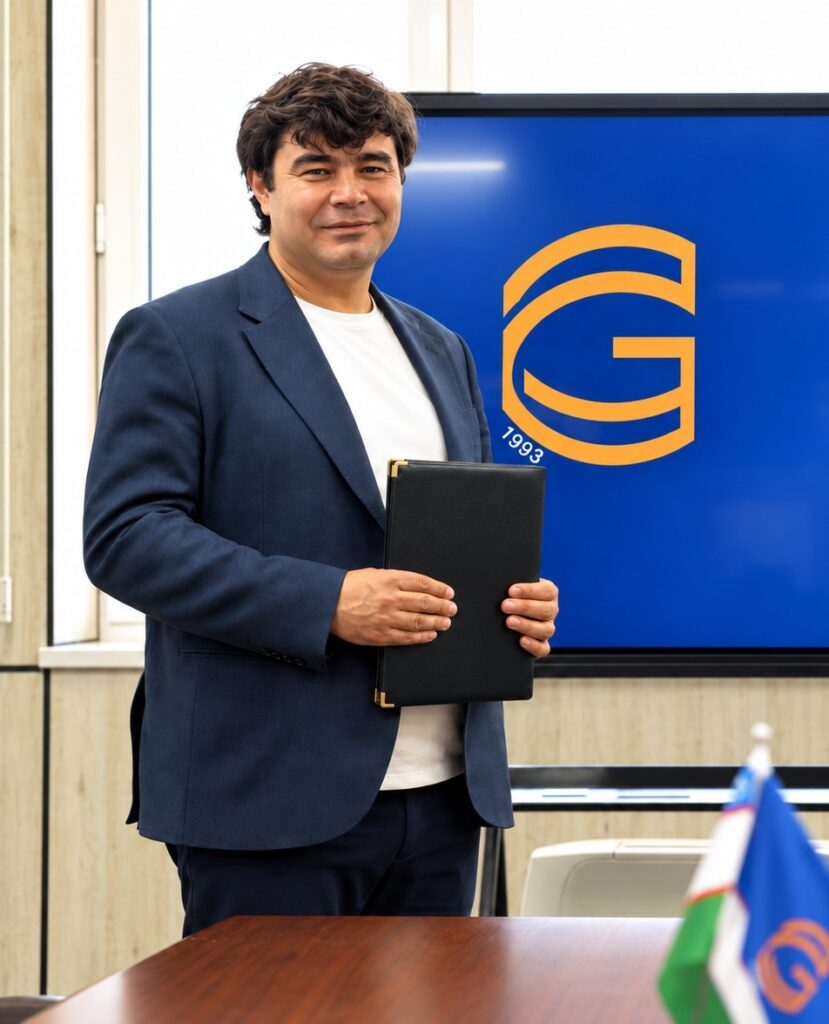
Working with a limited budget of its own, Gazalkent has gradually assembled a network of partners around the project.
In the spring, Yandex Uzbekistan became the club’s title sponsor, supporting the training process, infrastructure and development of young players.
INSON serves as Gazalkent’s insurance partner, providing coverage for players during training sessions, matches and trips abroad.
Ahead of the Cup quarter-final against Navbahor, British fintech company Moneff also joined the project.
Gazalkent have also attracted support from within their own region, with Hydrolife Bottlers — one of Uzbekistan’s leading drinking-water producers — based nearby in the Bostanlyk district.
Khasbiullin continues to look for potential investors as the club expands.
Gazalkent itself, however, existed long before Khasbiullin. The original club was founded in 1993 and played in Uzbekistan’s First League during the 1990s. Its ranks included figures who would later become prominent names in Uzbek football, among them Ravshan Ermatov and Vadim Abramov. After the 2000 season, the club disappeared.
The revival came a quarter of a century later. A new project was announced in December 2025, and the club soon received a place in the Pro League.
When assessing the application, the PFL examined the club’s budget, plans to reconstruct the stadium, development of a youth school and wider infrastructure. Gazalkent also announced plans to create academy branches across districts of the Tashkent Region and gradually prepare for AFC licensing requirements.
The club’s own stadium remains tied up in a legal issue. The ground in Gazalkent does not belong to the club, making major private investment in reconstruction impractical for now. Gazalkent are preparing the necessary documentation and going through the state procedures required to privatise the site.
“It is roughly the same as renovating your neighbour’s apartment: first you need to acquire ownership of it, and only then can you invest money and start the renovation,” Khasbiullin explains.
According to him, the stadium has received little proper attention for around 26 years, while the land and permanent structures cannot simply be transferred into private ownership without the required legal procedures.
The club is working with government bodies and hopes to obtain ownership within roughly a year. Khasbiullin points to Pakhtakor as a comparison, noting that the Tashkent club has been dealing with a similar issue for three or four years.
Once the paperwork is complete, Gazalkent intend to begin a full reconstruction.
For now, the team represents Gazalkent and the Bostanlyk district but plays most of its home matches in Tashkent. In Gazalkent itself, supporters are already waiting for their club to return. A fan base has begun to form. What remains is to build the team a proper home.
Tadzhiev and Gadzhiev: two generations of mentors
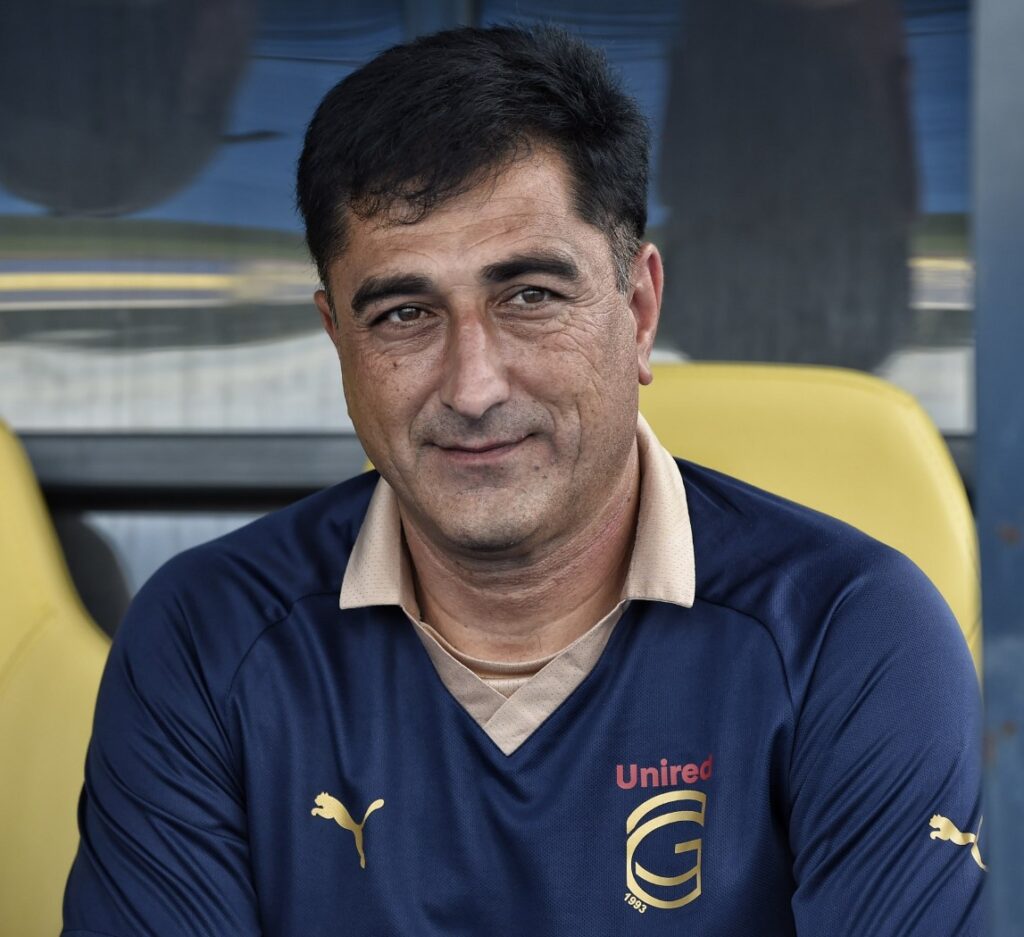
The first team has been coached since the revival by Zayniddin Tadzhiev. A former Pakhtakor and Uzbekistan striker, he himself reached professional football relatively late, later played abroad and devoted much of his coaching career to developing younger players.
Before Gazalkent, he worked within the Odil Junior system and with youth teams.
At the start of the season, Tadzhiev spoke about preparing footballers for the next level. In the middle of the campaign, he had no hesitation in allowing his own son Diyorbek to spend several weeks in Portugal.
Tadzhiev has managed to build strong relationships with a very young group while also producing results.
This autumn, another generation of coaching experience joined the project.
Gadzhi Gadzhiev, now 80, is set to oversee player and coach development from the 2027 season onwards. He is already reviewing training plans, studying the team’s work and discussing potential changes with the coaching staff.
During his career, Gadzhiev worked with the national teams of the Soviet Union and Russia as well as clubs including Anzhi, Krylya Sovetov, Saturn and Amkar. He was part of the Soviet Olympic staff that won gold at the 1988 Games and has spent decades working on the development of players and coaches.
Tadzhiev remains the head coach. Gadzhiev becomes the senior mentor of the wider system.
In Namangan, the story acquired an interesting twist.
Sitting on the opposite bench was Kapadze, who several years earlier had led Uzbekistan’s state-backed youth project, Olympic. The club was built around players of Olympic age, climbed from the Pro League into the Super League and later supplied the core of the Uzbekistan U23 side that qualified for the Olympics for the first time.
Now Kapadze was facing something resembling a privately funded counterpart to that model — even younger and built largely around youth internationals, wearing shirts covered with children’s drawings.
And many of the players themselves are still almost kids.
Yet they have already reached the Uzbekistan Cup quarter-finals and are now trying to take their club into the Super League, while remaining ordinary young men who are still growing in the right environment — both as footballers and as people.