
For years, Farrukh Marofiev’s career was closely tied to Khujand. He worked with the first team, helped shape recruitment and the club’s structure, and was involved in plans for a new training base. Heading into 2026, everything suggested he would remain with his hometown club.
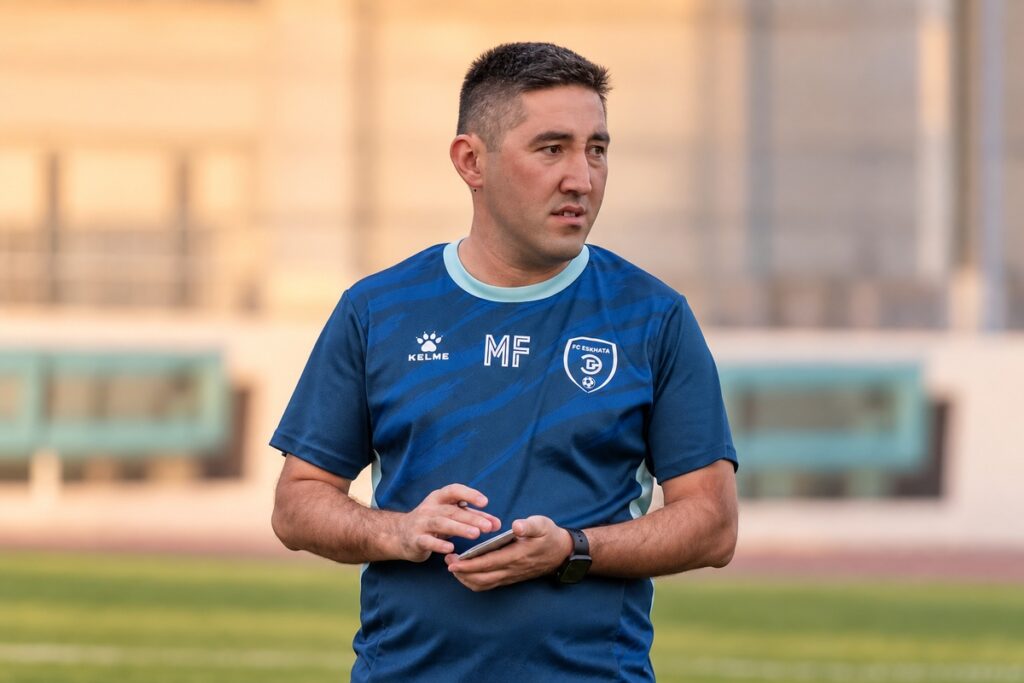
Instead, shortly before the season began, an unexpected reshuffle changed everything. Marofiev left Khujand and took charge of city rivals Eskhata, the club known as the Bankers, with barely two weeks to prepare for the new campaign.
Eurasia Football spoke to Marofiev in May, while the season was still unfolding.
Since then, Eskhata have reached the Tajikistan Cup semi-finals, while Khujand have advanced to the final, where they will face Sardor on 18 October in the club’s 50th anniversary year.
In a wide-ranging interview, Marofiev discussed his departure from Khujand, the spells of Alexander Krestinin and Milan Milanovic, financial and management problems, youth development in the Sughd Region, infrastructure, Uzbek players in Tajik football and the legacy left at Eskhata by Igor Surov.
‘I never expected to leave Khujand’
The move to Eskhata came together only two weeks before the start of the season.
Until then, everything had been pointing towards another year at Khujand. Around 70 per cent of the squad had already been assembled, largely with local players, and preparations for a new cycle were under way.
“I honestly didn’t expect to leave Khujand at all. A decision over the club director was supposed to be made in December, but apparently they either didn’t find anyone or nothing had been finalised.
“So I was completely focused on Khujand.”
With no changes made in December, he assumed he would be staying.
“A new coach, a new squad – everything was going according to plan. Then suddenly there was a reshuffle.”
The timing made it difficult to immediately throw himself into another club job.
A two-week spell in Dushanbe with Tajikistan’s U20 national team gave him time to consider what came next. Offers arrived from elsewhere in the Tajik top flight, including two head-coach positions, as well as opportunities to work as a vice-president or senior coach.
The decision was discussed with his father and two uncles, all three of whom have spent their lives in football.
Eskhata eventually stood out because of the project being offered.
“What I liked most was the emphasis on developing young local players.
“They explained that if we played well and got results, the club could set higher targets in the future. Then the budget would change and there would be an opportunity to bring in more expensive players, including foreign players.”
Even with a new challenge ahead, leaving Khujand was difficult.
“Anyone who has been through Khujand finds it hard to leave, whether things end well or badly.
“It is still difficult to leave your home and move to another team.”
Why Krestinin’s Khujand project stalled
Before his own departure, much of the work around building Khujand’s squad had passed through him.
That included the period under Alexander Krestinin, whose arrival was supposed to mark a step forward not only on the pitch, but in how the club operated behind the scenes.
“When you invite a specialist of that level, it requires a completely different approach to all the details – administration, medicine and the organisation of the work in general.”
That wider change, in his view, never fully arrived.
“We expected everything to be different, but unfortunately it wasn’t.
“They don’t always understand everything there, and when specialists are chosen and invited, they don’t always consult the people who actually work inside football.”
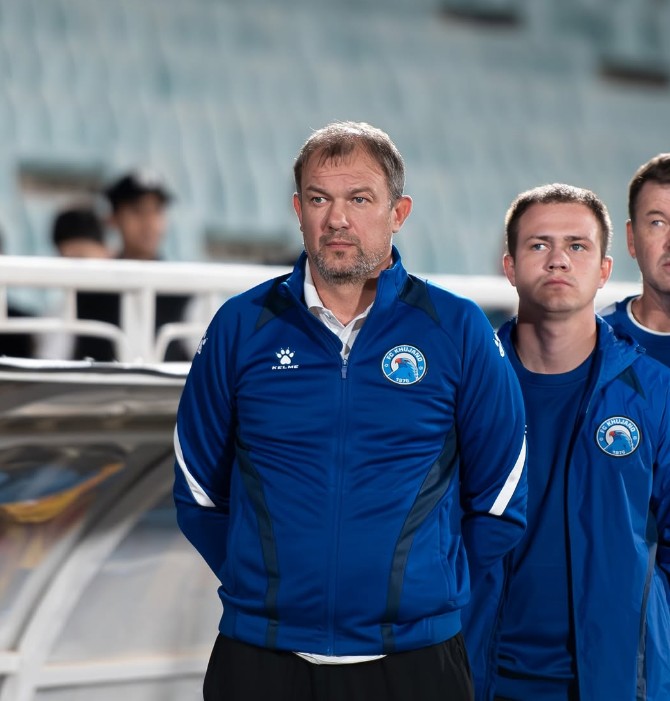
Alexander Krestinin and his son Kirill standing for the national anthem before a Khujand matchKrestinin eventually left despite interest from the head of the Sughd Region in keeping him at the club.
The decision, Marofiev believes, came largely from the coach himself.
“Perhaps he didn’t see enough room for the club to grow, and that was important to him.
“I was sure that after his arrival the attitude towards everything at the club would change, but it didn’t.”
There were mitigating circumstances on the football side.
Krestinin arrived during the summer transfer window, with a large number of players coming in and little time to build a settled team. Even so, there were signs of progress.
“We started well. In many matches Alexander Sergeevich was simply unlucky.
“We went out of the cup on penalties, and there were league games where we just lacked a little fortune. But you could already see that the team had started to play differently.”
Khujand were fifth when he arrived and finished the season in the same position, although expectations had been higher. The target in the league had been a top-three finish, alongside a stronger cup run.
For Marofiev, those results did not make the appointment a mistake.
“If you compare what was supposed to be provided to him before he arrived with what was actually provided, his appointment definitely cannot be called a mistake.
“On the contrary, it was a step forward for the club in many areas.”
He is equally positive about the coaching work itself.
“The training process was at a very high level. I also want to highlight the professionalism of his staff.”
The problems were instead found in some of the support around that work.
One example involved specialist tracking equipment from Russian company B-SiGHT. Negotiations had progressed to the point where the paperwork was prepared and only signatures were required, but the plan was never completed.
“We waited and waited, but in the end the sensors were cancelled.
“There were some other things as well that we weren’t able to implement.”
The problems went beyond results
Issues around Krestinin were not limited to recruitment or results.
There were also financial difficulties. According to Marofiev, payments funded directly through the state budget were not the problem; delays instead affected the portion that depended on sponsors.
“If you invite a specialist of that level, the finances have to be in order.
“That was what I expected. If we had decided that we needed a coach like that, then I assumed the whole approach would change. Unfortunately, a lot remained the same.”
For him, the league position was ultimately a consequence of those wider problems rather than the sole measure of Krestinin’s work.
“The result is already the consequence of many things. I was satisfied with Alexander’s work and I completely understand why he didn’t want to continue.”
Milanovic and a club under strain
Khujand turned next to Milan Milanovic, another experienced coach from abroad, but many of the same pressures remained.
By the time Eurasia Football spoke to Marofiev in May, he felt Milanovic already looked considerably more worn down than when he had arrived.
“He has good reviews everywhere. But during the season I could see that he had become very tired from the constant meetings and discussions. To be honest, I expected that.”
After one defeat, Milanovic offered his resignation. The head of the Sughd Region refused to accept it and told him to continue.
“You could see how exhausted he was compared with the way he arrived at the beginning of the year. Psychologically, it became very difficult for him.”
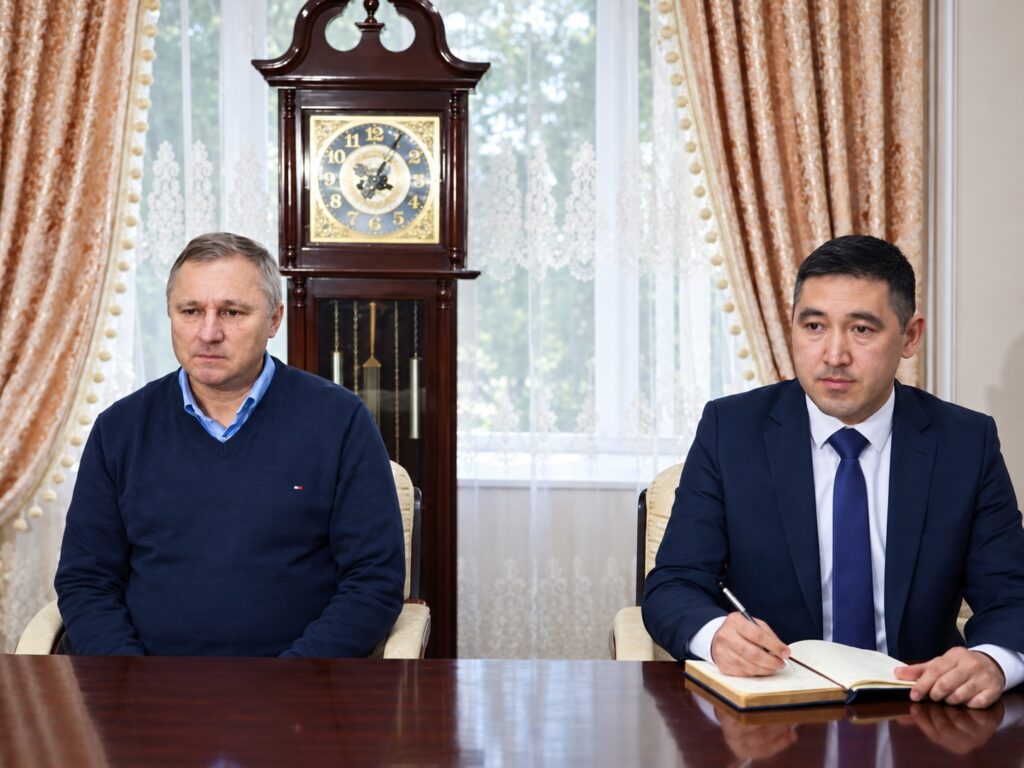
The frustration was particularly significant because the squad had originally been built with ambitions of challenging for the title.
Preparations had gone to plan and the season started well. Then payment delays began.
“The atmosphere became tense. There were unhappy people among the players and among the staff.
“By April, problems had appeared that should not exist if you want a team to fight for the championship.”
At that stage, Khujand had taken only one point from four matches and lost three in succession.
The change in Milanovic was noticeable.
“He arrived extremely motivated, with a huge desire to work. Afterwards, his condition was completely different.
“I understand him perfectly as a coach.”
Despite having moved across the city to Eskhata, the situation remained personal.
Khujand was still his hometown club and one he had spent years helping to build.
‘A team cannot run itself’
The deeper problem, in his view, was an assumption that once the players and coaching staff were in place, the rest would take care of itself.
“Many people think a team can work by itself. But football doesn’t work like that.”
The details away from the pitch matter just as much.
“You constantly need to talk to people. Sometimes you need to speak with a player’s family, solve problems with housing and everyday life.
“That applies to foreign players and locals. When all of that disappears, people’s attitudes change and the team starts to fall apart.”
Milanovic had been appointed with Marofiev involved in the process, and assurances had been given over the club’s finances.
Previously, he says, a hypothetical $1million budget might have been only partly guaranteed, leaving the club to find the remainder elsewhere.
For 2026, the arrangement appeared more secure: around 70 per cent was expected to come through the state budget and 30 per cent from sponsors, with the overall budget formally approved.
“For me, that meant the intentions were serious, especially because it was the anniversary year.
“Unfortunately, things didn’t quite go that way.”
He added that the delays had at least become shorter, with two months of outstanding payments sometimes cleared together.
There was inevitably an unusual dynamic once Eskhata moved above Khujand in the table.
“Of course it was nice. We are competing too. Why should we be at the bottom?”
But his involvement with Khujand now has clear limits.
He still feels a responsibility towards the coaches and players brought in during his time there, but accepts that Eskhata’s management would be entitled to object if he became too involved in another club’s affairs.
“Without being asked, I don’t interfere and I don’t call anyone. If they need help, I’ll always be happy to help.”
Asked what Khujand most needs to change, his answer again returned to structure rather than results.
The club has no separate sporting director, leaving a considerable amount of responsibility with the executive director.
“The first thing is the approach inside the club. The second is that the director’s work is extremely important.
“One person has a very difficult job, but when you make that appointment you have to understand who you are putting there and what responsibility comes with it.”
There is also frustration over whose advice carries influence.
“Unfortunately, sometimes outside opinions and advice from friends are listened to more than the people who have actually worked inside the club.”
How Khujand’s academy feeds Eskhata
The relationship between Khujand and Eskhata extends well beyond their first teams.
Khujand operate age-group sides from under-10 to under-18 level. Before that, much of the early development in the city takes place through private football schools, with the club’s coaches then identifying the most promising players.
As the age groups progress, recruitment widens beyond Khujand itself to the rest of the Sughd Region.
Around 40 per cent of those who pass through the system eventually reach professional football in some form, according to Marofiev, whether at Khujand, Eskhata or elsewhere in Tajikistan’s top flight.
That influence is particularly visible at his current club.
“If you take the current Eskhata squad without the foreign players, around 70 per cent of the guys have, in one way or another, been through the Khujand school.”
The two clubs, however, offer very different environments for young players.
Khujand are traditionally expected to compete near the top of Tajik football and therefore recruit heavily, including from abroad. The priority is to assemble the strongest possible first team rather than guarantee places for local academy graduates.
Coaches still try to promote their own players, but the jump from youth or reserve football to the Tajik top flight can be significant.
Eskhata can offer another route.
“A player who has outgrown the reserve team but still isn’t getting into the first team understands that he can stay and wait for his chance. Those who are mentally ready will wait. Those who aren’t will say: ‘I’m leaving.’”
For local players, there is less pressure at Eskhata and often more room to establish themselves.
“Here, the pressure on local players is much lower, so it is easier for them to show what they can do.
“But unfortunately, there aren’t many players who are genuinely prepared to be patient and fight for their place.”
Why Eskhata look so often to Uzbekistan
Eskhata’s reliance on local players has never stopped the club looking across the nearby border for reinforcements.
That approach dates back to 2021, when the club reached Tajikistan’s top flight and already had three or four foreign players in the squad.
The attraction of the Uzbek market is largely practical.
“The main reasons are proximity and cost.”
Bringing in a player from farther afield can mean flights, accommodation and other additional expenses.
An Uzbek player, by contrast, can cross the border, return home relatively easily when needed and often adapt more quickly to life in northern Tajikistan.
“The languages are different, but it is still easier for people to understand each other. The adaptation is quicker.”
That does not mean Eskhata intend to rely on one market indefinitely.
There is also interest in gradually widening recruitment, with Russia mentioned as another country where useful players could be found.
What Igor Surov left behind
The current Eskhata side has also retained elements of the work done by Igor Surov, who coached the club before later moving into Tajikistan’s national youth setup.
His influence is still visible, according to Marofiev.
“I analysed how the team played under him and I consider Surov a good specialist for our level.”
The pair also studied together on their coaching courses.
“On the A Licence course, he was basically number one in the group. On the Pro Licence course, he was also among the best.”
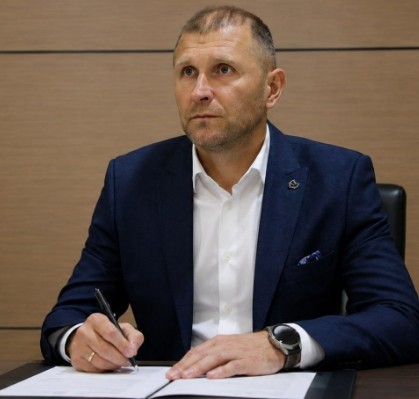
Surov’s later career did not develop exactly as hoped, but the respect remains.
“He was not afraid to take on the challenge from Uzbekistan, and I think he will definitely continue working.”
More important than any individual result, though, is the idea that a coach should leave something behind.
“After a coach leaves, something should remain at the club – a system, an approach, specialists, some trace of his work.
“If that remains, then it means the person really did a good job here.”
Some members of the previous staff are still helping the team, while one injured young player with a coaching licence has also been brought into work on the pitch.
For the Eskhata coach, that is part of the same principle: developing people inside the club rather than starting again from zero every time the staff changes.
‘The time has already come. You need to learn now’
His own development has continued alongside the work at club level.
Marofiev has now completed his Pro Licence, although paying for the course required a significant personal commitment.
“I took out a bank loan because I understood that I needed it for my career.
“Yes, I have to repay the loan, but now I have the licence. If you really want to develop, I don’t think you can use money alone as a reason not to study.”
The cost could be paid in instalments across individual modules rather than all at once, making the course more manageable.
One of the biggest influences on that decision was his mentor, Usmon Toshev, the experienced Uzbek coach who has managed the national teams of Tajikistan and, more recently, Afghanistan, as well as clubs including Nasaf, Andijan and Bukhara.
“I used to say: ‘It’s too early for me. I’m young, my time will come.’
“He told me: ‘There is no such thing as “your time will come”. The time has already come. You need to learn now.’”
The advice was not to wait for the perfect moment.
“He said: ‘You’re a director, you might be called into different jobs, but you have this opportunity now, go and study.’
“I’m very grateful to him for that push.”
Why youth football in Sughd needs reform
That emphasis on education extends to how he views player development across the Sughd Region.
The biggest concern is what happens when talented youngsters make the jump into senior football.
“When players come into the first team, there are still too many gaps in their development.
“You want to keep teaching them, but in the top division there is no time. There are different objectives there. Ideally, the player should arrive ready.”
Part of the problem lies in coaching, but infrastructure is another major limitation.
There are plenty of small artificial pitches across the region, but far fewer full-sized natural grass fields. Even when those facilities exist, private academies do not always have regular access to them.
“That’s why youth football in our region needs serious reform.”
Plans for a more coordinated approach have been discussed before.
The idea was to bring together top-flight clubs, youth schools and others involved in football development to identify common problems and work on solutions collectively.
The difficulty, he argues, is that flaws in a young player’s development can remain hidden for years.
“At youth level, many of the shortcomings aren’t visible. You go abroad, win a tournament and everything seems fine.
“But when the transition from youth football to the senior game begins, a huge number of gaps suddenly appear.”
That raises a more uncomfortable question: why do so few academy players ultimately reach first-team football at a high level?
The issue has been raised with the regional authorities, but Marofiev says discussion has not always translated into meaningful change. Pasted text
There are signs of progress.
Work has been planned around the redevelopment of Sports School No.1 and the creation of a dedicated city football academy, projects he says have the backing of the head of the Sughd Region.
Keeping players in the game at 16 or 17 is another challenge.
Wages have risen significantly over the past two seasons, with local players now earning around $1,000 (£750) a month on average, according to Marofiev.
“That is already a good motivation to continue a career. But you need a system so talented players don’t disappear.
“I’m not saying this as criticism of youth coaches. The situation itself simply needs reform.”
Building the facilities Khujand never had
Before leaving Khujand, he had also been closely involved in plans for the club’s first proper training base.
At the time of the interview, the project was expected to be completed around September. The pitch had already been laid, although significant work remained on the surrounding facilities.
“Khujand had never had a full training base before.
“I really hope that in the anniversary year the club finally gets one.”
The training ground and planned city academy are separate projects.
Khujand’s base was designed for the club itself, while the academy is planned close to the city’s main stadium and other sporting facilities. Proposals have also included an indoor pitch.
The details mattered to him.

Concept design for Khujand's planned training baseWhile helping design the Khujand base, he repeatedly pushed for more accommodation, around 50 beds, so the first team and reserves could stay there during training camps.
“I was going to the architects several times a week and asking them to work through everything in detail.”
The plans also included a gym, sauna, swimming pool, laundry and other facilities designed to make the complex more than simply a training pitch.
Nutrition was another priority.
“You can’t give children the proper training load without it. Food and water aren’t small details.”
He recalls former coach Andrey Pavlovsky being so strict on the issue that a youngster arriving without even a bottle of water could be prevented from training.
A dedicated base, he argues, makes those standards far easier to manage consistently. Pasted text
Eskhata have space to pursue something similar in future.
The club owns a site containing a roughly 40-by-60-metre pitch and additional land where a more complete training complex could eventually be developed.
For now, though, those plans have been put on hold.
“Eskhata have what you could loosely call a base now, but it is still a long way from the Khujand project.”
‘A return to Khujand is possible in the future’
Despite everything that happened, the connection with Khujand has not disappeared.
A return one day is not being ruled out, even if there is no suggestion it will happen soon.
“In the future, maybe. Right now all my thoughts are with another job, but I still care about Khujand.
“It is my home club, almost like family. That is why leaving was so difficult.”
He can even imagine the possibility being many years away.
“Maybe I won’t return soon, perhaps in ten years. It’s impossible to say now.”
For that relationship to be renewed, though, he believes the environment around the club would need to change.
His criticism is not aimed directly at the head of the Sughd Region, whom he describes as genuinely interested in football, but at the advice and decision-making surrounding him.
“The problem is that people around the head of the region often listen more to outsiders than to those who actually work in football.”
The decision not to accept Milan Milanovic’s resignation was, in his eyes, potentially a sign that attitudes were beginning to shift.
“Maybe he already understood that the problem was not only the coach, but a lot of different details.”