
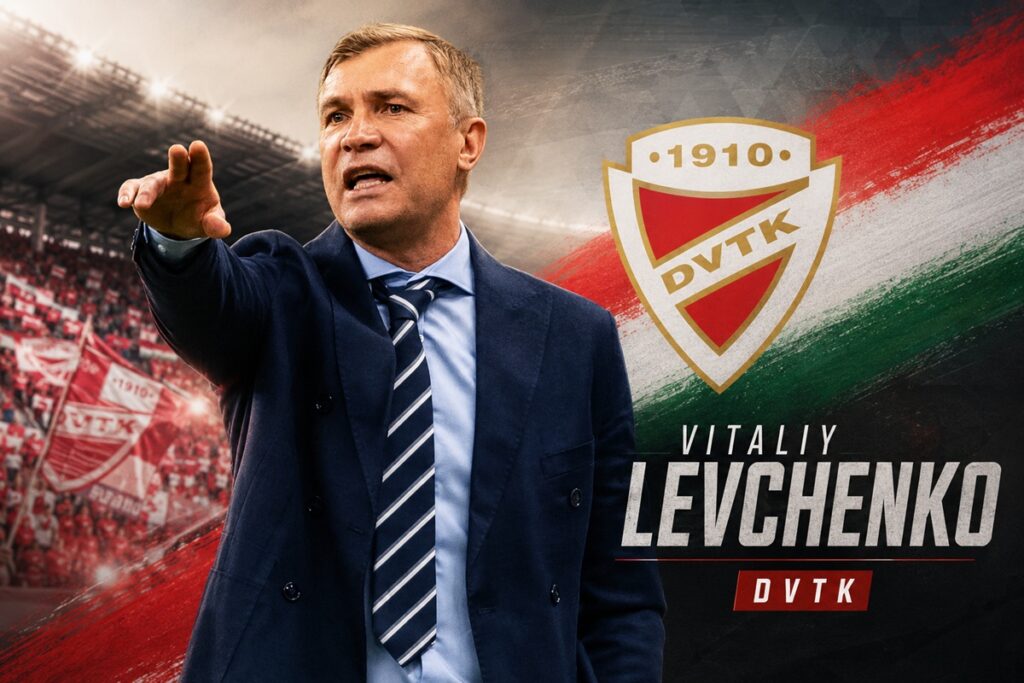
Vitaliy Levchenko is one of the coaches from the Central Asian football space who already has a strong case for success in Europe. He has won trophies in Tajikistan and Uzbekistan, taken Istiklol into the AFC Champions League knockout stage, led Neftchi to their first Uzbek league title in 24 years and been named the best coach in two different countries. Behind him are a Ukrainian playing and coaching background, experience inside a Russian club, work with youth national teams and several successful projects in very different football environments.
Ukrainian foundations
Levchenko left Tajikistan as a young player and entered the Dynamo Kyiv system, where he trained and played alongside the legendary Andriy Shevchenko. He later played for CSKA Kyiv, Tavriya and Arsenal Kyiv. With CSKA, Levchenko reached the 1997/98 Ukrainian Cup final, which earned the club a place in the UEFA Cup Winners’ Cup.
At Arsenal Kyiv, he became one of the club’s recognisable players of the early 2000s — the “No. 2 Lyova”, remembered by those who followed Ukrainian football at the time. He also represented the Tajikistan national team.
Levchenko’s first coaching results were also connected with Ukraine. At Kniazha Shchaslyve, he started as an assistant and in 2008 became head coach, guiding the club from the Ukrainian Second League to the First League. He later worked in the Arsenal Kyiv academy, coached Yednist Plysky and served on the coaching staffs of Ukraine’s U-17, U-19 and U-20 national teams. In Oleksandr Petrakov’s staff, Levchenko worked with a generation that reached the UEFA European U-19 Championship and the FIFA U-20 World Cup.
In 2016, he took charge of Tajikistan’s U-19 national team. A year later, he joined the coaching staff of Krylia Sovetov Samara under Andrey Tikhonov.
Tajikistan and Uzbekistan: trophies and recognition
In Central Asia, Levchenko has become one of the most successful coaches of recent years. In 2019, he took charge of Khujand and led the club to silver medals in the Tajik league in his first season.
Then came Istiklol. With the Dushanbe club, Levchenko won the league, lifted the Tajik Super Cup and became the first coach to take the team into the AFC Champions League knockout stage. In 2020 and 2021, he was named Tajikistan’s best coach.
After that, Levchenko took over Neftchi Fergana at a difficult moment for the club. In the summer of 2022, the team was near the bottom of the Uzbek league table. First, he kept Neftchi in the Super League. Then he stabilised the team, moved it into the upper part of the table and in 2025 led the club to a long-awaited championship — its first in 24 years.
His work in Fergana also brought individual recognition. Levchenko was twice named the best coach of the Uzbek championship — after the 2023 season and again after Neftchi’s title-winning 2025 campaign.
That matters in the wider context of Uzbek football’s rise. The local market is increasingly attracting attention from scouts, agents and foreign clubs, while the national team is set to play at the World Cup for the first time. Fabio Cannavaro’s squad includes five players who worked under Levchenko. Two more of his players will represent Tajikistan at the Asian Cup, while he also brought in Kyrgyzstan’s main striker Joel Kojo, who is heading to the continental tournament as well.
Last winter, Levchenko came close to returning to Ukraine, with a Premier League club interested in him. He also had an option to continue his career in Kazakhstan. Instead, he chose Istiklol, who will compete in the AFC Challenge League in the autumn.
Hungary as the next step?
Levchenko’s next step could come in a European league where clubs value practical coaches with a Ukrainian football background, experience in different environments and a record of rebuilding teams.
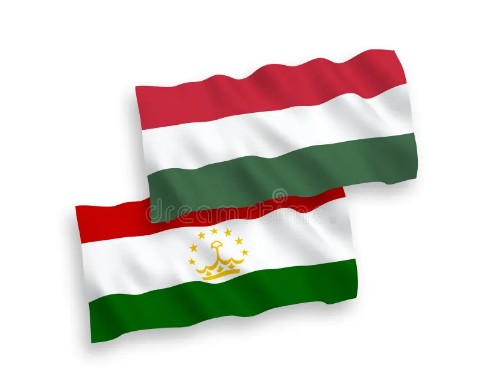
In that sense, Hungary looks like one of the more realistic options. There is even a visual coincidence: the red, white and green of Hungary and Tajikistan make the connection easy to frame. But the football logic matters more. Levchenko is not yet among the coaches widely known on the European market, but his record is already strong enough to be considered beyond the post-Soviet space. Hungarian football is also familiar with coaches from that school: Ferencváros was previously managed by Russian coach Stanislav Cherchesov, who later tried his hand in Kazakhstan — a destination Levchenko also had on the table but ultimately did not take.
In a conversation with Eurasia Football, a person familiar with Hungarian football suggested that Levchenko’s most realistic route would likely not be through the country’s very top clubs, but through a project with history, pressure and a clear rebuilding task. In that context, Diósgyőr (DVTK) was mentioned as a club whose current situation could fit his profile.
The club from Miskolc was founded in 1910, has twice won the Hungarian Cup, enjoys a strong regional identity, has a visible fan base and plays at a modern stadium. That kind of platform should match the ambitions of a coach with Levchenko’s profile. At the same time, DVTK have just been relegated from the top division.
In recent years, Diósgyőr have already gone through a return cycle. In 2022/23, the team won the second division and earned promotion to NB I. After coming back, DVTK finished seventh, then climbed to sixth, but the 2025/26 season ended in failure: 11th place, 28 points, six wins, ten draws and 17 defeats, followed by relegation back to NB II. For a club with this history and fan culture, that is a serious blow to status and reputation. Miskolc has the city, the stadium, the audience and the expectation of a quick return to the elite. The club’s management has also stated that no sponsors have left and that it intends to continue developing all sections in a stable way.
Levchenko has already dealt with a similar task in Fergana. He took over Neftchi near the bottom of the table, kept the club in the Super League, then pushed it into the upper half and eventually led it to the title. For Diósgyőr, who need a quick return, that is a relevant argument.
Levchenko also knows how to work with limited resources. That was visible in Ukrainian clubs, at Khujand and during his first season with Neftchi. He is ambitious and diplomatic, but also has a strong character and experience in environments where the pressure to deliver is felt every day.
Diósgyőr have already had a telling experience with a coach of Ukrainian football background. In August 2022, the team appointed Serhiy Kuznetsov, who held Ukrainian and Hungarian citizenship. He took over DVTK in the second division and brought the club back to NB I in his first season by winning the league. For the club from Miskolc, this is an important precedent: a coach from the Ukrainian football school has already solved the very task DVTK now face again after relegation.
The financial question could be complicated. After relegation, Diósgyőr are unlikely to have complete freedom in the budget, while Levchenko is currently working at Istiklol and is in a strong position. For the coach himself, however, such an option could be interesting if the sporting logic is clear: ambition to return quickly to the top league, trust in the coaching staff and the opportunity to build a team for a specific task.
There is also a practical detail: Levchenko has Ukrainian citizenship. For a Hungarian club, that would make the paperwork easier and reduce the risks that often come with hiring coaches from outside the European market.
For Levchenko, Diósgyőr could be a clear European step. For DVTK, he would be a coach with exactly the kind of rebuilding experience the club now needs.