
Tajikistan’s two leading clubs have just endured a bruising week in Asia. For Igor Angelovski, the concern extends beyond club football.
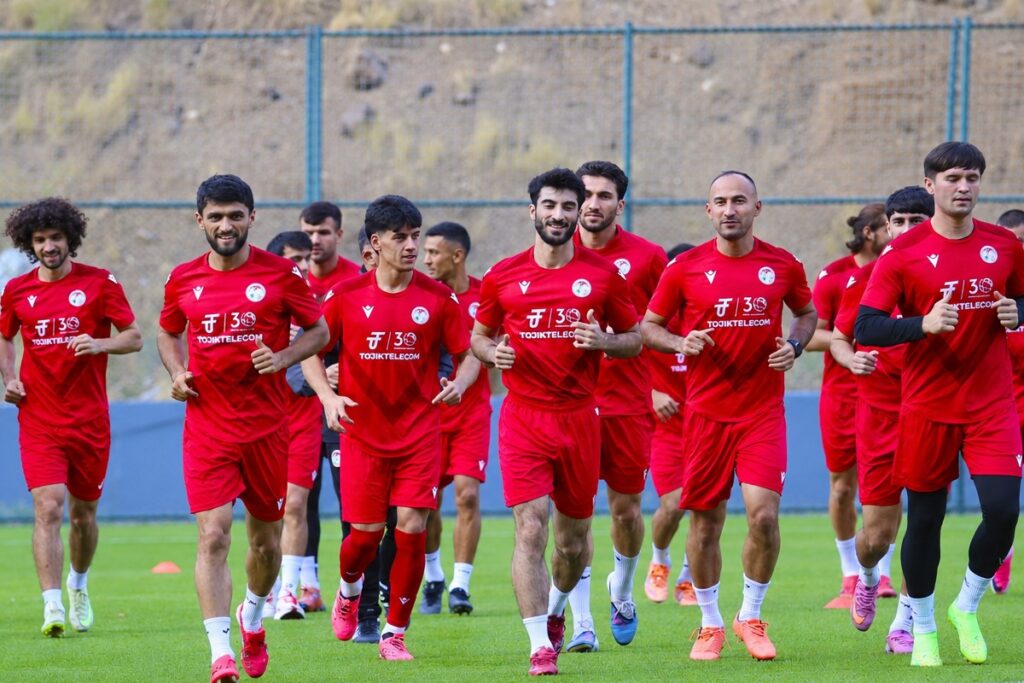
Fifteen of the 28 players in his latest national-team squad come from Istiklol and Regar-TadAZ, both of whom were eliminated from the AFC Challenge League at the group stage.
A handful of poor club results should not decide an international career. But they have underlined a familiar problem: Tajikistan’s player pool remains shallow.
With the 2027 Asian Cup approaching and another World Cup cycle already coming into view, the question is not whether Angelovski should rip up his squad.
It is whether now is the time to start widening it.
The most striking result came from Regar-TadAZ, the Tursunzoda side took the lead against Bangladesh’s Fortis, only to be reduced to 10 men after 17 minutes and eventually lose 3-1.
Fortis had lost their opening two group matches. Their only victory of the tournament came against Regar.
That made the result difficult to dismiss as just another continental defeat. Regar are one of the historic powers of Tajik football, three-time winners of the old AFC President’s Cup and the reigning Tajikistan Cup holders.
If that was concerning, Istiklol’s elimination was even harder to ignore.
For readers less familiar with Tajik football, Istiklol are its dominant modern force. The Dushanbe club have won 14 league titles, including every championship from 2014 through 2025, and have regularly represented the country in Asian competition.
They reached the AFC Champions League knockout stage in 2021 after topping a group containing Al Hilal, Shabab Al Ahli and OKMK, and also finished runners-up in the AFC Cup in 2015 and 2017.
The Lions also had the advantage of playing all three of their AFC Challenge League group matches in Tajikistan.
Istiklol began with a 1-0 defeat to Lebanon’s Nejmeh before recovering to beat Kuwait’s Al-Arabi 2-0.
That left their final match against Homs Al Fidaa as the decisive one.
The Syrian side were playing in continental club competition for the first time, yet beat Istiklol 2-0 and finished the group with three wins from three.
For a club accustomed to dominating domestically, and regarded as one of the strongest teams in the competition, elimination at the group stage was a significant disappointment.
Ordinarily, that might be where the discussion ended: a poor week for two Tajik clubs in Asia.
But there is a wider issue.
National team Manager Igor Angelovski selected 12 Istiklol players and another three from Regar-TadAZ in his latest 28-man Tajikistan squad for the friendlies against Azerbaijan, Palestine and China.
Fifteen players from two clubs. More than half of the national-team squad.
Club performances cannot simply be transferred onto every individual player. Many of those selected have earned their places and will remain important to Tajikistan.
But when so much of the national team is concentrated in two domestic clubs, their performances in Asian competition inevitably become something of a stress test.
This one produced uncomfortable results.
And perhaps it also offers another reason to look beyond the usual core of players.
The rebuild had already started
Tajikistan have already been given a good example of how quickly the status of a young player can change.
On October 17, 2023, Petar Segrt handed 21-year-old Alisher Shukurov his senior international debut.
Three months later, the midfielder played in all five of Tajikistan’s matches at the Asian Cup, accumulating 459 minutes during the country’s historic run to the quarter-finals.
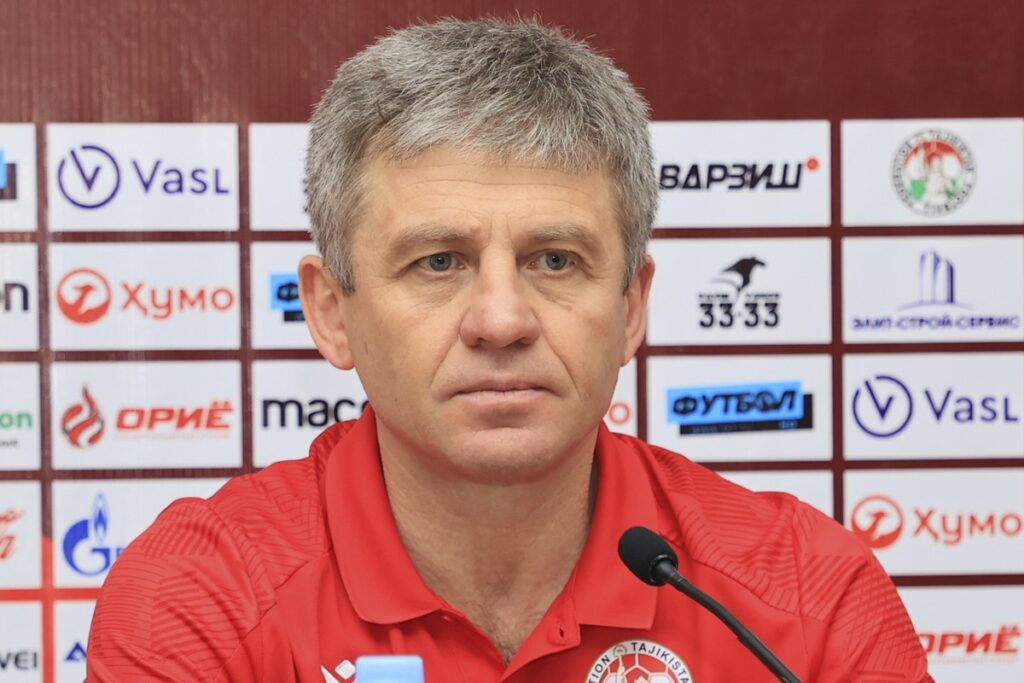
After Segrt’s departure, Gela Shekiladze continued to widen the pool.
Seven players made their senior debuts across just two matches at the 2024 Merdeka Tournament in Malaysia: Daler Sharipov, Jovidon Khushvakhtov, Bilol Boboev, Oleg Baklov, Fakhriddin Akhtamov, Barakatullo Nigmatullozoda and Salohiddin Irgashev.
Shekiladze had already given 18-year-old Fatkhullo Olimzoda his first appearance in a World Cup qualifier.
Not all of those players established themselves. But that is the point of expanding a squad: every new option does not have to become a long-term international.
Shekiladze also understood one of the fundamental problems facing Tajik football.
In a country with a much larger player pool, losing one international often means turning to another of a similar level. Tajikistan simply does not have that depth.
Different coaches, the same problem
Goran Stevanovic had far less time to address it.
The Serbian coach managed only four matches, but achieved his immediate objective by qualifying Tajikistan for the 2027 Asian Cup.
Developing younger players was not unfamiliar territory. Stevanovic had previously coached Serbia’s U21 side in 2022 and spoke about the need to gradually refresh Tajikistan’s squad if he remained in the job.
He did not.
Angelovski was appointed on April 30 with a different priority: preparing the team for the Asian Cup itself.
That changes the calculation.
With the tournament only months away, Angelovski needs to establish his core, develop combinations and produce results in January. Tajikistan do not need a revolution on the eve of a major tournament.
Nor does Angelovski have much history of overseeing one.
Across more than 50 matches as North Macedonia head coach, only two players under the age of 23 made their senior debuts under him. One was Elif Elmas, who was just 17 and already one of the country’s outstanding prospects.
But gradual renewal does not require tearing the team apart.
There are already players around the national setup who have made a case for at least being tested.
Perhaps the clearest example is Alexander Mukhin.
The players still waiting for their chance
The 21-year-old defender developed in Russia, spending time in the systems of Khimki and Arsenal Tula before moving to Tajikistan in 2026, where he now plays for Eskhata.
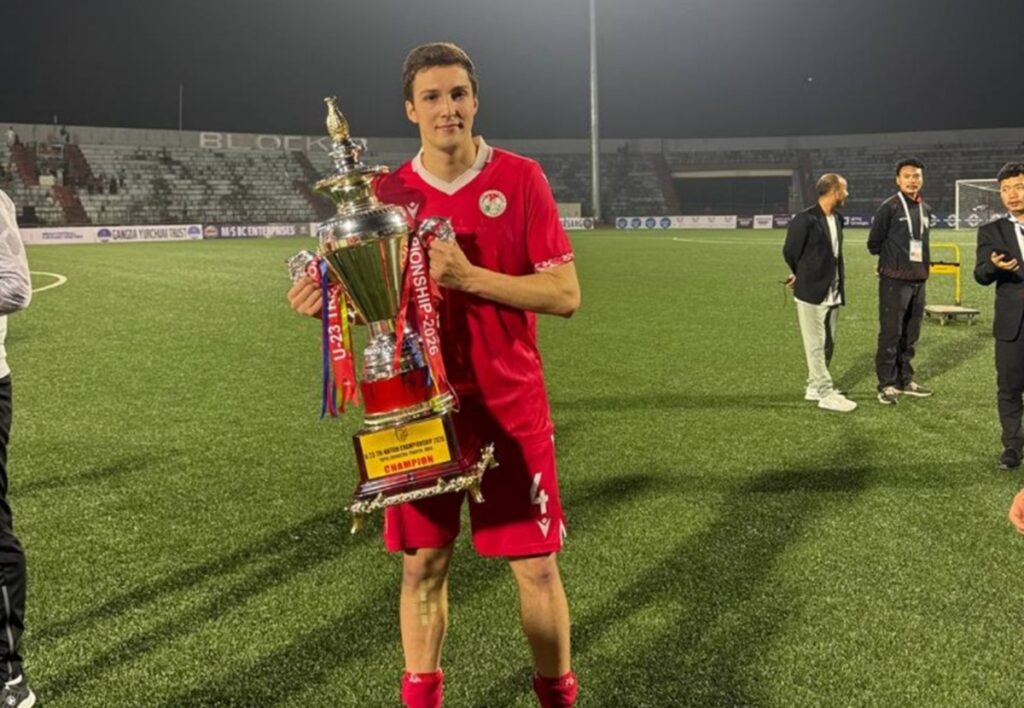
Mukhin has represented Tajikistan at U23 level but is still waiting for his senior debut.
Both Shekiladze and Stevanovic had wanted to look at him. Documentation problems initially prevented a call-up before injury intervened.
By Angelovski’s expanded August squad, Mukhin was no longer included.
Milan Milanovic, who assessed the defender at Khujand before the season, has also spoken positively about him.
The case for another look has only become stronger following the serious injury suffered by Manuchehr Safarov.
Mukhin may ultimately prove no better than the defenders already in the squad. But for a country with such a limited player pool, there is value simply in finding out.
Olimzoda and Irgashev are in a different position. Angelovski has called both players up, but neither has yet forced his way into the regular side.
Then there is Abubakr Sulaymonov.
A new generation is emerging
The 19-year-old midfielder has emerged as one of the main creative players for modest FC Sardor, who reached this season’s Tajikistan Cup final.
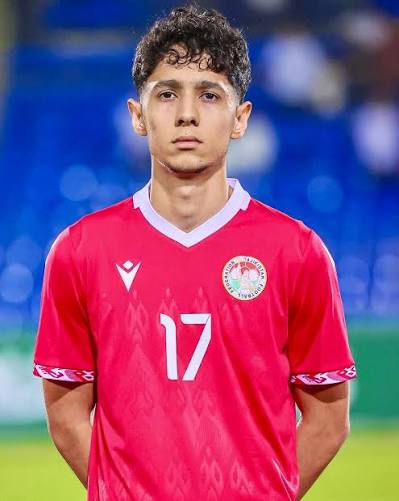
Angelovski included Sulaymonov in an expanded squad in August, but he did not make the final group of 28.
He has nevertheless been on the national-team radar for some time and remains one of the more intriguing young players in the domestic game.
Mukhin, Olimzoda, Irgashev and Sulaymonov are already enough to turn the conversation from an abstract demand for “youth” into something more concrete.
There are others across Tajik football who may not yet be ready to improve the national team, but have done enough to deserve the head coach’s attention.
Angelovski has an immediate responsibility not to allow the Asian Cup campaign to fail.
But Tajikistan also have to think beyond January.
With such a shallow player pool, identifying the next group cannot wait until the current one begins to disappear.
Two different models for Tajikistan to consider
Tajikistan do not have to look far for examples of how a national team can refresh itself.
Kyrgyzstan and Uzbekistan have both done it recently, but in very different ways.
Stefan Tarkovic began reshaping Kyrgyzstan before the 2023 Asian Cup.
By the time the tournament arrived, experienced players such as Mirlan Murzaev, Viktor Maier and Tursunali Rustamov had disappeared from the squad.
The replacements did not all fit the same profile.
Kimi Merk was only 19 and just breaking into senior international football. His brother Kai was already 25.
Erzhan Tokotaev, Christian Brauzman, Joel Kojo and Erbol Atabaev were also given opportunities as Tarkovic tried to build a younger side.
Before the Asian Cup, the Slovak coach said openly that rejuvenating and rebuilding the squad had been one of the tasks given to his staff.
The tournament itself did not go well.
Kyrgyzstan took one point from three matches and finished bottom of their group.
But the federation did not abandon the plan.
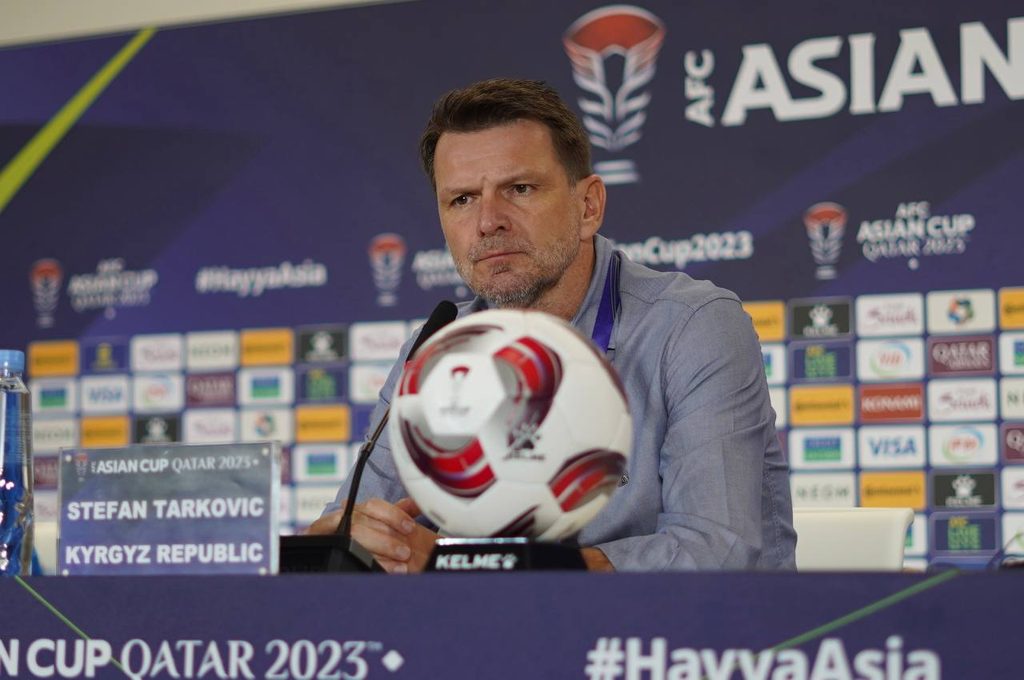
In March, the Kyrgyz Football Union organised a separate identification camp involving 26 players. The aim was to continue refreshing the squad and build a team capable of competing over the next five or six years.
Eldiyar Zarypbekov, Said Datsiev and Yryskeldi Madanov followed.
Ermek Kenzhebaev and Nurbol Baktybekov made their debuts in the summer.
By June, Zarypbekov and Kenzhebaev were already in the final squad for decisive World Cup qualifiers.
Kyrgyzstan went on to reach the third round of World Cup qualifying for the first time.
Tarkovic did not remain in charge long enough to lead them into that stage, with Maksim Lisitsyn taking over in the summer, but much of the refreshed squad survived the change.
When Kyrgyzstan faced Uzbekistan in September, Tokotaev, Brauzman, Zarypbekov and Kenzhebaev all started.
Kimi Merk came off the bench, while Kai Merk was also in the squad.
Across the third round, Zarypbekov made 10 appearances, Kenzhebaev nine, Kimi Merk eight and Kai seven.
That was a fairly dramatic rebuild.
The gradual approach
Uzbekistan are now showing another route and perhaps one more suited to Tajikistan’s current position.
Fabio Cannavaro did not dismantle the side after the World Cup.
Instead, he kept the experienced core and began introducing the next generation more aggressively around it.
The Italian later explained that he wanted to give younger players more opportunities after the tournament while maintaining a balance with established internationals.
Aziz Kholmurodov, Nurmuhammad Abduganiev and Muhammad Khakimov all made their senior debuts during three autumn international fixtures.
Khakimov was 16 years and 362 days old when he debuted against Syria, becoming the youngest player in Uzbekistan’s history.
The record itself is not the most important part.
What matters is the willingness to test players before they are desperately needed.
There are parallels with Tajikistan.
The players Tajikistan could test now
Alexander Mukhin is 21. Uzbekistan defender Jahongir Urozov is 22.
Mukhin developed in Russia, while Urozov now plays in the Russian Premier League with Rubin Kazan.
Both are defenders, both came through youth international football and both can fill more than one role.
The difference is opportunity.
Urozov has already played at a World Cup and continued to feature for Uzbekistan afterwards. Mukhin is still waiting to find out whether he can compete at senior international level.
Abubakr Sulaymonov offers another comparison.
Like Uzbekistan prospect Behruz Karimov, he became noticeable in senior football at a young age without playing for one of the clubs that traditionally supply much of the national team.
Karimov was trusted at the World Cup aged 18, starting against Colombia and Portugal before moving from Surkhon to Lugano in Switzerland.
He is now 19.
Sulaymonov, also 19, has been one of Sardor’s main creative players during a season in which the unfancied club reached the Tajikistan Cup final.
There are similar cases elsewhere.
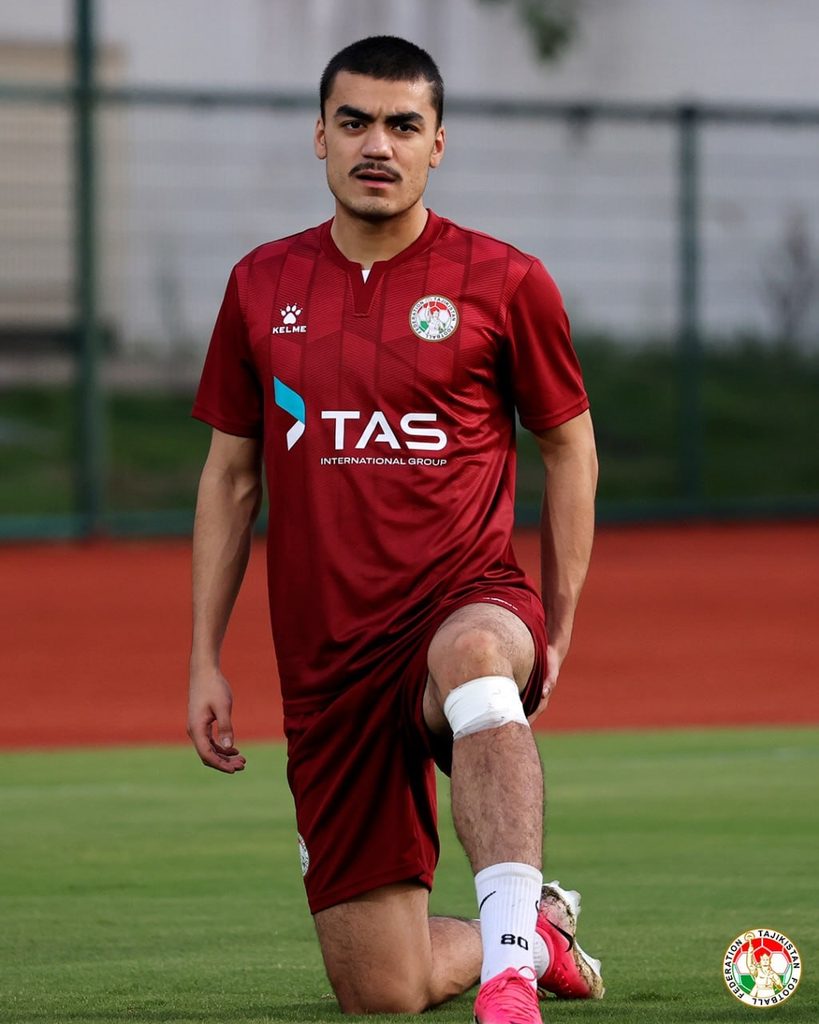
Salohiddin Irgashev and Sherzod Esanov are both 23 and both previously spent time in Belarus.
Irgashev is now scoring for Khosilot, while Esanov has enjoyed a strong season with Bukhara.
Neither plays for a traditional giant.
Esanov reached double figures in the Uzbekistan league before Cannavaro started him against Syria in October. He responded by scoring.
Fathullo Olimzoda and Umarali Rakhmonaliev offer another useful comparison.
Both have spent years around their senior national teams, both have experience abroad and both are the type of player supporters notice when they disappear from a squad.
Rakhmonaliev, 23, is with Sabah in Azerbaijan and has been brought back into Uzbekistan’s group this autumn.
Olimzoda debuted for Tajikistan at 18 but is now receiving far fewer minutes.
The model matters more than the comparison
None of these comparisons mean the players are of equal quality.
Uzbekistan have a far deeper player pool, and direct comparisons between the two national teams only go so far.
The interesting part is the mechanism.
Cannavaro is preparing Uzbekistan for the Asian Cup, retaining an experienced spine and, at the same time, testing players who may matter more in the next cycle.
Tajikistan probably do not need the kind of sharp reset Kyrgyzstan attempted.
The Uzbek model would be far less disruptive.
And it could begin now.
2030 is not as far away as it looks
Angelovski has an obvious short-term objective.
He was appointed to prepare Tajikistan for the 2027 Asian Cup, and his work will inevitably be judged first on what happens in Saudi Arabia.
But the next cycle is already beginning to appear on the horizon.
The 2026 World Cup was the first to feature 48 teams. FIFA is now studying a proposal to expand the tournament again, potentially to 64 nations for its centenary edition in 2030.
No decision has been made, and the proposal remains controversial.
For Tajikistan, though, the politics surrounding expansion are less important than the opportunity that already exists.
Even if the World Cup remains at 48 teams, AFC qualifying offers significantly more places than in previous cycles. Tajikistan will need a deeper squad if they are serious about competing for one of them.
If the field does expand to 64, the opportunity could become greater still.
But only for teams ready to take advantage of it.
By 2030, Alexander Mukhin and Fatkhullo Olimzoda will be 25.
Salohiddin Irgashev will be 27. Abubakr Sulaymonov will have reached an age where he should either be an established senior international or have been overtaken by somebody better.
Behind them will come the players currently representing Tajikistan at U20 and U17 level.
None of this means Angelovski should discard the established core now.
Vakhdat Khanonov, Ehson Panjshanbe, Parvizdzhon Umarbaev, Zoir Dzhuraboev and other senior players still have significant roles to play.
Nor should 15 players from Istiklol and Regar-TadAZ suddenly be judged on the basis of a handful of disappointing club results in Asia.
That would be an overreaction.
But those results have highlighted something Tajikistan already knew: beyond the familiar core, the pool remains shallow.
The Asian Cup matters.
So does what comes afterwards.
Tajikistan do not need to choose between the present and the future. They can prepare for Saudi Arabia while beginning to find out who might still matter three years later.
And 2030 is no longer quite as distant as it sounds.