
Kazakhstan international Islam Chesnokov has revealed that he turned down interest from Russian Premier League clubs and accepted at least a 50 per cent salary reduction to pursue his European ambitions with Hearts.
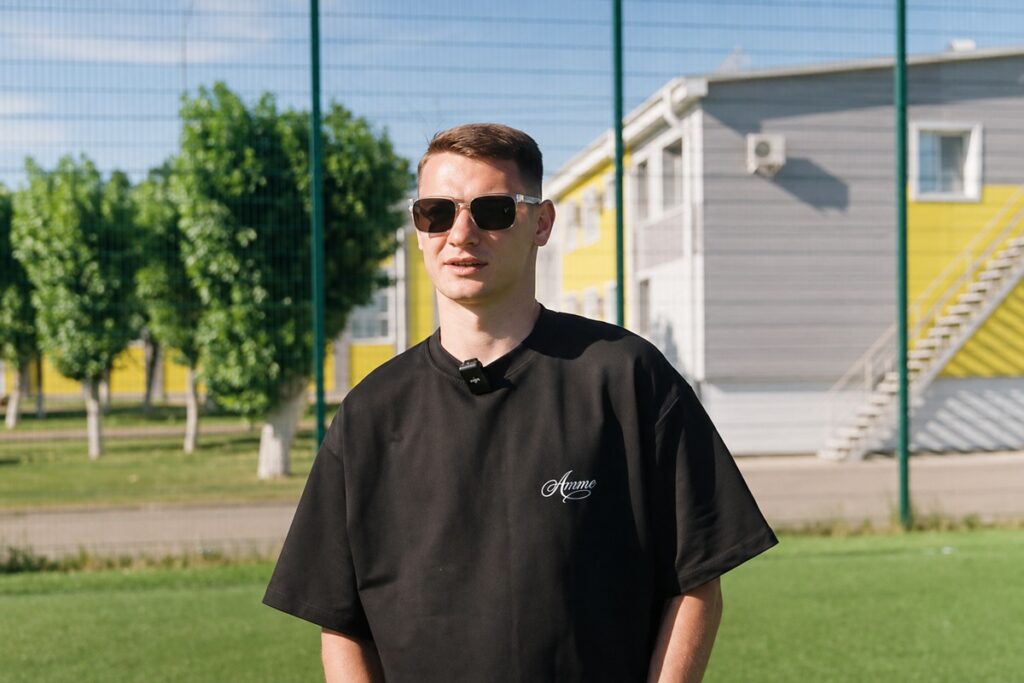
Speaking to the BorodAbata YouTube channel, Chesnokov reflected on his move to Edinburgh, working under Derek McInnes, the painful end to Hearts’ season and the reasons behind his return to Tobol.
Despite struggling for regular playing time in Scotland, the winger insists he has no regrets about the decision.
Hearts waited for Chesnokov
According to Chesnokov, Hearts first showed interest in him during a training camp in 2025. The sides were unable to reach an agreement at the time, but the Scottish club later returned with another offer.
There was also a change of manager during that period, with Derek McInnes taking charge. Chesnokov initially wondered whether the appointment might affect the proposed transfer, but the new head coach also approved the move.
“They had been waiting for me for a long time, but then the manager changed and Derek came in,” Chesnokov said.
“I thought something might change, but nothing did. He still wanted me, and so did the board. They waited for my contract with Tobol to expire, and I decided to go and give it a try.”
The player was not directly involved in most of the negotiations. He spoke to the Hearts manager several times, while his agent handled the remaining details.
Russian interest and a major pay cut
Chesnokov confirmed that he had other options before moving to Edinburgh, including interest from Russian Premier League clubs.
However, he was determined to test himself in Europe and did not seriously consider the Russian offers.
“There were options from the Russian Premier League in 2025, but I did not want to go there,” he said.
“I still had the dream of trying myself in Europe. I did not really consider the other teams because Hearts were very persistent.”
The transfer also required a significant financial sacrifice. Chesnokov said he knew he would earn at least twice as little in Scotland as he could have earned elsewhere.
“I understood that I was taking at least a 50 per cent pay cut, but I was going there for football,” he said.
“I think it was worth it. I do not regret anything. I went there, saw it all, met new people and experienced the atmosphere.”
Chesnokov noted that leading local players in the Kazakhstan Premier League can earn considerably more than footballers in a number of European competitions. Nevertheless, money was not the decisive factor in his decision.
The roar of Tynecastle
One of the highlights of Chesnokov’s time in Scotland was scoring his first goal for Hearts.
The winger recalled that his teammates had encouraged him to be more confident and reproduce his training performances in a competitive match.
“The boys kept telling me: ‘Shoot. Everything is working for you. You are doing well in training. Just do the same in the game, and we will support you,’” he said.
“Kizzy could have taken the shot himself, but he passed to me and I scored. After the game, the manager and all the players supported me.”
The reaction inside Tynecastle made an even stronger impression.
“Those first five seconds after the goal, when the whole stadium erupts — I had never experienced anything like it,” Chesnokov said.
“Perhaps only with the Kazakhstan national team in 2023.”
Working with Derek McInnes
Chesnokov described his relationship with McInnes as a normal professional relationship between a manager and a player.
There was no constant personal communication or detailed explanation of every selection decision, but the Kazakhstan international was struck by the Scotsman’s passion.
“I would not say the relationship was especially good or bad,” Chesnokov explained.
“What I can say is that he is extremely emotional. When the team scores, his emotions just explode. He can run 30 metres and celebrate with the ball boy.”
Chesnokov added that McInnes could appear calm but was also capable of delivering fierce dressing-room team talks when he was unhappy with the performance.
“He was emotional as a player too, according to people who knew him,” Chesnokov said. “As a manager, he could be completely calm, but there were also a couple of occasions when he really tore into the dressing room.”
Why he left Hearts
Chesnokov said there was only one reason behind his departure: he wanted regular football.
“If I am not playing, it does not matter whether it is Hearts or another club,” he said. “I want to play.
“That is why I became a footballer. I can watch football at home on the sofa.”
The winger acknowledged that supporters often argue that a player simply needs to work harder in training. However, he stressed that hard work does not always guarantee selection.
“Until you experience it yourself, it is difficult to understand,” he said. “Even if you work hard, it does not mean you will definitely play.
“Every club has its own reasons and its own details. Maybe I simply did not suit something. I do not know.”
Chesnokov also responded to suggestions that returning to Kazakhstan represented a retreat into his comfort zone.
“I saw all the comments and reports about the comfort zone,” he said. “I simply wanted to play football and help the team.
“That was the only reason. I wanted to play.”
According to Chesnokov, he had gone several months without playing regularly and believed consistent minutes were essential if he was to regain his rhythm and physical condition.
The pain of missing out on the title
Chesnokov also spoke about the sense of devastation inside Hearts after the club missed the opportunity to become champions.
He said the disappointment was particularly acute among people who had been connected with Hearts for many years.
“There was a feeling of emptiness because of the missed opportunity to become champions,” he said.
“Perhaps I did not feel it as deeply as the people who had been there for a long time. For them, becoming champions after so many years was almost the meaning of life.
“I could feel their disappointment as well.”
The atmosphere after the decisive game was so difficult that, according to Chesnokov, interviews and public comments were temporarily restricted.
He said the players understood it was better to leave for their holidays and discuss their futures only after emotions had settled.
“When I left, I still did not know what my future would be or what was going to happen,” he added.
Celtic pitch invasion
Chesnokov also recalled the chaotic scenes after Celtic supporters entered the pitch.
He said the Hearts players were immediately instructed to head for the tunnel and return to the dressing room.
“I looked towards our bench, and they were already shouting: ‘Get into the tunnel,’” he said.
“I ran there immediately. Some of our players became involved with supporters, but within two or three minutes we were in the dressing room.
“We grabbed our things, and about five minutes later we were already on the bus.”
Chesnokov said a crowd surge developed and the atmosphere remained tense as Hearts attempted to leave the stadium.
Despite the painful end to the campaign, he praised the reaction of Hearts supporters in Edinburgh.
“They did not come up to us and say: ‘You lost, you are this or that,’” he said.
“They spoke with respect and said it had still been an amazing season and that we had done very well. You feel that they will support you regardless of the result.”
Why he chose Tobol
Chesnokov revealed that several Kazakhstan clubs contacted him after it became clear he could leave Hearts.
He named Ordabasy, Aktobe and Elimai among the teams involved in discussions but said he had always felt drawn towards a return to Tobol.
“I do not know why, but I wanted to go back to Tobol,” he said. “I always had that feeling.”
The winger believed returning to a familiar environment would help him restore his confidence and rediscover his best football.
“I understood that if I joined another club, expectations would be very high,” Chesnokov said.
“If something did not work out, the criticism would quickly begin. I needed to return to an environment where I would feel comfortable, be myself and show again what I can do.
“That will help both me and the club.”
“I would make the same decision again”
Chesnokov admitted that his spell in Edinburgh left him with a sense of unfinished business.
At times, he wanted to leave because he was not playing. When he received more minutes, however, he began to reconsider.
“I left with a feeling that something had been left unsaid,” he explained. “I did not really understand what those five months had been or whether things could have turned out differently.
“When I was not playing, I wanted to leave. Then I played three games and thought: ‘No, everything is fine, I will stay.’ Those emotional swings affected me.”
Nevertheless, he remains convinced that moving to Scotland was the right choice.
“If someone had told me three or four years ago that I would play at Celtic Park and Ibrox, I would not have believed them,” Chesnokov said.
“I experienced football in its birthplace and saw how people support their teams, worry about them and treat the game. Football is a serious part of life there. It is a culture.
“I do not regret anything. I would make the same decision and go there again.”
Chesnokov believes the experience also helped him mature mentally.
He noted that Scotland was very different from Belarus, where the language and general environment had been more familiar.
“The first few weeks were mentally difficult because I had to adapt to everything,” he said.
“But I became mentally stronger. Now I am gradually getting back into rhythm and working towards returning to my best condition.”