
Turkey has begun work on a proposal that could allow footballers from Turkic countries to be registered as domestic players rather than foreigners.
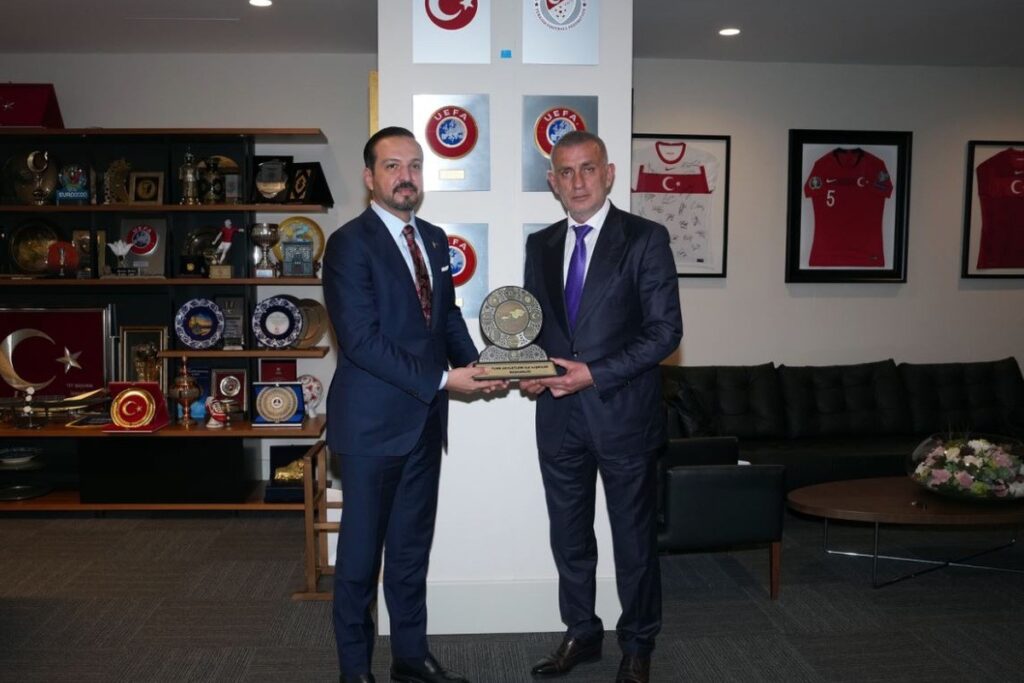
The initiative was announced by Kürşad Zorlu, deputy chairman of Turkey’s ruling Justice and Development Party (AK Party), TRT Haber reported.
According to Zorlu, the issue has already been discussed with Turkish Football Federation (TFF) president İbrahim Hacıosmanoğlu. No timetable has yet been announced, while the exact mechanism and the list of countries that could benefit from the new status remain unclear.
If implemented, the change could have a significant impact on footballers from Central Asia, particularly Uzbekistan, Kazakhstan and Kyrgyzstan, whose players have increasingly moved to Turkish clubs in recent years.
Turkey has already experimented with a similar system.
Ahead of the 2023/24 season, Süper Lig clubs were allowed to register one additional player from Azerbaijan, Kazakhstan, Kyrgyzstan, Uzbekistan or Turkmenistan outside the standard foreign-player quota.
A separate additional slot was also available for certain players who were not eligible to represent the Turkish national team but held Turkish citizenship or a Mavi Kart, a special status available to some former Turkish citizens and their descendants.
The introduction of the rule coincided with an increase in the number of Central Asian internationals moving to Turkish clubs.
In the summer of 2023, Beşiktaş signed Kazakhstan international Bakhtiyor Zaynutdinov, while Uzbekistan defender Husniddin Aliqulov joined Çaykur Rizespor.
Kyrgyzstan goalkeeper Erzhan Tokotaev moved to Şanlıurfaspor in Turkey’s second tier.
During the following winter transfer window, Kazakhstan striker Abat Aimbetov joined Adana Demirspor, while Uzbekistan midfielder Azizbek Turgunboev signed for Sivasspor.
Uzbek players have become particularly visible in Turkish football in recent seasons.
Alongside Aliqulov and Turgunboev, Otabek Shukurov arrived in Turkey in 2022, while Uzbekistan internationals Eldor Shomurodov and Abbosbek Fayzullaev later joined İstanbul Başakşehir.
Azerbaijani players have an even longer presence in Turkish football and continue to feature across several professional divisions, with some also holding Turkish citizenship.
However, the special rule introduced in 2023 remained in its original form for only one season.
From the 2024/25 season, newly signed players from the five Turkic countries could no longer obtain the same special status. Footballers who had already been registered under the 2023/24 regulation were allowed to retain those rights until the end of their existing contracts.
Under the current Süper Lig regulations, clubs can register up to 14 players who are not eligible to represent Turkey. If all 14 places are used, at least four of those players must have been born on or after January 1, 2003.
A separate exemption remains in place for young footballers from Azerbaijan, Kazakhstan, Kyrgyzstan, Uzbekistan and Turkmenistan. Players born in 2006 or later can be included in a matchday squad without occupying a place on the club’s main list if they have been registered with the club for at least three seasons, or 36 months, since the age of 15.
The new proposal would go significantly further than the 2023 regulation.
Instead of allowing clubs one additional exempt player, footballers from eligible Turkic countries could potentially be removed from the foreign-player quota altogether and treated as domestic players.
Zorlu also announced plans for a new “Turkic Cup”, a football tournament involving Turkic states that could be held every two years.
The project is expected to be developed by the Turkish Football Federation together with Turkey’s Ministry of Youth and Sports.