
Changzhou, January 27, 2018. With the AFC U23 Asian Cup final against Vietnam locked at 1-1 deep into extra time, Uzbekistan turned to a 22-year-old striker from the bench. Just moments after stepping onto the pitch, Andrey Sidorov met a Dostonbek Khamdamov cross and scored with his very first touch, sealing a dramatic 2-1 victory and Uzbekistan’s first-ever title at the tournament.
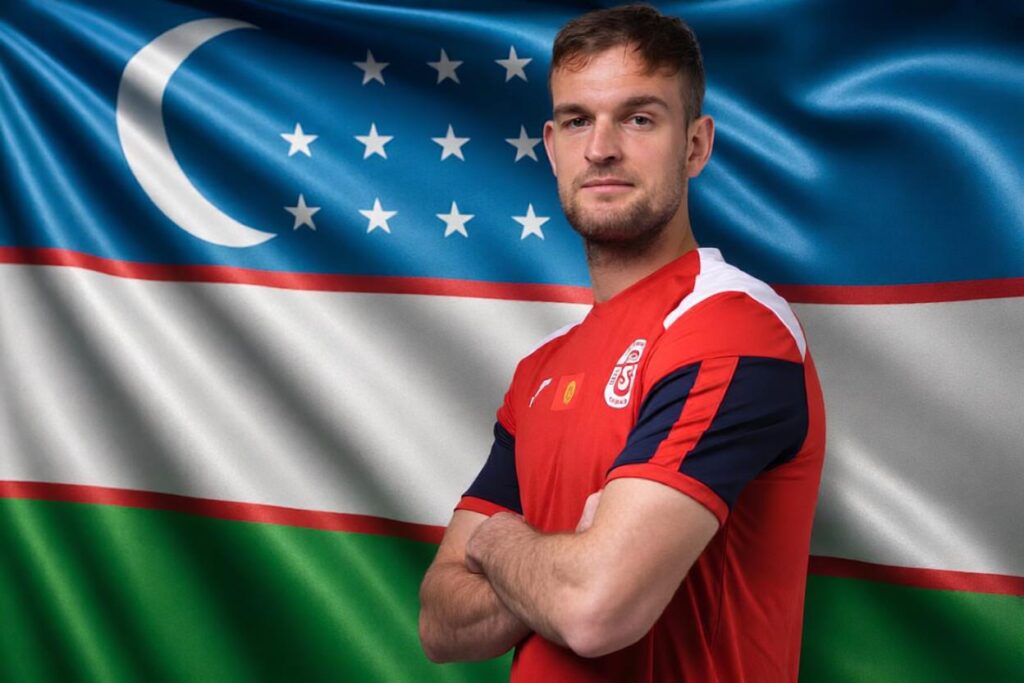
A senior international debut soon followed and, at just 22, Sidorov appeared destined for a long career at the top of Uzbek football. Instead, a series of unsuccessful moves left him without a club for almost 18 months and on the verge of walking away from the game altogether.
Rather than becoming an established name in the Uzbekistan Super League, Sidorov has rebuilt his career in neighbouring Kyrgyzstan. Since joining OshMU in 2024, the former Pakhtakor academy graduate has become club captain and one of the Jogorku Liga’s most consistent performers. This season, however, the experienced striker has taken on an unexpected role, regularly filling in at centre-back before moving back up front whenever OshMU need a goal.
During Eurasia Football’s expedition across the Fergana Valley, we met Sidorov in Osh following an evening training session. He spoke about rebuilding his career after nearly retiring, his remarkable switch from striker to centre-back, captaining OshMU, the rapid growth of the Jogorku Liga and why he still believes he can earn one more opportunity back home in Uzbekistan.
Rebuilding a career
This is now your third season in Kyrgyzstan. How did you end up at OshMU?
“Yes, this is my third season here. Before moving to Kyrgyzstan, I spent almost 18 months without playing football. At the start of 2023 I couldn’t find a club, then that summer I moved to Kazakhstan and spent about a month with FC Arys. It was a First League team, but I quickly realised it wasn’t the right fit for me, so I left without getting any real playing time.
“Things worked out for the best, though. While I was in Kazakhstan I met the Ukrainian midfielder Yevgen Chumak, who now plays for Alga. When he received an offer from OshMU, I asked him to mention my name to the club as well.
“By then I’d almost given up on football. But I came here, signed a contract straight away and, thankfully, managed to restart my career.
“The beginning wasn’t easy. Eighteen months out of the game is a long time, especially for someone with my build.”
How did a striker end up playing at centre-back?
“The position isn’t completely new to me. As a child, I played both at right-back and in the centre of defence. They also tried me at centre-back when I was in the Pakhtakor system.
“By nature, though, I’m still a striker. I need to be in the penalty area, battling with defenders and scoring goals.
“Last year, I started getting less playing time. I had been a little unwell, put on some weight and our leading scorer, Richard Romario, was playing more regularly through the middle. I was mostly coming off the bench.
“One day, we were sitting in an airport and I jokingly said that I would find it easy to play at centre-back. The coaches took me seriously.
“In the next round, I played there for the reserve team against Alga. Three days later, I started in the same position against Talant.
“There were only a few matches left in the season, and I played all of them in defence. It went quite well. I then spent the entire winter training camp working in that position.
“You could say I’m an attacking centre-back now,” he jokes.
Does playing as a striker help you as a defender?
“Definitely. I understand how forwards think, where they want to run, the spaces they’re looking for and how they time their movement. That means I can anticipate things earlier, cut out passes and make decisions before they even receive the ball.
“I might not be the quickest defender, but you can make up for that by reading the game well.
“I’m also comfortable on the ball. As a striker you’re used to receiving passes under pressure and protecting possession. Centre-backs often have a little more time, which gives you the chance to lift your head and start attacks.”
This is your second season as club captain. What does wearing the armband mean to you?
“First and foremost, it’s a responsibility. You have to keep the team together and support them.
“We’re a very international squad. I get on well with the local players, the Uzbeks and the other foreign players. In a men’s team, emotions can run high during training. There are misunderstandings, arguments and the occasional clash, and someone has to step in and calm things down.
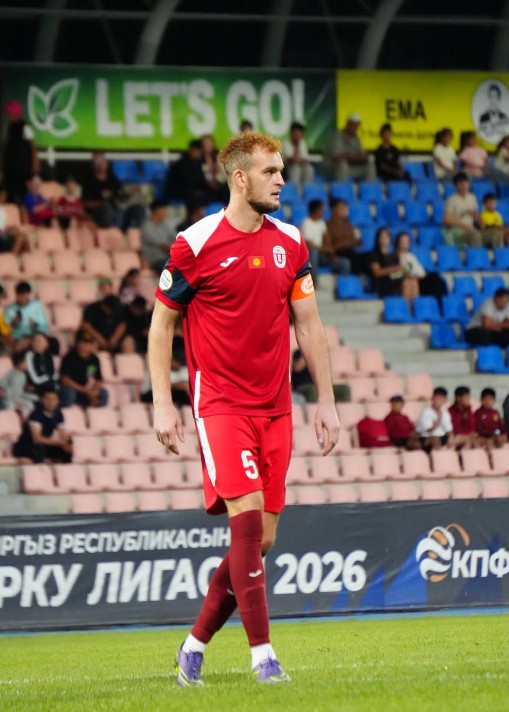
“The local players respect me and listen to me, and the foreign players do as well. A captain also has to be the link between the dressing room and the coaching staff-communicating the players’ views to the coaches and making sure the squad understands what the coaches expect.
“It’s a new experience for me. I was never captain in Uzbekistan because I was still young and there were older, more experienced players ahead of me. I’m still learning in the role.”
Would you say you’re now in the most mature stage of your career?
“I definitely look at football and at myself differently now. Once you turn 30, you start listening to your body more and understanding the game better.
“It’s not a critical age for a footballer. In Europe, plenty of players continue performing at a high level well into their thirties. But after spending almost 18 months out of football, coming back was incredibly difficult. I think that’s why I appreciate every opportunity to play much more now.”
You arrived in Kyrgyzstan in 2024. How much has the league changed since then?
“When I first arrived, and I don’t mean this disrespectfully, the league wasn’t as competitive as it is now. There were some good local players and promising youngsters, but the overall standard was different.
“The very next season surprised me. The league expanded from ten to 14 teams, the quality of foreign signings improved and almost every club strengthened its squad. The championship became much more competitive.
“That progress has continued this year. Players with experience in Uzbekistan and Russia have arrived. Every game is tough now. Nobody rolls over or gives you an easy game.
“In my opinion, the Kyrgyz league has now overtaken the Tajik league. Five or six years ago, Tajikistan was stronger, but I’d now put Kyrgyzstan ahead. Based on comparing it to when I played for Khujand in 2020.
“It’s still some way behind the Uzbekistan Super League, but it’s moving in the right direction.”
Have clubs’ financial resources improved as well?
“I think so. Financially, the league has become much more attractive. Two or three years ago, it was difficult to persuade quality players to come because the salaries weren’t competitive.
“Now, almost any club can afford to sign a good foreign player if they’re ambitious enough. Football here is improving step by step. The important thing is to keep building on what’s already been achieved.”
How has the influx of foreign players affected local footballers?
“It’s been a huge positive. Local players see the quality of the foreign players coming into the league and they raise their own standards. A foreign player should always be clearly better than the local players otherwise there’s no point signing him.
“Young players learn professionalism, work ethic and a different football mentality. When I first arrived, almost every match involved shouting, arguments and sometimes it felt like fights could break out. At times I wondered where I’d ended up.
“That’s changing now. The local players take their profession much more seriously and they’re developing both as footballers and as people. In time, they’ll pass those standards on to the next generation.
“The current limit of seven or eight foreign players won’t last forever. Kyrgyzstan ultimately needs more local players for the national team. But without this level of competition, I don’t think they would have improved anywhere near as quickly.
“If things continue on this path over the next five or six years, the league keeps attracting quality foreign players and the local players keep improving, then maybe one day we’ll see Kyrgyzstan at a World Cup.”
During your time in Kyrgyzstan, have you attracted interest from clubs back in Uzbekistan?
“I’ve had offers from the Pro League, but I haven’t felt any serious interest from Uzbekistan Super League clubs.
“I follow both divisions closely. There are some very good teams and interesting matches in the Pro League, but I don’t think it’s stronger than the Kyrgyz top flight.
“I hope the opportunity to return will come. Uzbekistan is home. I’m proud of my country and I’d love to play there again. Maybe I could even work my way back into the national team.
“Anything is possible in football. I know what I’m capable of and I don’t see myself as an average player. But to make that happen, I have to keep working hard and improving.”
Do you still keep in touch with the national team players?
“I know almost all of them and played alongside many of them. These days I speak most often with Botirali Ergashev and always support him.
“I’m not in regular contact with everyone else, but I watch interviews with Eldor Shomurodov and the others. From what they’ve said, Fabio Cannavaro has significantly raised the intensity of training with the national team. The sessions are more demanding and the players are being pushed to work much harder.
“I really like this Uzbekistan team. They play good football and they’re capable of competing with anyone.”