
Iran have announced their squad for the 2026 FIFA World Cup, but Amir Ghalenoei’s list has raised more questions than expected.
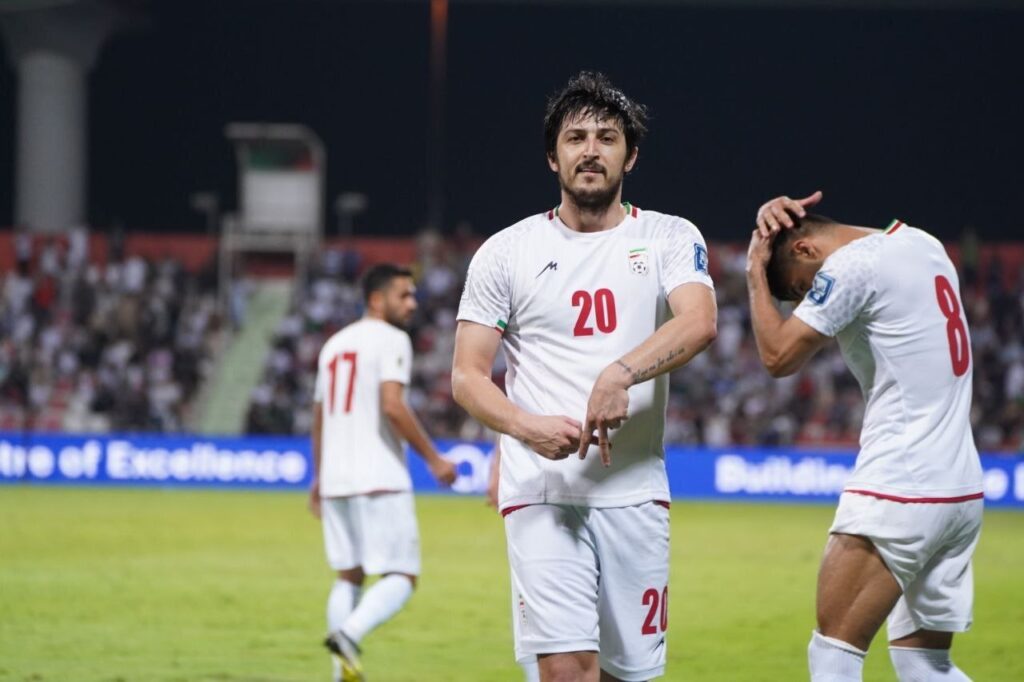
Sardar Azmoun, Allahyar Sayyadmanesh, Mohammad Javad Hosseinnejad and Mohammad Mehdi Zare are among the notable absentees — players who had all been mentioned by Iranian media and fans as possible candidates for the tournament.
The biggest name is Azmoun. The 31-year-old Shabab Al-Ahli striker was left out of both the preliminary and final lists, despite remaining one of the most prolific forwards in Iran’s history. Sayyadmanesh’s absence is also difficult to explain from a purely footballing perspective: he was directly involved in 11 goals in Belgium last season, yet did not make the squad.
Officially, the coaching staff have framed the decisions in footballing terms. In Iran, however, the squad is being discussed in a wider context — not only because of Azmoun, but also because of the number of younger or foreign-based players left out.
Iran have been drawn with New Zealand, Belgium and Egypt, and will again try to reach the knockout stage of a World Cup for the first time. Against that backdrop, every controversial selection decision carries extra weight. For Team Melli, this is not just another tournament, but another attempt to make a breakthrough that has eluded every previous generation of Iranian footballers.
Why Azmoun’s Absence Matters
Azmoun has scored 57 goals in 91 appearances for Iran. Few active Asian forwards can match his CV: Rubin Kazan, Rostov, Zenit, Bayer Leverkusen, Roma and now Shabab Al-Ahli in the UAE. For Iran, he has never been a fringe player. For years, he was part of the national team’s attacking core.
His omission has a footballing dimension, but not only that. During the protests in Iran in 2022, following the death of Mahsa Amini, Azmoun publicly supported Iranian women. In a post on Instagram, he wrote that he was ready to sacrifice his place in the national team for “one hair on the heads of Iranian women”, a statement that drew criticism from some inside the country.
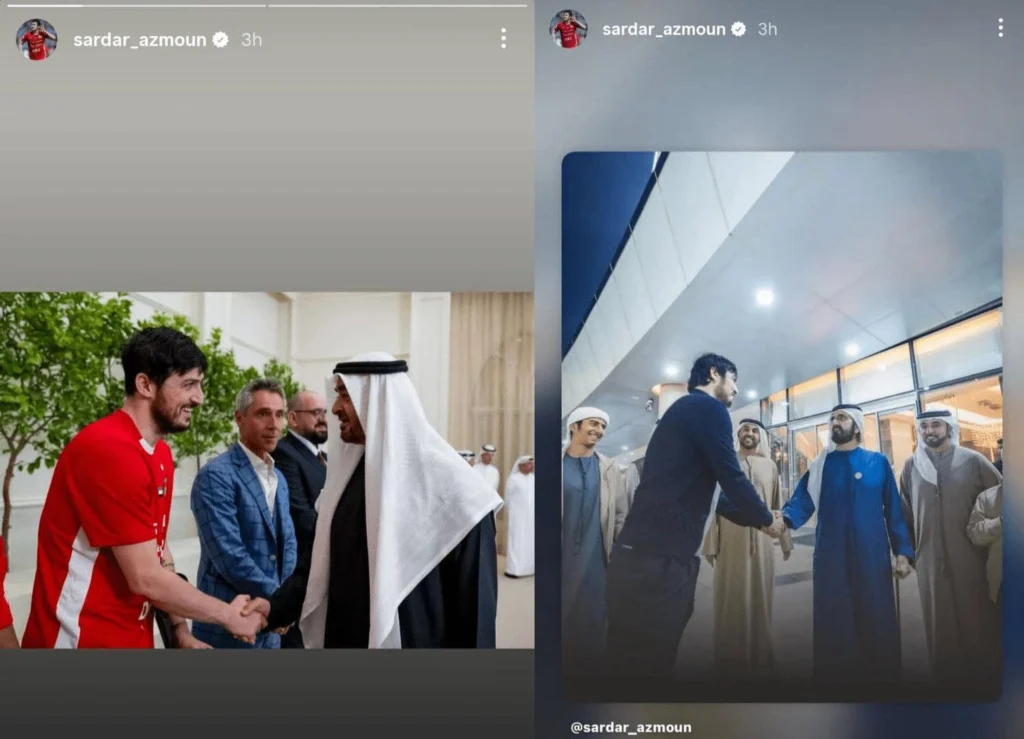
In 2026, the situation took another turn. Azmoun, who plays in the UAE for Shabab Al-Ahli, posted a photo with Mohammed bin Rashid Al Maktoum, the ruler of Dubai and prime minister of the United Arab Emirates. Amid regional tensions, the image drew a negative reaction from parts of the Iranian media. After that, Azmoun was not called up for the March friendlies and later missed out on the World Cup squad.
Azmoun himself has stressed that he remains Iranian and has always played for the national team for the people who love football. After being left out, he wished his teammates success and said they remained his friends.
In Iranian football, such stories are rarely treated as purely personal matters. After the 2022 protests, Ali Daei and Ali Karimi — two figures whose status long ago moved beyond the pitch — also found themselves at the centre of public debate. Daei is one of the greatest players in Iranian history and a former world-record holder for international goals. Karimi is a former national team captain and one of the most popular Iranian players of his generation. Both reacted publicly to events in the country, creating additional tension around their names.
Azmoun’s case is different. He is not a retired icon but an active forward who could still have helped Iran at the World Cup. That is why his absence has been discussed so widely.
Moghanlou Becomes One of the Most Debated Choices
Another source of debate is the inclusion of Shahriar Moghanlou. The Kalba striker was not initially part of Iran’s extended squad, but after Roozbeh Cheshmi’s injury, Ghalenoei called up a forward rather than a direct replacement in midfield or defence. Moghanlou then made the final World Cup squad.
From a footballing point of view, the decision can be explained. Moghanlou is a tall central striker, useful in the penalty area, strong in aerial duels and capable of giving Iran a different attacking profile. He scored eight goals for Kalba in the UAE Pro League last season. Another Iran international, Saman Ghoddos, also plays for the same club.
The questions come from the wider context. Moghanlou took a place in the attacking group where Azmoun might have been. He also plays in the UAE — the same country that became part of the discussion around Azmoun after his photo with the ruler of Dubai. Saeid Ezatolahi, Azmoun’s teammate at Shabab Al-Ahli, also remained in the squad.
This suggests that playing for a UAE club was not, in itself, a problem for the coaching staff. The issue around Azmoun was the public story attached to him, and his reputation as a player who does not always avoid sensitive subjects.
Formally, Moghanlou does not have to be seen as a direct replacement for Azmoun. These were separate selection decisions. In practice, however, he took one of the attacking slots that could have gone to a striker with 57 international goals. For some Iranian fans and observers, the call-up of a less high-profile forward from the same league became one of the symbols of a controversial squad.
Sayyadmanesh and Hosseinnejad: Questions in Attack and Midfield
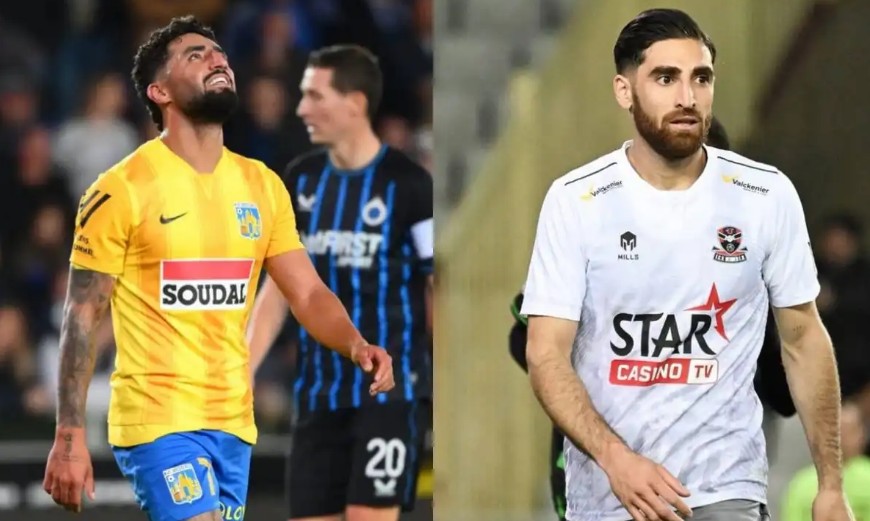
Azmoun is not the only notable player left out. Etemad Online, in an article questioning Ghalenoei’s squad choices, highlighted three major absentees: Sardar Azmoun, Mohammad Javad Hosseinnejad and Allahyar Sayyadmanesh. The outlet noted that Azmoun had not been called up after publishing his photo with the UAE ruler, while Hosseinnejad had enjoyed a strong season in Russia and Sayyadmanesh had been involved in 11 goals in 29 matches in Belgium.
Sayyadmanesh’s absence is one of the most debated decisions. The Westerlo forward was directly involved in 11 goals in 29 matches last season, scoring seven and providing four assists. He has long been regarded as one of the more talented players of his generation and has already represented Iran, but he did not make Ghalenoei’s squad.
Etemad Online argued that Sayyadmanesh’s omission looked particularly questionable given the inclusion of other players from the Belgian league. Alireza Jahanbakhsh, playing for a team near the bottom of the Belgian table, was called up after scoring one goal. Dennis Dargah, also based in Belgium, made the squad with five goals in 33 matches and no assists.
Football360 made a similar comparison, pointing out that Sayyadmanesh’s numbers in Belgium looked stronger than Jahanbakhsh’s, even though part of his season had been spent not as a central striker but on the right wing.
Hosseinnejad’s case also raised questions. The 22-year-old midfielder plays for Dynamo Makhachkala. Last season he appeared in 29 Russian Premier League matches and eight Russian Cup games, scored important goals and had already been called up by Ghalenoei. Many expected him, at the very least, to make the extended list given his technical quality and consistent playing time. Instead, the coaching staff did not include him even in the 30-man squad.
Zare and the Question of Renewal
Mohammad Mehdi Zare is another name discussed in Iran. The 23-year-old Akhmat Grozny defender spent the season in the Russian league and was seen by some Iranian observers as a player who could be part of the national team’s future.
Zare is not the loudest name among the absentees, but his omission fits into the broader debate over the squad. Ghalenoei has been criticised not only for individual attacking decisions, but also for taking a cautious approach to renewal. Experienced players remain in the squad, while several younger footballers with playing time abroad have been left out.
In that sense, Zare matters as part of a wider pattern. Iran are going to the World Cup with a clear emphasis on experience, established relationships and familiar structures. That may provide stability, but it also limits the room for renewal.
Ghandipour and Other Controversial Omissions
Reza Ghandipour was also discussed in Iran after a strong season in the UAE league. Following his omission, he posted an Instagram story hinting that non-footballing factors may have influenced the decision: “The statistics were good, but apparently other things are more important.” After that post, he was also removed from Iran’s Olympic team list.
Ahmad Nourollahi, who has been away from the national team for some time, was another name mentioned in discussions around the squad. Iranian outlets also debated the broader cuts made after the training process, with several players working with the team for weeks before being left out of the final phase of preparation.
Such cuts are not unusual in themselves. Before a World Cup, every coach must reduce the squad and make difficult choices. In Iran’s case, however, the questions have accumulated because of several factors at once: Azmoun’s absence, the omission of young foreign-based players, Moghanlou’s call-up and the continued reliance on a number of older players.
Ghalenoei Chooses Experience
The main criticism of Ghalenoei’s squad is not limited to one or two names. Critics argue that the coaching staff have again placed their trust in older, proven players, despite expectations that the World Cup squad might show more meaningful renewal.
Iran still have Mehdi Taremi, Alireza Jahanbakhsh, Mehdi Torabi, Mohammad Mohebi, Ali Alipour, Moghanlou and several other experienced players. That gives the team structure, chemistry and experience in major matches. For a tournament in the United States, those qualities matter. Iran face New Zealand, Belgium and Egypt, and the goal of reaching the knockout stage remains historic.
The cost is reduced space for younger players and less flexibility in attack. Taremi and Azmoun were Iran’s most recognisable attacking partnership for years. Their understanding, experience and ability to play under pressure could have been valuable in a tournament where Iran will need not only to defend well, but also to find attacking solutions against very different opponents.
Ghalenoei still has options. Taremi is the main forward and leader. Jahanbakhsh brings experience and width. Moghanlou can be useful as a physical striker. Mohebi and Hosseinzadeh add movement. Still, Azmoun’s absence changes the balance of Iran’s attack and increases the pressure on those who did make the squad.
The Squad Could Still Change
Iran’s final squad has already been published, but a theoretical possibility of changes remains before the tournament begins. Under FIFA regulations, a player in the final list can be replaced in the event of serious injury or illness no later than 24 hours before the team’s first match. Any such replacement must be approved by FIFA’s medical structures.
There is another important detail. Before submitting the final squad, federations had to provide FIFA with a preliminary list of 35 to 55 players. FIFA does not publish these lists in full, and the Iranian Football Federation has not released its extended list either. That means it is impossible to verify who exactly was included.
If Azmoun, Sayyadmanesh, Hosseinnejad, Zare or any other absentee was included on that preliminary list, a late return would remain technically possible. There is, however, no public confirmation that they were. A formal reason — injury or illness involving a player from the final squad — would still be required.
Iran will play their World Cup matches in the United States, a country with which Tehran’s relations remain tense. Their opening game will be in Los Angeles, home to the largest Iranian diaspora community in the US. In that setting, every decision around Team Melli will be watched closely.
For Ghalenoei, the football question is just as direct: if Iran struggle to create or score against New Zealand, Belgium or Egypt, the debate over Azmoun, Sayyadmanesh, Hosseinnejad and the other players left at home will return immediately.\