
Het Nieuwsblad has questioned whether Muhammadali Urinboev can finally make his breakthrough at Antwerp after a year with the Belgian club.
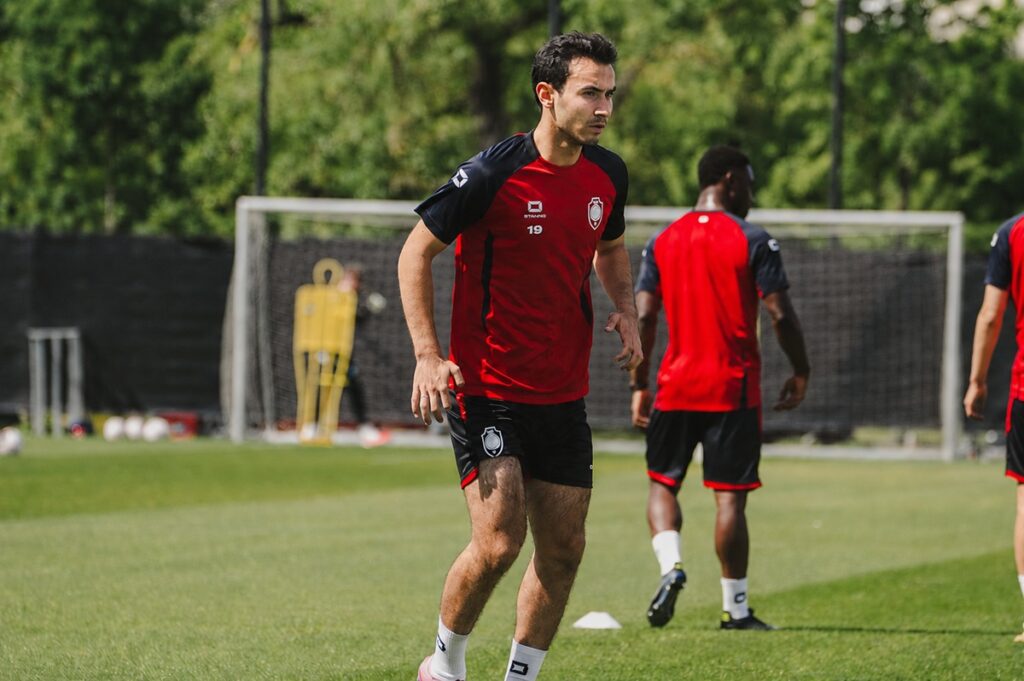
The question may sound harsh, but it is a fair one. Urinboev arrived in Belgium last summer as one of Uzbekistan’s brightest young talents. Antwerp paid around €500,000 to sign the winger from Pakhtakor and handed him a contract until 2029.
The move was widely linked to sporting director Marc Overmars, who oversees the club’s recruitment. Some supporters questioned the signing, wondering where Antwerp had found a player largely unknown to Belgian football.
However, Overmars had little room to manoeuvre. Antwerp’s budget had been reduced and several key players had left the club. Urinboev, who had impressed for Uzbekistan’s youth national teams, fit the club’s strategy of investing in young talent.
A Season Reduced to Two Hours
Unfortunately, Urinboev was unable to make the impact many had hoped for. The Uzbek winger made just five appearances in the Belgian Pro League, playing a combined total of a little over two hours without registering a goal or assist. His longest outing came against Gent, where he played the entire first half.
An injury sustained in the autumn kept him sidelined for several months, and he did not return until the end of January. After a 28-minute appearance against Cercle Brugge, he again disappeared from the first-team picture.
Even so, it would be unfair to describe his debut season as a complete failure. Urinboev barely played, spent much of the campaign recovering from injury, and never had the chance to properly settle into Belgian football.
That offers little consolation for Antwerp, however. The club invested around €500,000 in the winger expecting him to become either a regular starter or at least an important squad player.
By November, Belgian media had already listed Urinboev among the club’s summer signings yet to make an impact. Antwerp’s transfer strategy also came under scrutiny, with several recent signings failing to justify the money spent.
In that sense, Het Nieuwsblad’s question is not aimed solely at Urinboev. It is also directed at Marc Overmars and Antwerp’s recruitment: why did the club invest in the Uzbek winger, and what are their plans for him now?
Starting From Scratch at Antwerp
Urinboev enters the 2026/27 season in a very different Antwerp side. The club began pre-season without a permanent head coach, amid uncertainty over its future and with a significantly reduced squad. The rebuilding process, driven largely by financial constraints, is now in its second year.
Several experienced players have departed, including fellow wingers Gyrano Kerk and Anthony Valencia, two of Urinboev’s direct competitors. Valencia remains under contract for now, but is widely expected to leave.
At the start of July, Antwerp’s first-team squad consisted of just 24 players, with half of them aged 20 or younger. Many are either still developing or yet to prove themselves in the Belgian Pro League.
That creates an opportunity for Urinboev. There is no longer an established star blocking his path, and he has a genuine chance to earn regular minutes.
The pressure, however, has also increased. A year after arriving in Belgium, he is no longer viewed as a new signing who simply needs time to adapt. Antwerp expect him to start delivering, while continuing to recruit young players capable of competing for the same positions.
The Biggest Obstacle: Mejia
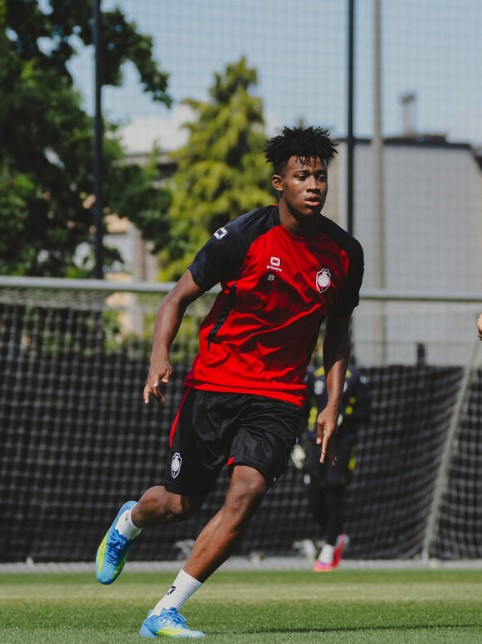
Urinboev’s main competition now comes from 18-year-old Ecuadorian Carlos Daniel Mejia. Another left-footed winger, Mejia joined Antwerp in June on a four-year deal after spells with Independiente del Valle and Croatian third-tier side Kustošija.
In profile, Mejia is almost a direct rival for Urinboev. He is another young winger Antwerp hope to develop and eventually sell for a profit.
Age also works against the Uzbek. Mejia is three years younger, so if both players perform at a similar level, the club may favour the player with more room to grow.
However, the first friendly suggested Mejia is not ahead of him yet.
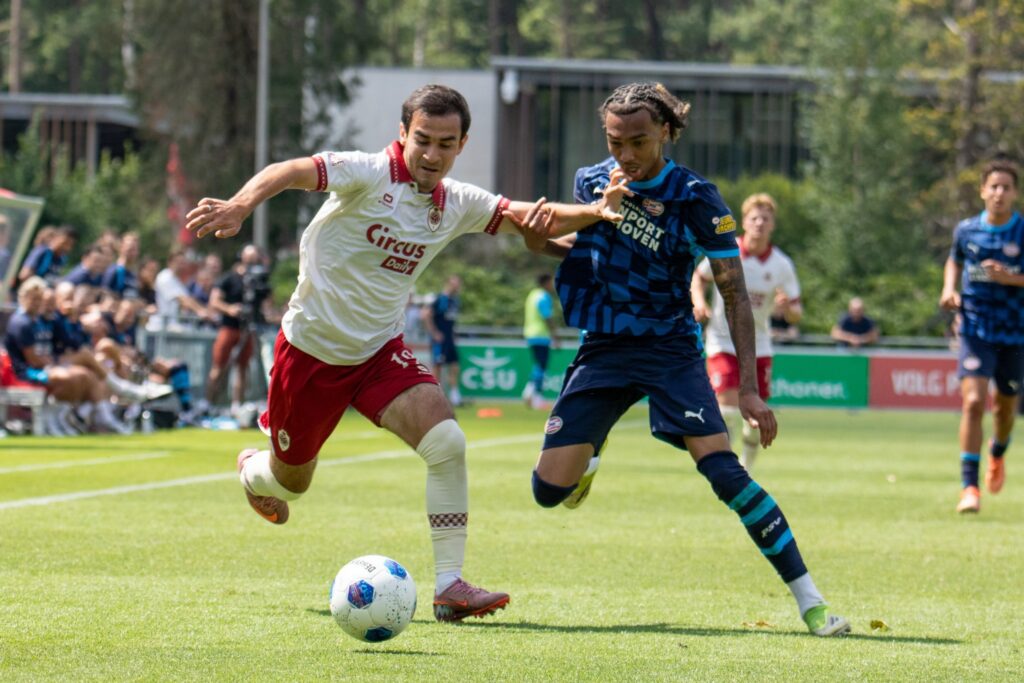
Against Dutch champions PSV, Mejia started the match before being replaced by Urinboev at half-time. Antwerp trailed 1-0 at the break but equalised in the second half. Both teams made major changes, so the result cannot be linked to one substitution. Still, Urinboev looked stronger on the numbers.
Sofascore gave Urinboev a rating of 6.7, compared with Mejia’s 6.1. For the Ecuadorian, it was one of the lowest ratings in the Antwerp side.
Mejia completed 11 of his 15 passes and created two shooting chances. He also had one shot, but all four of his crosses failed to find a teammate.
Urinboev was less flashy but much cleaner in possession. He completed 13 of his 14 passes, including six of seven in the opposition half, and found a teammate with all three of his long balls.
The Uzbek did not score, provide an assist or produce a standout moment. But he made very few mistakes, kept the ball well and helped Antwerp move through midfield more quickly. After a poor first half, that was useful.
It would be wrong to draw firm conclusions from one July friendly. But Urinboev has started pre-season better than his new rival. For a player already facing difficult questions from the Belgian press, that matters.
The Pressure Is on Overmars Too
Marc Overmars remains Antwerp’s sporting director, with his contract running until mid-2027. However, he continues to work under difficult financial constraints. The club spent months searching for new investment, lacked clarity over its budget and was unable to compete for expensive signings or hand out lucrative contracts.
Critics argue that Antwerp’s recruitment has declined in recent years. While the club has generated significant income through player sales, it has not always found suitable replacements. Urinboev is among the signings who, so far, has failed to deliver either on the pitch or in terms of transfer value.
That is why Overmars has every reason to hope the Uzbek winger succeeds. If Urinboev establishes himself in the first team, Antwerp’s €500,000 investment will quickly look far more sensible. It would also strengthen Overmars’ reputation for identifying young talent in emerging football markets.
But Urinboev cannot rely on the sporting director’s backing alone. The arrival of Carlos Daniel Mejia is a clear reminder that Antwerp are not prepared to wait forever. If one young signing fails to develop, the club will simply bring in the next one.
The Season That Could Define His Future
Expecting Urinboev to immediately become a key player for one of Belgium’s biggest clubs would be unrealistic.
After playing just over two hours of league football last season, his first objective is much simpler: earn a regular place in the matchday squad and start playing consistently.
Even 15-20 league appearances with meaningful minutes would represent significant progress. But for a winger, simply keeping possession is not enough.
Urinboev needs goals, assists, successful dribbles and match-winning moments that make it difficult for the coach to leave him on the bench.
For now, he holds a few advantages over Mejia. He has already spent a year in Belgium, knows the club and understands the demands of the Belgian Pro League.
The Ecuadorian still has to adapt. But that head start will disappear quickly if Urinboev continues to play it safe and is limited to brief substitute appearances.
It is too early to describe this as his last chance. His contract runs until 2029. However, the coming season is likely to determine whether he has a long-term future at Antwerp. Another campaign without regular playing time would almost certainly result in a loan move or a search for a new club, perhaps even a return to Uzbekistan.