
Ruslan Mingazov has built one of the most unusual and wide-ranging careers in Central Asian football. From the courtyards of Ashgabat to league titles in Latvia, the Czech Republic and Hong Kong, the Turkmen winger has followed a path few players from the region have managed to take. He represented Turkmenistan at the Asian Cup, became a key figure at Skonto and Jablonec, won the Czech title with Slavia Prague, spent several important seasons in Kazakhstan and then reinvented himself in Hong Kong, where he quickly established himself as one of the league’s standout foreign players. In this interview with Eurasia Football, Mingazov reflects on his childhood, his football journey and the people who shaped it.
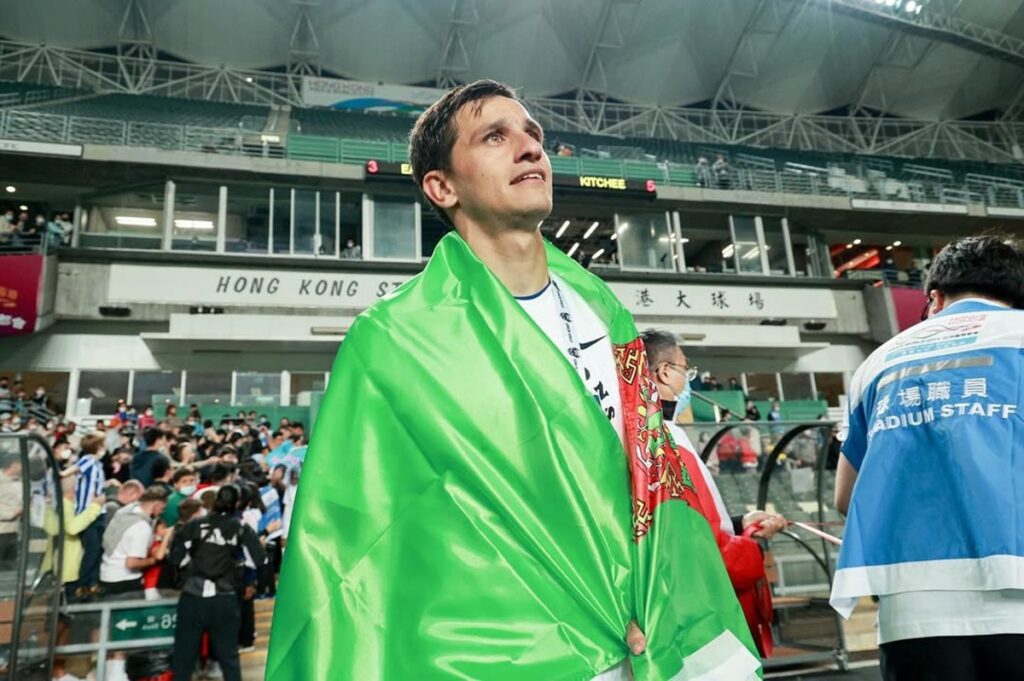
— You come from a football family. Your father, Kamil Mingazov, is a well-known Turkmen coach. Did that help your development, or did it make things more difficult?
— Football was part of my life from a very early age. I always wanted to play, and having a real example at home only motivated me more. Until I was about 14 or 15, my father mostly watched from the side because he did not know whether I would really become a footballer. Later, though, he played a major role in my development.
— What was Turkmen football like when you were growing up?
— It meant that when you were six years old and wanted to play football, there were often no teams for children your age, so you had to start with boys who were two or three years older. Later I found my team and my coach. The boys there were still older than me, but I stayed with that team until I was 16 under Vasiliy Vasilyevich Karpov, may he rest in peace. He shaped me as a footballer, and I will always be grateful to him. My father used to come to my matches, and I always wanted to surprise him and make him proud.
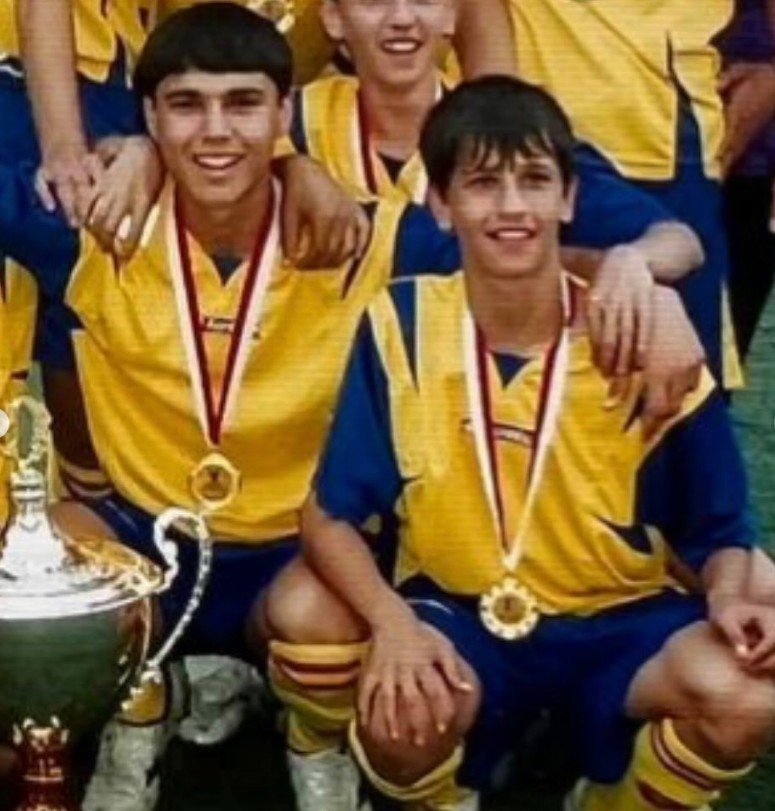
— There is a childhood photo of you with Arslanmyrat Amanov, one of the leaders of the Turkmen national team. You recently posted a touching message for his birthday.
— Arslan is someone I grew up with in the same team and later played alongside in the national team. He was older than me, so I always saw him as an older brother. The mutual respect between us only grew stronger with time. I was sad when he retired, so I decided to write that post. I also remember one funny story from a youth tournament in Turkmenistan. I lost one of my socks in the hotel, and Arslan told me to go out wearing just one. So I did the warm-up like that — you should have seen the coach’s face. But my desire to play was stronger than the problem.
— Were there boys in your youth teams who looked like bigger talents than you, but never fully made it?
— That happens a lot in youth football. At that age, some players look as if they are guaranteed a big future, but football does not work like that. There were a couple of boys who seemed very strong to me, and I was sure they would make it. But very often you only understand things properly at 16 or 17, when it becomes clear what kind of player you are and whether you really have the potential to go far.
— Turkmenistan has produced many respected coaches, and your father is one of them.
— The coaching school in Turkmenistan is genuinely very strong. We have a lot to be proud of, and I believe more good coaches will come through in the future. As for my father, after finishing his playing career he tried to go into business, but football never truly left him. He recently obtained his PRO licence and can work as a head coach, although I am not sure he wants that right now — maybe in the future. After his work with the Turkmenistan women’s national team, he took a break. My father always gives everything to the job. He lives for football, even though it never brought him big money. He simply loves football and loves his country. In many ways, much of what women’s football in Turkmenistan has achieved over the past decade is also down to him. A lot of girls moved abroad to play for clubs in other countries, and they were grateful because he believed in them and helped prepare them. He deserves more recognition for that. At the same time, women’s football still needs further development, and there are serious challenges ahead.
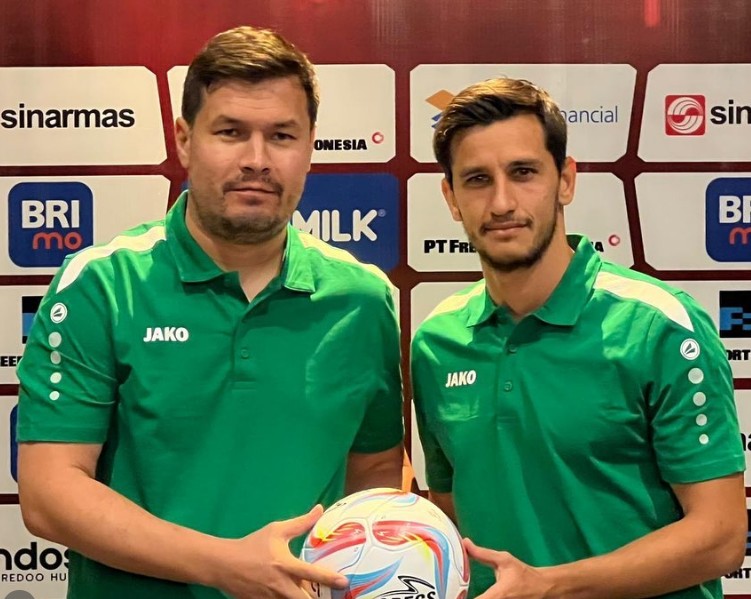
— Mergen Orazov recently worked in Lithuania. What do you think of him as a coach?
— I met Mergen in the national team, and we still speak regularly, mostly about football. We are friends. He is a young coach with big ambitions. I think he was one of the first coaches in Turkmenistan who did not want his teams simply to defend and adapt to the opposition, but instead tried to impose his own football — playing out from the back, keeping the ball and building attacks through short passes. If you watched some of Ahal’s matches in the past, or Arkadag’s now, you could notice that style. I remember he liked to use Brighton as an example — a team that is not afraid of bigger opponents and tries to play on equal terms.
Champion in Latvia
In 2009, Mingazov moved from Ashgabat to Latvian side Skonto. Over five seasons, he made 133 appearances in all competitions, scored 38 goals and registered 42 assists. He became one of the club’s leaders and won both the Latvian league title and the Latvian Cup.
— Your European career began in Latvia. What do you remember most about that move?
— I moved there in 2009, still very young, so I did not have much to compare it with. Latvia welcomed me with cold weather and snow, and my first thought was: what am I doing here? But my father flew with me and helped me settle in at the beginning. After that, I had a clear goal — to improve as a player at Skonto and eventually move to a stronger league. Latvia will always stay with me as the place where I took my first serious step into European football. Everything was new: the climate, daily life, the football culture. After Turkmenistan, it all felt very different.
— You arrived at Skonto under Paul Ashworth, but later Aleksandrs Starkovs took over.
— After Starkovs came in, I had to prove myself all over again. I think I managed to show during pre-season that I was good enough to be a starter. He was very polite, very intelligent, always calm, and he understood players well. After speaking with him, you felt as though you had learned more than you expected. He made us believe we were ready for bigger challenges. We trusted him, and in the end we became champions.
— Starkovs led Latvia to UEFA Euro 2004. As a Turkmenistan international, was that inspiring to you?
— Absolutely. And some of the players from that Latvia team were in our dressing room, so I heard those stories many times. Starkovs’ reputation and his approach gave the team extra confidence.
— Juris Laizans, for example?
— A legend. He stayed hungry, in the best possible sense, until the very end of his career. We still keep in touch from time to time. A true master. He could play a perfect 40-metre pass without even looking. He would send the ball into an area as if he already knew I would be there. I still do not know how he did it, but his passing was magical.
— Were you at Skonto when the club’s financial problems started?
— Yes, it began while I was still there. Salaries went unpaid for months. We were thrown out of the training base, food was cut off — and that was only part of it. Skonto went through genuinely difficult times. Eventually I left, and soon after that the club disappeared. I felt empty. I was deeply upset because after more than five years I had become part of that club and knew its history. Latvia lost Skonto, but of course things could not continue like that.
Champion in the Czech Republic
In 2014, Mingazov moved to Czech side Jablonec under Jaroslav Silhavy, who had noticed him when Skonto played Europa League qualifiers against Slovan Liberec. Mingazov provided an assist in one of those matches as the Latvian side claimed a surprise 2-1 win, although they still failed to progress after a 1-0 defeat away from home. At Jablonec, he won bronze in the Czech league and became one of the team’s leading players. Later, Silhavy moved to Slavia Prague and brought Mingazov with him. There, the Turkmen winger won the league title. He also played for Mlada Boleslav and Pribram. Across five seasons in the Czech Republic, he made 114 appearances in all competitions, scoring 30 goals and registering 18 assists.
— How did you see the move to the Czech Republic?
— Looking back now, it was the right move at the right time. Jaroslav Silhavy, who noticed me and brought me to Jablonec, later played another huge role by taking me to Slavia, where I won the title. I spent five years in that country and I absolutely love Prague. For me, both the city and the country became like a second home. My younger daughter, Melissa, was born there. And Prague at Christmas is something special — the city feels completely different.
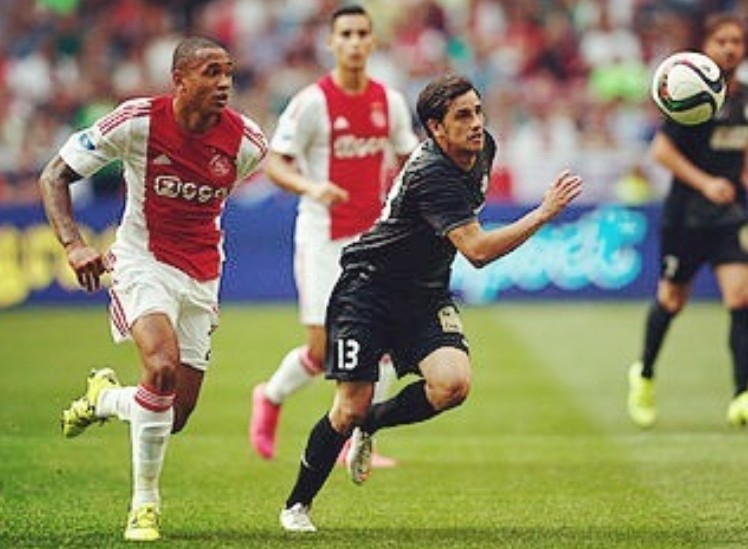
— Your Europa League tie against Ajax ended 0-1 and 0-0. Was that one of the most painful moments of your career?
— Every footballer has painful moments in his career, but yes, that was definitely one of them. Based on the way we played, we felt we should have gone through. There was also the missed penalty in the home match. But that is football. Even so, playing for Jablonec in Amsterdam was an unforgettable experience.
— Your move to Slavia Prague was probably the peak of your career. You played alongside Danny, Ruslan Rotan and Vladimir Coufal.
— Yes, joining Slavia was the peak. Being around players of that quality made it a very memorable period. I still keep in touch with Rotan, but I was probably closest to Danny. First, because Zenit is the Russian club I have always liked, and Danny is a legend there. His football was exceptional, and even in training it was a pleasure just to be around him. Second, I often acted as a translator from Czech, so we spent a lot of time together.
— And the league title itself?
— One of the brightest moments of my life. What I remember most is how the supporters ran onto the pitch in the final minutes and celebrated with us. Later, though, I had to go out on loan because my playing time decreased, and for me that is always critical.
Kazakhstan
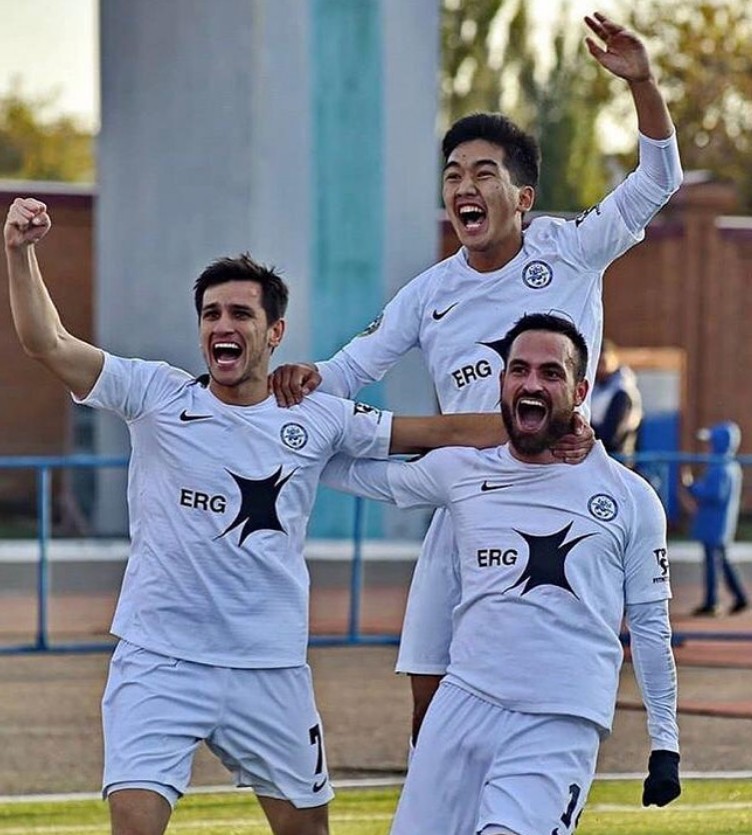
In 2019, after knee surgery left him without a club, Mingazov made a somewhat unexpected move to Irtysh Pavlodar. What looked from the outside like a career reset became an important stage in his journey. He later also played for Shakhter Karagandy and Caspiy Aktau, with a brief spell at Bahraini side Al-Muharraq in between. Across almost three seasons in Kazakhstan, he made 50 appearances in all competitions, scoring 12 goals and providing nine assists.
— At Irtysh, you played under Milan Milanovic, who is now in Tajikistan, and at Shakhter Karagandy under Konstantin Gorovenko, who is now a fitness coach at a Kazakh second-tier club. How do you look back on working with those two coaches?
— Milanovic made a very good impression on me. He created a strong atmosphere in the dressing room and knew how to build trust with the players. Even when the club ran into financial problems, that spirit remained important.
Gorovenko also impressed me a lot. We achieved good results under him, and he always looked like a coach with a strong future. At the time, his assistant was current Kairat head coach Rafael Urazbakhtin, and together they were aiming for European qualification. I do not know all the details of his current situation, but I still see him as a very good coach.
— Your move from the Czech Republic to Kazakhstan looked surprising from the outside. What did that period mean to you?
— I had knee surgery and found myself without a club. I understood that in the Czech Republic only a couple of teams would be able to meet both the financial side and my own expectations, so things developed in a way that made it necessary to leave the country and move on. Pavlodar offered me a three-month contract, which suited me because I needed to get back into shape. After those three months, the club decided to extend my deal and offered me better terms, so I agreed. My family had to adapt, but everyone understood that football does not guarantee life in one country forever.
Beyond football, Kazakhstan gave me a lot as well. I love the country and I am grateful to it. I cannot single out one club or one city. Almaty, where Shakhter played its home matches at the time, is a wonderful city, and I fell in love with the mountains. But I also felt at home in Aktau: there is the sea there, and many Turkmens live and study there. Everybody knew me. In Pavlodar, meanwhile, I was completely focused on football. If I went anywhere, it was usually just for walks along the embankment. So overall, my memories are all positive, just in different ways.
— Then there was the brief spell in Bahrain. What happened there?
— In Bahrain, I signed a contract, was given an apartment and a car, everything was arranged — and then it turned out the club had financial problems. After some time, we agreed to part ways by mutual consent. I did not want to go through financial uncertainty again, so I returned to Kazakhstan and joined Caspiy.
Best player and champion in Hong Kong
Mingazov joined Kitchee in 2022 and made an immediate impact. In his first season, he became the league’s top scorer and was named Player of the Year. He also won the domestic cup and later added two league titles. Across four seasons with Kitchee, he made 86 appearances in all competitions, scoring 36 goals and registering 32 assists.
— You have been in Hong Kong for a while now. Was it easy to adapt there?
— Yes, quite easy. Everyone speaks English, so that helped a lot from the beginning. Life here is comfortable, and I settled in quickly.
— The Hong Kong Premier League has a decent reputation, good foreign players and solid salaries, but clubs often struggle internationally.
— I think Kitchee have performed well in the AFC Champions League. In my first season, we competed evenly with Vissel Kobe from Japan and drew 2-2. But of course, consistency is still the issue. We are trying, but the level of the Japanese league is higher. It takes time.
— Kim Dong-jin, another former Zenit player, was also part of Kitchee. Did he play an important role in the club’s success?
— Kim is a great person, very warm, and he knew quite a few words in Russian. He used to tell stories about his football life in Russia. He brought a lot not only to Kitchee, but to Hong Kong football as a whole. I could speak with him openly about anything. In those conversations, there was never any distance between coach and player — I always saw, and still see, him as a teammate and a friend.
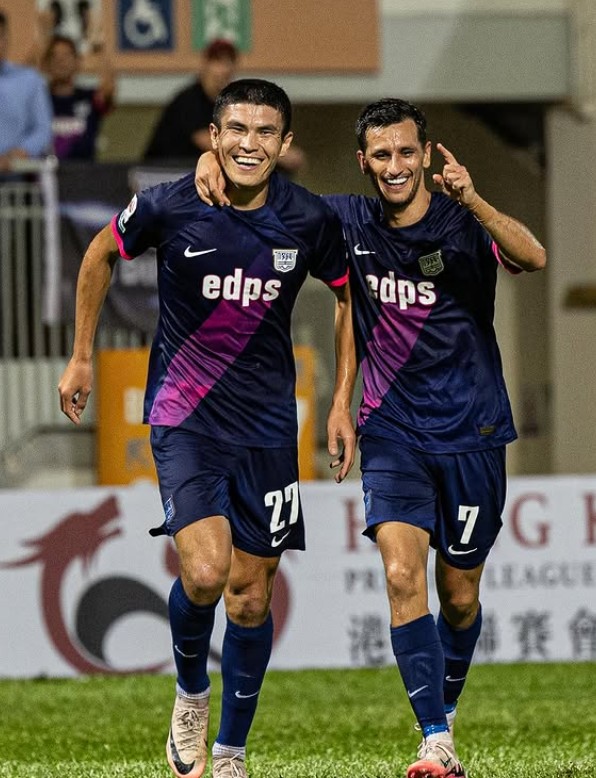
— Other Central Asian players have also appeared in Hong Kong, including Sherzod Temirov and Tamirlan Kozubaev. What was that like from your perspective?
— Sherzod Temirov made a strong impression at Kitchee. He is a very hard-working player, and I have no doubts about either his commitment or his character. He has had a strong season, scored important goals and shown that he can make a difference in a competitive environment. If Fabio Cannavaro includes him in Uzbekistan’s squad for the World Cup, I think that would be the right decision, because he is capable of helping the team.
As for Tamirlan Kozubaev, that was a nice experience too. We actually lived in the same building, so we started talking from the very first day. We were opponents on the pitch, but off it we stayed in touch. Our wives also got along well, and even after his departure we still contact each other from time to time and congratulate one another on holidays.
— How do you see the future of football in Hong Kong? What is still missing?
— The weather in summer is very difficult — high humidity, a lot of heat. That makes it hard to produce high-quality football. We play our home matches on a good pitch, but away from home we sometimes face poor surfaces, and I think that also slows development. Overall, though, I like life here very much. At the same time, there is always room for improvement and growth.
— Hong Kong looks quite cramped from the outside. Is it a good place for family life?
— There is not much space, that is true. At first it took time to get used to it, but now it feels natural. We adapted.
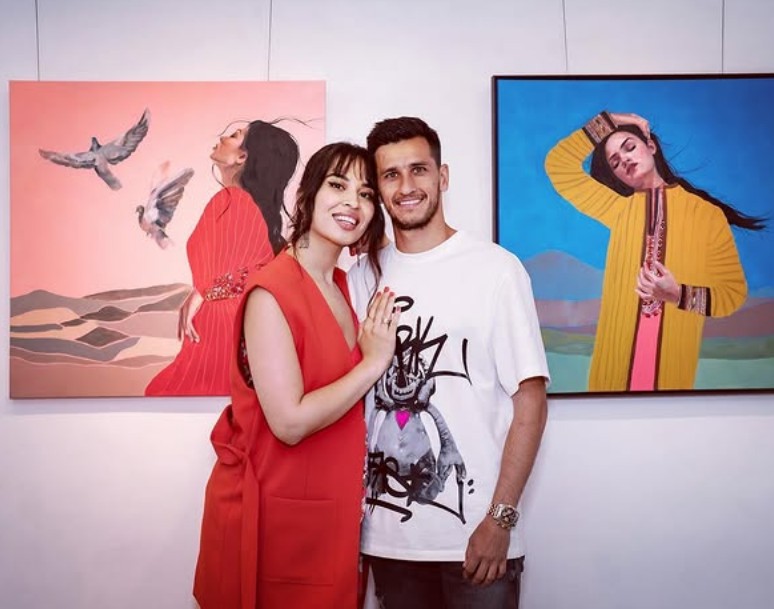
— Your wife is a painter. Could her work eventually be shown in Central Asia as well?
— She is currently planning exhibitions in Hong Kong and Singapore this year. Kazakhstan and other Central Asian countries are also part of the plans. We hope it all works out.
— You have played in Turkmenistan, Europe, Kazakhstan and Asia. Is Central Asia now one football market, or is it still a collection of separate countries?
— I think Central Asia can absolutely be seen as a market and as a platform for future talent. The problem is that this market is still not well studied, and many players go unnoticed. I am sure that with time, recognition will grow, and we will see more and more footballers from Central Asia in European clubs.