
For Syrian clubs, securing a place in continental competition has increasingly become only the beginning of the struggle.
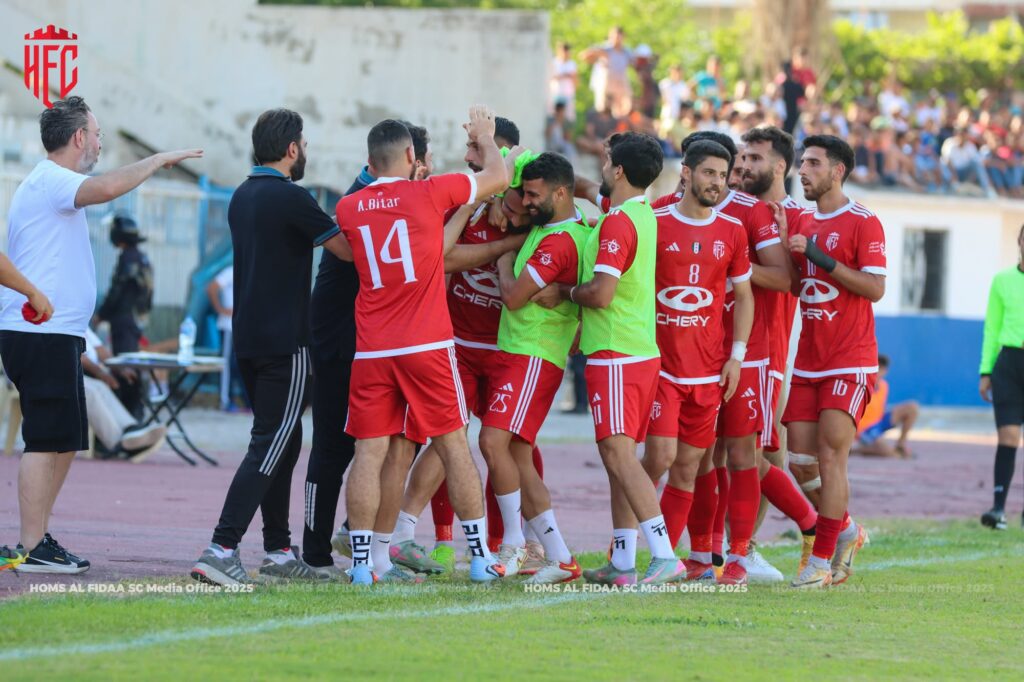
In recent seasons, teams have entered AFC tournaments after losing sponsors and key players, scrambling to finance international travel and rebuilding squads only weeks before decisive matches.
In 2024, Syrian league and cup winners Al-Futowa approached the AFC Challenge League after losing most of their major financial backers. Much of the squad and staff that had delivered the domestic double also left, while some prospective signings were told that the club could no longer afford their contracts. At one stage, even Al-Futowa’s participation in Asia was reported to be under threat.
The team eventually made it to the group stage, where its campaign began with a 5–0 defeat to Oman’s Al Seeb.
A year later, the same problems followed Syrian clubs into the preliminary round.
Hutteen’s trip to Bishkek to face Abdysh-Ata remained uncertain because of financial difficulties. Preparations started late, the squad was only fully assembled shortly before departure, and local authorities and the Latakia Chamber of Commerce became involved in helping the team make the journey.
Hutteen reached Kyrgyzstan — and lost 5–2.
Al-Karamah entered its qualifier after roughly two weeks of preparation. The core of the team was supplemented by new local players and foreign signings. They lost 1–0 to Bashundhara Kings in Doha.
Both Syrian representatives were eliminated before reaching the group stage.
Now Homs Al-Fidaa have arrived in Bishkek.
And their story is perhaps the clearest example yet of the difficulty Syrian clubs face in turning domestic success into a stable Asian campaign.
Syria’s runners-up will face Dordoi on August 11 in a single-leg AFC Challenge League preliminary tie. The winner advances to the group stage.
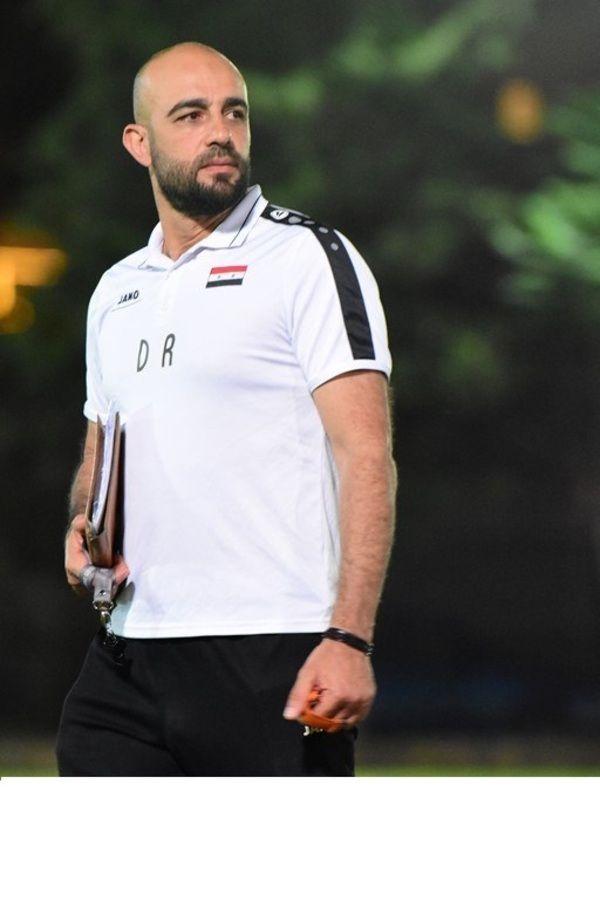
Only weeks ago, Homs Al-Fidaa were one of the strongest teams in Syrian football. They finished one point short of the league title, lost only twice in 30 matches and conceded fewer goals than anyone else. Syrian newspaper Al-Watan called them the country’s “uncrowned champions”.
Then the season ended.
The president and two other board members announced their resignations. Most player contracts expired. Several leading players left or did not travel to Kyrgyzstan. Replacements were brought in from other Syrian clubs.
The outgoing management remained in office for the AFC match, while head coach Dirar Radawi and a number of players agreed to stay for one more month.
The team is in Bishkek.
The crisis came with it.
From ‘uncrowned champions’ to uncertainty
For decades, the club from Homs was known as Al-Wathba before restoring its historic Al-Fidaa name in 2025.
Ahead of the 2025/26 season, the club assembled a squad capable of challenging for the Syrian title. The group included experienced players such as goalkeeper Ahmad Madania, Fares Arnaout, Kamel Hmeisheh, Youssef Al-Hamwi, Mohammad Malta, Mahmoud Mhanna, Mardik Mardikian and Abdulhadi Dali.
The conditions around the team were much less impressive.
Homs Al-Fidaa effectively spent the first half of the season without a suitable home ground in Homs. Training facilities were limited as well, with artificial pitches shared with other clubs from the city.
Club president Najib Al-Farra would later point to the lack of a proper training ground, the burden of playing away and insufficient support among the difficulties faced by the club.
Despite that, Al-Fidaa remained in the title race.
A 2–1 defeat to Al-Karamah — only their second league loss of the season — led to the resignation of head coach Haitham Jatal.
Dirar Radawi was appointed on April 7. He had previously coached the club, worked with several other Syrian sides and served as an assistant with the senior Syrian national team.
His first match was the final postponed fixture from the first half of the season, against eventual champions Al-Ahli Aleppo.
It finished 1–1.
At that point, Homs Al-Fidaa had 31 points and sat third.
Then the second half of the season began.
They did not lose again.
Under Radawi, Homs Al-Fidaa finished the league on a 16-match unbeaten run: 13 wins and three draws. The second half alone produced 13 victories and two draws.
Among those results was a 1–0 away win over Al-Ahli Aleppo — the champions’ only league defeat of the entire season. Homs also beat Al-Wahda away in Damascus.
The title eventually slipped away somewhere far less expected.
A goalless draw against bottom side Al-Shoula proved especially costly.
Al-Ahli Aleppo finished with 73 points.
Homs Al-Fidaa had 72.
Their final record was 22 wins, six draws and only two defeats in 30 matches. They scored 56 goals and conceded just 11.
It was the best defensive record in the league and the second-best attacking record.
The “uncrowned champions” label was not difficult to understand.
The season ended. So did the contracts
The problems began almost immediately after the domestic campaign finished.
In mid-July, club president Najib Al-Farra announced his resignation. Vice-president Hossam Abdelazim and board member Abdelmajid Abdelazim made the same decision.
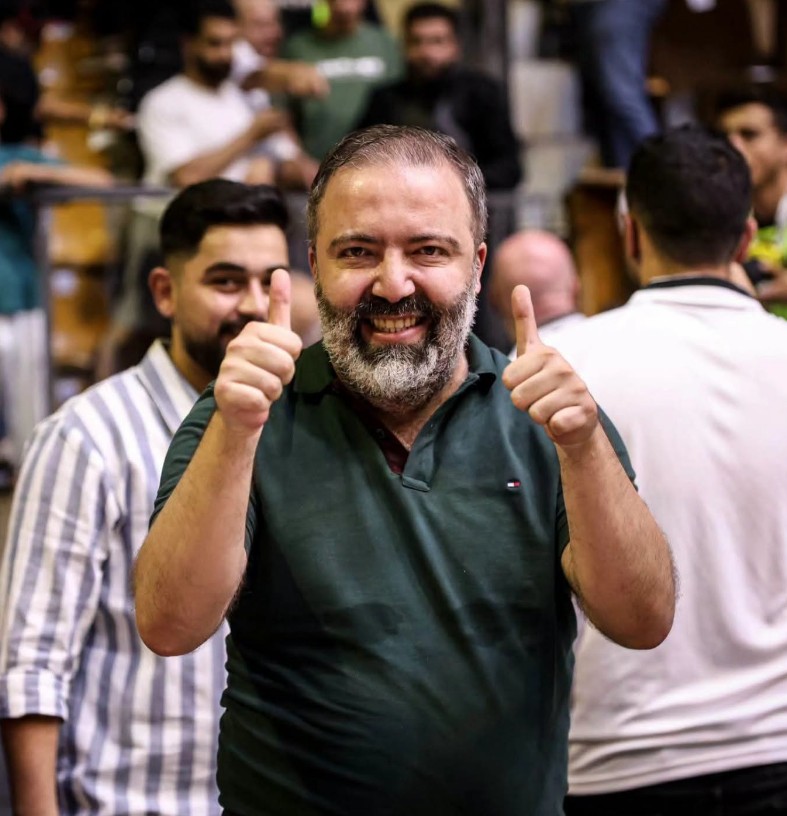
Al-Farra spoke publicly about the financial and organisational burden surrounding the club: the cost of maintaining competitive football and basketball teams, insufficient support, poor working conditions and the pressure placed on the administration throughout the season.
The resignations, he said, were final.
Their timing was not.
Homs Al-Fidaa still had an AFC Challenge League qualifier to play.
The outgoing management therefore agreed to remain in place until the continental match. Al-Farra later said the board would leave immediately after the game against the Kyrgyz representative, regardless of the result.
Then came another problem.
Most contracts had expired.
On August 7, Al-Watan reported that the agreements of most players had ended, as had Radawi’s own contract.
The club reached short-term agreements with the coach and a number of players to continue for another month.
One month — enough to keep the team together, rebuild the squad and complete the AFC trip to Bishkek.
What happens after that is far less certain.
Three of the top four scorers are missing
The changes are most obvious in attack.
Nigerian forward Song Sunday finished as Homs Al-Fidaa’s leading league scorer with 11 goals.
Mohammad Malta scored eight.
Mardik Mardikian scored seven.
Abdulhadi Dali scored six.
Together, those four players accounted for 32 of the team’s 56 league goals.
Only one of them is in Kyrgyzstan.
Mardikian travelled to Bishkek. Sunday, Malta and Dali did not.
The losses extend beyond the forward line.
First-choice goalkeeper Ahmad Madania and experienced defender Fares Arnaout have already joined Al-Karamah for the new season.
Khaled Kurdghli and Abdulqader Addi, also members of the silver-medal squad, are absent from the travelling party.
There is no equally clear public explanation for every missing player, and it would be wrong to assign the same reason to all of them.
What is established is that the end of the league season coincided with the expiry of most contracts.
The team that conceded only 11 goals and came within one point of the Syrian title could not simply be carried intact into Asia.
Parts of it had to be rebuilt.
Rebuilding the squad for one AFC match
Initial reports identified five players brought in at the request of Radawi’s coaching staff ahead of the qualifier: Suleiman Rasho, Mohammad Al-Asaad, Abdulrahman Barakat, Anas Bouta and Mohammad Othman.
All five are in Kyrgyzstan.
The reconstruction went further.
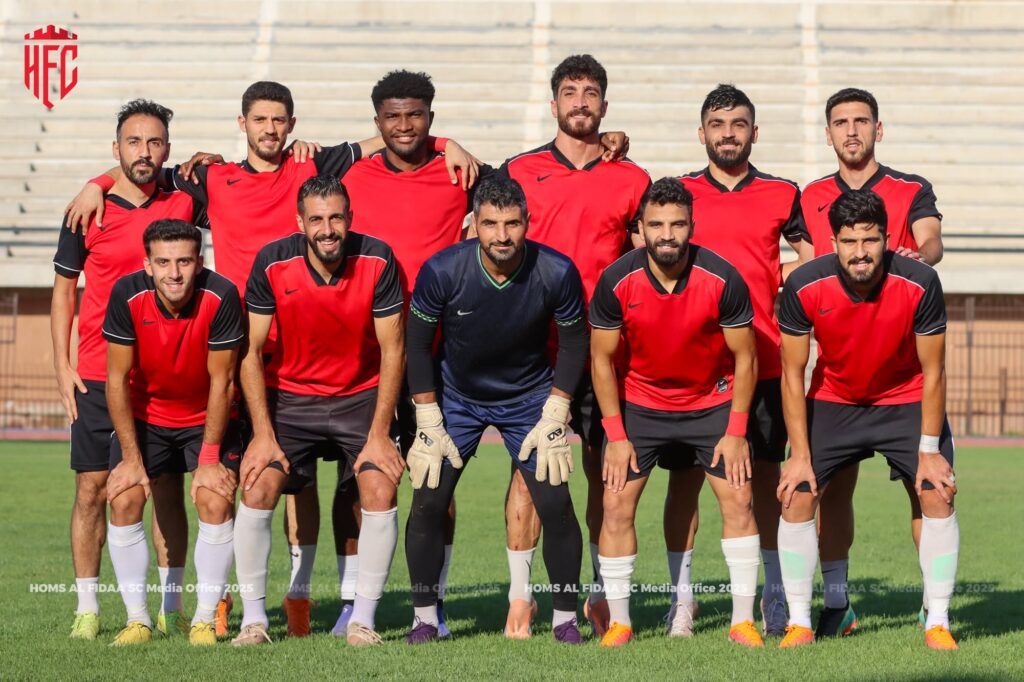
Al-Watan reported that Al-Asaad arrived from Tishreen; goalkeeper Mahmoud Khalaf and Rasho from Al-Taliya; Bouta from Al-Shorta; Othman and Barakat from Al-Wahda; and Ahmad Al-Soufi from Hutteen.
Cameroonian defender Frank Atsama is also part of the travelling squad, although Syrian reports have not been entirely consistent over his contractual status.
The official delegation contains three goalkeepers and 18 outfield players.
A substantial part of the silver-medal team remains. Mardikian, Hmeisheh, Al-Hamwi, Mhanna, Ibrahim Khalil, Wael Al-Rifai, Khattab Mashlab, Samer Mustafa, Atsama, Sobhi Shoufan, Moatasem Shoufan and Abduljawad Bitar were all part of the domestic-season squad.
So this is not a completely new team.
But several important pieces have been removed, and replacements have been inserted in a matter of weeks.
That matters for Radawi.
During the title race, Homs Al-Fidaa were able to change shape. They played with a back four in several matches and used a 3-4-1-2 in others.
By the end of the season, those structures had produced the best defensive record in Syria.
In Bishkek, the question is how much of that organisation has survived the summer.
One friendly and twenty penalties
There was little time for a conventional pre-season.
Before leaving Syria, Homs Al-Fidaa played a training match against champions Al-Ahli Aleppo, who are also preparing for the AFC Challenge League.
The game finished 1–1.
After the final whistle, the teams practised penalties.
Each side took ten.
Al-Ahli converted all ten. Homs scored eight.
For clubs preparing for single-leg continental qualifiers, it was hardly an irrelevant exercise.
A season’s work can now be reduced to one evening.
Dordoi have changed too
The hosts are approaching the match in different circumstances, although their own team has also changed since qualifying for Asia.
Dordoi earned their AFC Challenge League place as winners of the 2025 Kyrgyzstan Cup, beating Muras United 2–1 in the final.
Kyrgyz champions Bars were unable to meet AFC club licensing criteria related to two consecutive seasons of participation in domestic competition. The Karakol club had only been established in December 2024.
Dordoi therefore entered the continental competition as cup winners.
There has also been a coaching change in Bishkek.
Belarusian Vadim Skripchenko took charge on June 3, replacing Vladimir Salo.
Salo had delivered the cup, but Dordoi began the 2026 league season poorly. At the time of the change, the club had only ten points from 11 matches and was sitting in the lower part of the table.
Skripchenko brings recent title-winning experience. He led Dinamo Minsk to consecutive Belarusian championships in 2023 and 2024.
Dordoi also possess something Homs Al-Fidaa have very little of: continental history.
The Bishkek club reached six consecutive AFC President’s Cup finals and won the competition in 2006 and 2007.
Their most recent AFC campaign came in 2022.
Four years later, Dordoi are back in Asia.
Homs have barely any AFC history
For Homs Al-Fidaa, the picture is very different.
Their only previous AFC campaign came in 2020, when the club was still known as Al-Wathba.
They drew 0–0 with Jordan’s Al-Faisaly and 0–0 with Kuwait SC in the AFC Cup.
Then the competition was halted during the COVID-19 pandemic.
The match against Dordoi will therefore be only the club’s third appearance in AFC competition — and its first in six years.
That makes the contrast in Bishkek striking.
Dordoi arrive with a long continental history and a new coach trying to revive a difficult domestic season.
Homs arrive as Syria’s runners-up, carrying the remains of a team that nearly won the league and the consequences of everything that happened immediately afterwards.
They made it to Bishkek. The problems came with them
For Syrian clubs, recent AFC campaigns have repeatedly begun with questions that stronger football systems usually settle long before kick-off.
Who will finance the trip?
Which players are still under contract?
Can the club retain its coach?
Can replacements be registered in time?
Will the administration still be in place when the match is played?
Homs Al-Fidaa have answered enough of those questions to get themselves onto the pitch in Bishkek.
Radawi has stayed for another month.
A significant part of the side that finished one point short of the Syrian title remains.
Players from other clubs have been brought in to cover the gaps.
The outgoing board has stayed long enough to organise the AFC campaign.
On August 11, the football finally takes centre stage.
For 90 minutes — perhaps 120 and penalties — the financial problems, expired contracts and administrative uncertainty can be pushed outside the touchline.
Afterwards, they return.
Homs Al-Fidaa’s current leadership has already said it intends to step down regardless of the result.
Syria’s “uncrowned champions” are in Bishkek.
What kind of club returns home is much less certain.