
Dynamo Makhachkala have signed 23-year-old Uzbekistan left-back Makhmud Makhamadzhonov from Andijan. An AFC U20 Asian Cup winner who once scored against Argentina at the U-20 World Cup, he belongs to the same generation as Abdukodir Khusanov, Abbosbek Fayzullaev and Jahongir Urozov — a generation that foreign clubs are increasingly turning to for first-team talent.
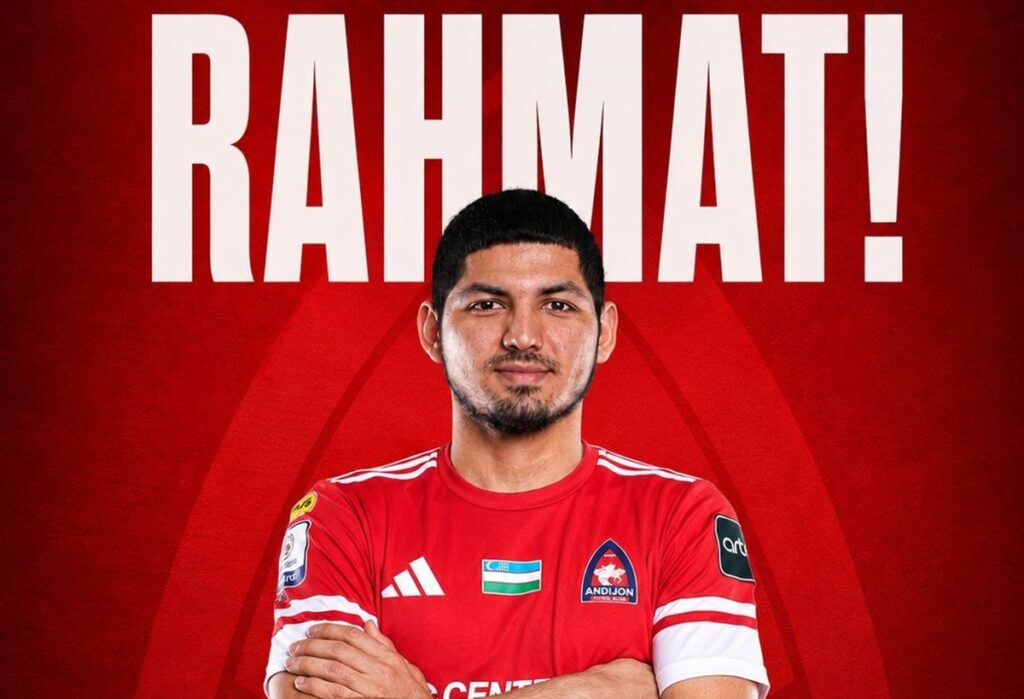
Makhmud Makhamadzhonov. Photo: FC Andijan
Andijan announced that they received $250,000 for Makhamadzhonov. Before the deal was completed, Russian outlet Sport24 had reported a significantly higher figure of €500,000 and said the defender had passed his medical ahead of signing a three-year contract.
With the figures differing considerably, the amount officially announced by Andijan is the more reliable reference point. At that price, the transfer looks particularly interesting for Dynamo.
Makhamadzhonov spent only seven months with Andijan but established himself quickly, making 19 appearances in the Uzbek Super League and another three in the Uzbekistan Cup, while providing three assists.
The transfer had also been in the making for some time.
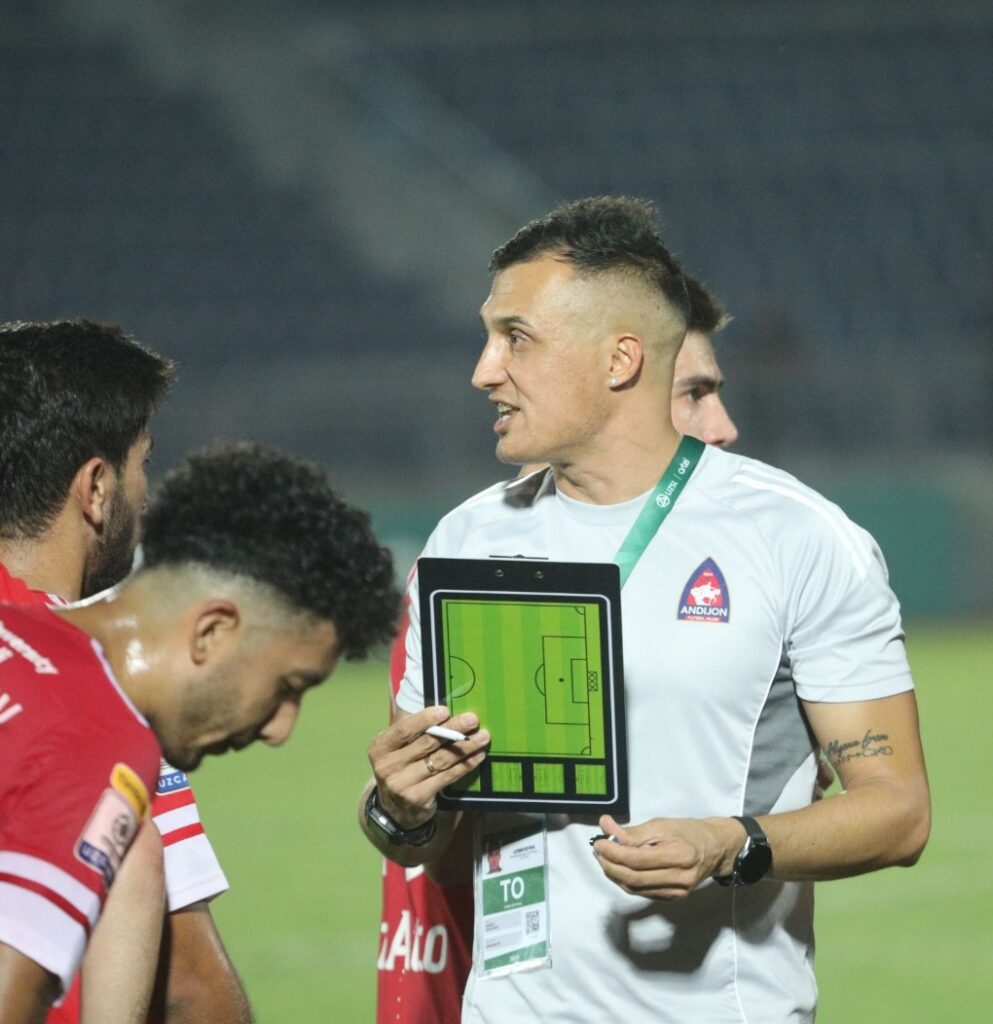
Andijan senior coach Sergey Arslanov told Eurasia Football that Dynamo had been following the defender for a while — most likely since Makhamadzhonov scored against the Makhachkala club during a pre-season friendly in Turkey.
A move abroad had been part of the player’s plans as well.
In February, shortly after joining Andijan, Makhamadzhonov outlined two personal objectives in an interview with the club’s media team: to establish himself with Uzbekistan’s senior national team and to earn a move abroad.
Less than seven months later, one of those goals has already been achieved.
A move to the Russian Premier League should also strengthen his case for a regular place in Fabio Cannavaro’s Uzbekistan squad.
What kind of player are Dynamo getting?
Makhamadzhonov is primarily a left-back, but describing him as a conventional defensive full-back would not tell the whole story.
His profile is arguably even better suited to playing as a wing-back, where his pace and stamina allow him to cover the entire flank.
Arslanov highlighted several qualities that could make him useful in Russia.
“He plays at left-back and can also play as a wing-back. He has a very good left foot. He takes throw-ins very well and has a long throw,” Arslanov told Eurasia Football.
“And something particularly important for a defender: he is quick and mobile. He can dribble at speed, take responsibility and beat an opponent one-on-one. I think he can fulfil that potential in Russia.”
Interestingly, Makhamadzhonov received a very similar assessment long before Dynamo came calling.
Back in 2023, scouting project A2M included the then 20-year-old among a group of Uzbek players capable of attracting interest from clubs in Russia and Europe.
The scouts highlighted his pace, stamina, technique and willingness to join attacks. In stylistic terms, they compared him with Dynamo Moscow left-back Dmitry Skopintsev, while noting that Skopintsev was considerably more aggressive in direct one-on-one dribbling.
Even then, Makhamadzhonov looked more like a modern attacking full-back than a purely defensive player: someone who provides width, makes runs from deep and is capable of carrying the ball forward himself.
His performances in Uzbekistan have provided plenty of evidence.
While playing for Dynamo Samarkand in 2025, Makhamadzhonov scored against Sogdiana with a powerful left-footed strike after picking up a loose ball outside the penalty area. Championat.Asia named it the best goal of the round.
Opponents were paying attention to him as well.
Before facing Andijan, Neftchi head coach Islombek Ismoilov specifically mentioned Makhamadzhonov and the need to restrict the space available to him.
“Makhamadzhonov is a good footballer. We know what kind of football he played at Dynamo,” Ismoilov said, referring to his performances in Samarkand.
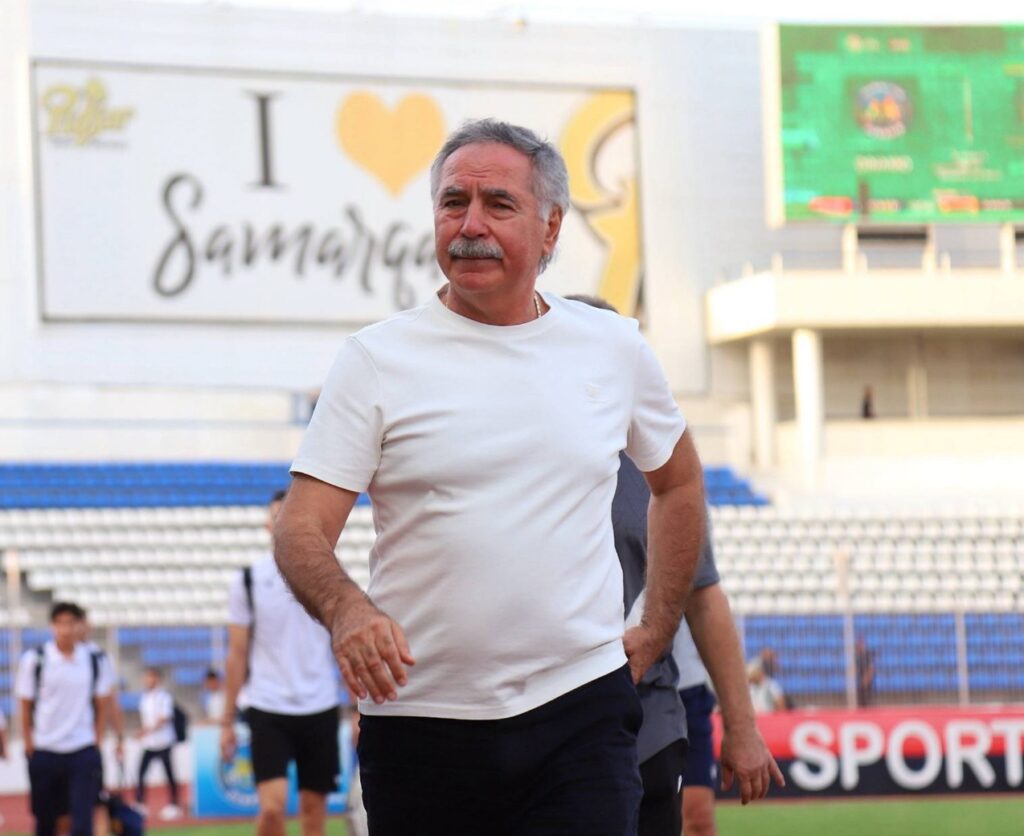
Few coaches know Makhamadzhonov better than Vadim Abramov, who worked with him at Dynamo Samarkand.
“We took him on loan from Pakhtakor for six months,” Abramov told Eurasia Football. “He was barely playing there, but with us he got regular football and by the end of the season he was called up to the senior national team. Andijan then saw his progress and bought him.”
For Abramov, Makhamadzhonov’s biggest strengths become apparent when his team has the ball.
“He is good at helping organise attacks and combining with his teammates. He can score and has a good shot. He gets forward well, covers a huge amount of ground and is in very good physical condition.”
There is, however, an obvious area for improvement.
“Defensively, he can sometimes get carried away,” Abramov added. “He is very good going forward, but there are certain problems when he has to recover and get back.
“If he improves that and the coaches help him with it, he can develop into a very good player. I think Dynamo Makhachkala have signed a quality footballer.”
More than just a player who attacks space
Sergey Arslanov. Photo: FC Andijan
One detail from Makhamadzhonov’s final months in Uzbekistan could prove useful during his adaptation to Russian football.
After a coaching change at Andijan in the spring, the team began placing greater emphasis on short passing, possession and positional football.
Makhamadzhonov explained in an April interview that the players had been specifically working on short combinations in training, with the intention of controlling games and keeping possession for longer periods.
So Dynamo are not signing a wing-back whose entire game depends on receiving the ball in open space and running forward.
Makhamadzhonov has experience in a more possession-oriented structure as well.
That does not make him a ready-made top RPL full-back. This is his first move abroad and his first sustained test at this level.
The main question is whether his pace and confidence in one-on-one situations will translate against physically stronger and better-organised opponents — and whether the defensive shortcomings identified by Abramov can be corrected.
He does, however, already have some experience of high-level international club football.
With Pakhtakor, Makhamadzhonov featured in the AFC Champions League Elite, including against Saudi giants Al Hilal. He has made six appearances in Asia’s leading club competition.
Why Dynamo need him
The obvious interpretation is that Makhamadzhonov has been signed to compete with Temirkan Sundukov for the left-sided role.
Under Vadim Evseev, however, his value could go beyond straightforward competition.
Evseev has repeatedly stressed that he does not want Dynamo tied to one formation. His team have operated both with a back four and with three centre-backs, changing the structure depending on personnel and the opposition.
That flexibility has already been visible this season.
Dynamo used a 4-2-3-1 against Krylya Sovetov in the Russian Cup, then switched to three centre-backs when the clubs met again in the league less than two weeks later.
Dynamo won the second game 4-1. Makhamadzhonov therefore gives Evseev more than one option.
The most natural role is as a left wing-back in a 3-5-2 or 3-4-2-1.
His speed, stamina and willingness to attack suit a system in which he has to drop into a back five without the ball and then cover large distances quickly once possession is regained.
That is also a useful profile for a side that can be dangerous in transition.
After Dynamo’s 4-1 victory over Krylya Sovetov, Evseev specifically highlighted their second goal, which came from a quick attack.
A player capable not only of making the first forward pass but of carrying the ball up the flank himself adds another way of turning a defensive regain into an attack.
Makhamadzhonov can also play as a conventional left-back in a back four.
That creates another possibility involving Sundukov, who began his career as a full-back but has spent several years operating higher as a wing-back.
In certain matches, Evseev could theoretically use both on the same side: Makhamadzhonov deeper and Sundukov further forward.
The simpler scenario, of course, is that they compete for one place. Either way, Dynamo now have considerably more flexibility on the left.
There is also the issue of workload.
Sundukov made 27 league appearances and played almost 2,500 minutes in 2025/26, effectively completing an entire season without a genuine alternative in his position.
Makhamadzhonov offers competition and rotation while giving Evseev another tactical option.
And there is one additional weapon.
“He takes throw-ins very well. He has a long throw,” Arslanov said.
For Dynamo, that is more important than it might sound.
Evseev’s staff include a specialist set-piece coach, and the manager has publicly spoken about the amount of work being done on dead-ball situations.
A long throw effectively becomes another set piece in the final third — particularly useful for a side that will not always dominate opponents through prolonged possession.
From Uzbekistan’s U-20 champions to an export generation
The wider significance of Makhamadzhonov’s transfer goes far beyond Dynamo Makhachkala.
He belongs to Uzbekistan’s celebrated generation of players born mainly in 2003 and 2004.
In 2023, Ravshan Khaydarov’s team won the AFC U20 Asian Cup on home soil before travelling to Argentina for the FIFA U-20 World Cup.
Look at that team now, and it becomes clear how dramatically perceptions of young Uzbek footballers have changed.
In Uzbekistan’s opening World Cup match against hosts Argentina, Abdukodir Khusanov, Jahongir Urozov and Makhmud Makhamadzhonov all started.
Abbosbek Fayzullaev and Umarali Rakhmonaliev were in midfield.
And it was Makhamadzhonov who gave Uzbekistan a shock lead in the 23rd minute.
Argentina eventually came back to win 2-1, but Uzbekistan had shown that their Asian title was no accident.
Three years later, the core of that side has spread across foreign leagues.
Khusanov took the most spectacular route. From Belarusian side Energetik-BGU, he moved to Lens and then Manchester City, becoming the first Uzbek player in the Premier League. In 2026, City rewarded his progress with a new contract running until 2031.
Fayzullaev joined CSKA Moscow in 2023 before later moving to Turkish side Başakşehir.
CSKA sporting director Andrey Movsesyan subsequently said that the Moscow club had been convinced to sign Fayzullaev by his performances at the AFC U20 Asian Cup and the U-20 World Cup.
Rakhmonaliev moved to Rubin Kazan before continuing his career with Azerbaijan’s Sabah.
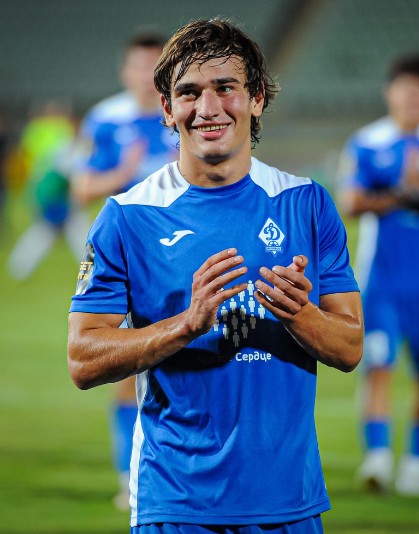
And now two more defenders from that same U-20 side have arrived in the Russian Premier League almost simultaneously: Urozov and Makhamadzhonov.
Their connection is particularly close.
Urozov and Makhamadzhonov were not only teammates with Uzbekistan U-20.
They started their senior careers together at Bunyodkor, where both were part of the first-team squad by 2022 and appeared on the pitch together.
Three years later, they were reunited in Samarkand.
In 2025, both played for Vadim Abramov’s Dynamo Samarkand and started matches alongside one another.
Their paths continued to cross at international level too, including with Uzbekistan’s Olympic team.
Then, in August 2026, Urozov moved from Dynamo Samarkand to Rubin Kazan on loan with an option to buy.
The timing of what happened next was almost symbolic.
On August 30, Urozov started for Rubin against Dynamo Makhachkala and played the entire game as the Kazan club won 3-1.
Two days later, Dynamo brought in another player from that same Uzbekistan U-20 team — and Urozov’s former teammate at both Bunyodkor and Dynamo Samarkand.
Makhamadzhonov.
There is another striking detail.
The 2023 A2M scouting report mentioned Urozov and Makhamadzhonov almost side by side.
Makhamadzhonov was praised for his pace, stamina and attacking potential. Urozov stood out because of his physical qualities and his relatively rare profile as a tall, left-footed centre-back.
Both were identified as players worth following for clubs in Russia and Europe.
Three years later, both are in the Russian Premier League.
“His goal isn’t simply to go abroad and make money”
For Arslanov, however, one of Makhamadzhonov’s most important qualities has little to do with tactics.
“He is a genuinely good guy. There have never been any problems with him away from football and there have never been any complaints about his discipline on the pitch,” the coach told Eurasia Football.
“He works hard and is very committed. But the most important thing is that he is ambitious.
“His goal isn’t simply to move somewhere and make money. His goal is to develop as a footballer. That is why he decided to continue his career in Russia.”
That makes this transfer interesting on several levels.
For Dynamo Makhachkala, Makhamadzhonov is a relatively inexpensive 23-year-old with pace, stamina, a strong left foot, youth international pedigree and the ability to play in several tactical structures.
For the player, the RPL is the first serious test of whether the qualities that made him stand out in Uzbekistan can survive at a higher level.
But the bigger story is what his move says about Uzbek football.
Three years ago, Makhamadzhonov was part of a young Uzbekistan side that went to Argentina as Asian champions and took the lead against the hosts at a U-20 World Cup.
Today, Khusanov is at Manchester City. Fayzullaev has already moved from the RPL to Turkey. Rakhmonaliev has continued his career abroad. Urozov is at Rubin. And Makhamadzhonov has now reached the Russian Premier League as well.
This generation is no longer being treated by foreign clubs simply as a collection of promising Uzbek youngsters for the future.
It has become an export generation.
Makhamadzhonov is the latest example.