
Robert Prosinečki has left his post as head coach of the Kyrgyzstan national team just eight and a half months after his appointment. The Croatian arrived amid arguably the highest expectations in the team’s history: Kyrgyzstan had just completed a strong World Cup qualifying campaign, while the European Cup winner with Red Star Belgrade and former Real Madrid and Barcelona midfielder was expected to take the team to the next level. Prosinečki himself even spoke about winning gold at the 2027 Asian Cup. He never made it to that main test. Talk of a possible departure emerged after a change in leadership at the Kyrgyz Football Union (KFU), and according to Eurasia Football, the two sides later failed to reach an agreement over proposed changes to his contract.
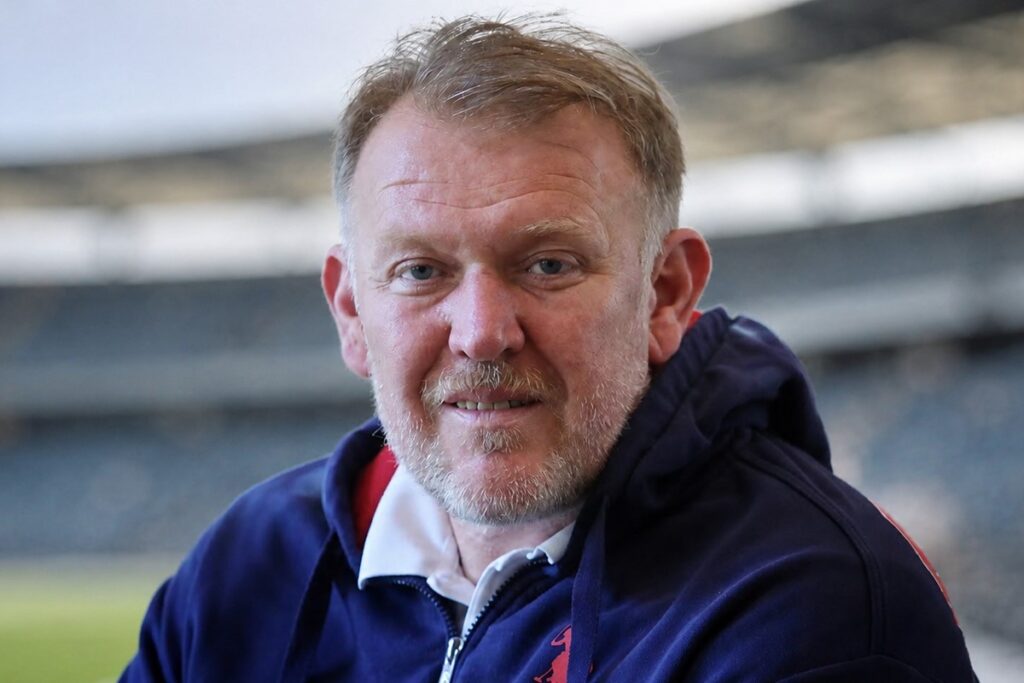
The KFU announced Prosinečki’s departure on August 25. The union’s Executive Committee decided to end the cooperation, after which the two sides reached a mutual agreement to terminate the contract. No official reason for the decision was disclosed.
Prosinečki took charge of Kyrgyzstan on December 10, 2025. His initial deal was for one year and one month, with the possibility of extending the agreement for another three years in the event of a successful performance at the 2027 Asian Cup.
The contract was signed with the involvement of then-KFU president Kamchybek Tashiev, who spoke about “major objectives,” a new impetus for the national team and qualitative changes. The union itself said the Croatian’s appointment had generated “great expectations.”
Those expectations were very real.
Prosinečki Inherited a Team That Had Already Raised the Bar
The Croatian did not arrive to rescue a national team coming off a failed campaign. On the contrary, he inherited a side that had recently produced one of the strongest periods in its history.
Kyrgyzstan reached the third round of World Cup qualifying for the first time under Štefan Tarkovič. After his departure, Maksim Lisitsyn took charge and led the team through the entire next stage.
Kyrgyzstan failed to reach the fourth round, but remained in contention deep into the campaign. The team defeated reigning Asian champions Qatar 3-1, beat North Korea 1-0 and ended qualifying with a 1-1 draw against the United Arab Emirates.
Its performances against the two strongest teams in the group were particularly telling. Kyrgyzstan lost 3-2 and 1-0 to Uzbekistan, playing for more than an hour with ten men in Tashkent. Iran won the two meetings 1-0 and 3-2. All four defeats against teams that would go on to qualify for the World Cup came by a single goal.
Back in November 2024, Aleksandr Krestinin, who had spent almost a decade in charge of Kyrgyzstan, told Fergana that the national team had a limited player pool but noted the progress made under Lisitsyn. In his view, there was “a little more order” in the team’s play. He cited the 1-0 defeat to Iran as an example of a match in which Kyrgyzstan could realistically have taken a point with better finishing.
Prosinečki, therefore, was not inheriting a team that needed to be rebuilt from scratch. He was expected to build on an already established level.
Even before his appointment, a Croatian delegation travelled to Bishkek, with Prosinečki among its members. During talks with the KFU, the selection of a new national team head coach was discussed separately, while the visitors presented their proposals and vision for further work. A contract with Prosinečki was signed several days later.
The appointment was viewed somewhat differently in Croatia than it was in Kyrgyzstan. Gol.hr described the job as a “huge challenge,” noting that Prosinečki was taking over a team ranked 104th in the FIFA standings at the time. Index.hr highlighted the prospect of going to the Asian Cup with players largely unknown to the wider European football audience.
For the Croatian media, it looked like an unusual and difficult new chapter in Prosinečki’s coaching career. For Kyrgyz football, it represented the arrival of arguably the highest-profile coach in the national team’s history and an attempt to move to the next level.
“Our Goal Is High — Gold”
Prosinečki himself raised expectations even further.
At his first press conference in December, he said Kyrgyzstan should at least repeat its performance from the 2019 Asian Cup, when the team reached the round of 16. But the Croatian did not stop at setting that as the minimum target.
“Our goal is high — gold at the tournament,” Prosinečki said, adding that a great deal of work would have to be done over the following year to achieve it.
At the same time, even in the early months of his tenure, the coach left himself some room for manoeuvre. Prosinečki spoke about the need to take into account the actual abilities of his players rather than simply imposing his own ideas.
Even before his first match, Eurasia Football noted that an immediate impact from the Croatian was unlikely. Prosinečki was viewed more as a coach for a longer-term project, while one of the main risks was precisely the level of expectation surrounding him. After Kyrgyzstan had reached the third round of World Cup qualifying, results that would once have been considered major achievements risked becoming viewed as the bare minimum.
A few months later, Krestinin made almost exactly the same point.
In an interview with Eurasia Football in May, he highlighted the possible gap between the demands of a coach of Prosinečki’s stature and the actual capabilities of Kyrgyzstan’s players.
Krestinin gave a simple example: a coach might demand a certain quality of long passing from Valery Kichin or a greater amount of defensive work from Joel Kojo, but the level of the players does not always allow every tactical idea to be executed.
His main conclusion was unequivocal: “Do not expect quick results.”
Unlike a club coach, a national team manager only has his players for a few days at a time and has almost no opportunity to fundamentally rebuild the way they play.
Prosinečki ultimately did not get that time.
He Did Not Come Only for the Asian Cup
Prosinečki himself viewed the Kyrgyzstan offer as something broader than simply an opportunity to coach at one tournament.
In a lengthy interview with Flashscore in March, he explained why he had agreed to take the job. After leaving Montenegro, he received an offer from Kyrgyzstan but made his final decision only after visiting the country.
“I came to the country, saw the infrastructure and their ideas. They want to progress, they want to do things differently,” Prosinečki said.
He accepted the position after that visit, while also noting that the Asian Cup has a significance in the region comparable to that of the European Championship.
In other words, by his own account, Prosinečki was convinced not only by the national team itself but also by the broader development concept presented to him.
In the same interview, he identified another area of focus: refreshing the squad.
Prosinečki spoke about the large number of young players available and said his staff were already monitoring potential candidates.
“Maybe three or four players from the U21 team have caught our eye,” he said.
Those words were followed by action. Prosinečki’s staff monitored domestic league matches and expanded the pool of players under consideration, while the first friendlies were also used for selection purposes.
One of the players to receive his chance under the Croatian was Valery Murzakov. The Moscow-born centre-back, who came through the Zenit St Petersburg system, made his Kyrgyzstan debut in Prosinečki’s first match in charge, against Equatorial Guinea.
The 22-year-old immediately started alongside captain Valery Kichin in central defence, remained in the national team setup and was called up again for the June fixtures.
By May, Prosinečki was openly discussing a policy of rejuvenation. He spoke about developing younger players while keeping experienced footballers around them, as well as his intention to build a team capable of playing more proactively — controlling possession, attacking and exploiting space.
At the same time, the tone of his comments about the Asian Cup had changed.
While in December he had spoken about winning gold, by May 25 his target was phrased far more cautiously: Kyrgyzstan should play competitive football and progress further in the tournament.
What Changed After Tashiev’s Departure?
Between those statements, an important change took place inside the KFU itself.
On April 15, Kamchybek Tashiev announced that he would not seek another term as head of the football union. On May 12, Kyrgyzstan’s Chairman of the Cabinet of Ministers Adylbek Kasymaliev was elected KFU president.
Three days later, on May 15, Kasymaliev met union staff and the coaches of the national teams. According to the KFU, the meeting included discussions about “upcoming objectives, strategic directions and plans for the development of football.”
There is no direct evidence that Prosinečki was formally given a different sporting target after the change in leadership. Preparation for the 2027 Asian Cup also continued to be publicly identified as one of the national team’s main priorities under the new KFU president.
However, it cannot be ruled out that other parameters of the project were reconsidered — working conditions, criteria for evaluating progress or the longer-term framework of the cooperation.
The subsequent chronology makes that possibility difficult to ignore.
As early as June 10, less than a month after the election of the new KFU president, reports appeared in the Kyrgyz media suggesting Prosinečki could soon leave his position. The union did not officially confirm those reports at the time.
According to Eurasia Football, following the leadership change, Prosinečki was offered revisions to certain terms of his existing contract. The Croatian did not agree to the proposed changes.
Ultimately, the two sides appear to have been unable to find a formula acceptable to both, and on August 25 they formally ended their cooperation. Eurasia Football’s information about the attempt to revise the agreement was subsequently picked up by media outlets in the Balkans.
This is not enough to claim that Tashiev’s departure directly caused Prosinečki’s exit.
But the leadership change clearly became a turning point in the chronology of the project. The Croatian signed his agreement under one KFU president and against the expectations formulated at the time, while the question of revising his contract arose under another.
The sequence of events is telling: in December there was talk of Asian Cup gold and a possible three-year extension; in April Tashiev announced his departure; in May a new KFU leadership took over and discussed objectives and strategy; in June the first reports of a possible coaching change appeared; and in August Prosinečki’s contract was terminated.
Four Matches Without a Win — but No Real Test Either
Statistically, Prosinečki’s spell was modest.
Kyrgyzstan played four friendlies under him. In March, the team lost 1-0 to Equatorial Guinea and 5-2 to Madagascar. In June, it drew 0-0 with Palestine twice.
The final record was two draws, two defeats, no wins and a goal difference of 2-6.
Yet Prosinečki never coached Kyrgyzstan in a competitive match. Four friendlies provide too little evidence for a definitive sporting verdict.
The Croatian deliberately used his first camps for experimentation and to identify new players. That was consistent with what he had said in March about several U21 players catching his eye and with his later commitment to rejuvenating the squad.
The most visible legacy of his brief spell was therefore not a new tactical identity and certainly not results, but the beginning of a squad refresh.
He broadened the pool of national-team candidates, gave opportunities to younger players and outlined the direction in which he intended to develop the team.
Whether that process would have worked will now remain unknown.
Prosinečki arrived with expectations already extremely high following Kyrgyzstan’s previous World Cup qualifying campaign. He became arguably the biggest coaching name ever appointed by the country and then raised the bar himself by talking about winning the Asian Cup.
At the same time, people who knew Kyrgyz football well warned from the beginning that turning those ambitions into results would require time.
The project ended before its main sporting test began.
Prosinečki leaves without a victory, but also without a single competitive match. He started a squad refresh but did not stay long enough to oversee a genuine generational transition. He spoke about Asian Cup gold, yet departed months before Kyrgyzstan could test those ambitions on the continental stage.
Whether he could have delivered the next step expected after Lisitsyn’s strong World Cup qualifying campaign will remain unanswered.