
Kyrgyz club Muras United bowed out of the AFC Challenge League at the semi-final stage after a 2-1 defeat to Kuwait’s Al-Kuwait in Bishkek on April 22. Eurasia Football founder Alexander Troitski looks back on the club’s 2025/26 campaign — and on what this loss means far beyond one painful night.
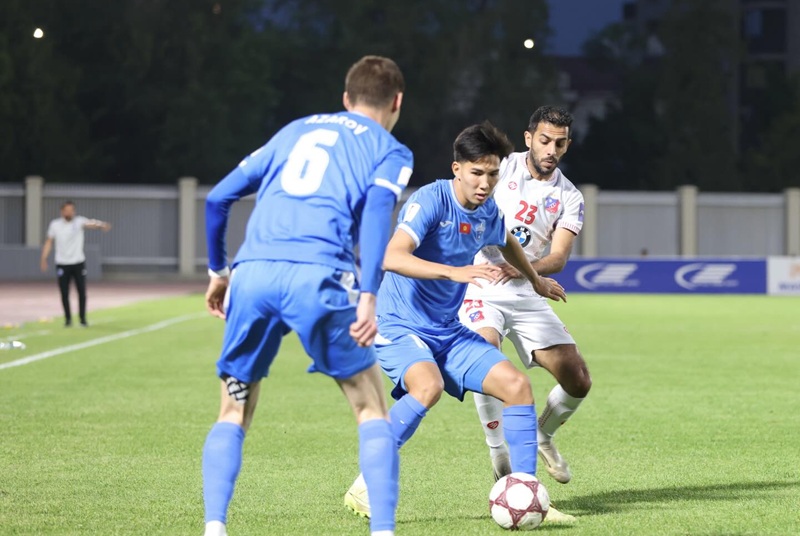
If you look beyond the scoreline, much had broken Muras’ way from the very start of the season. First, changes to AFC regulations effectively opened the door to the Challenge League for the Kyrgyz Cup holders. Then geopolitics stepped in: because of the conflict in the Middle East, the play-offs were moved to a centralized format in Bishkek. Clubs from the Arab world arrived without proper match rhythm. In other words, Muras were handed an advantage they would hardly have enjoyed under normal circumstances.
That much was already visible in Al-Kuwait’s quarter-final against Oman’s Al-Shabab. The Kuwaitis raced into a 4-0 lead, then allowed the game to turn messy before eventually winning 5-3. It pointed to a side that was not fully ready — physically, psychologically, or perhaps both. On paper, that should have suited Muras perfectly. The Kyrgyz side had just dismantled Lebanon’s Al-Ansar 3-0 and have looked convincing domestically as well. There is a reason they brought in Erbol Atabaev and Alimardon Shukurov, kept Orest Kostyk, and appointed Edmar as head coach.
But Al-Kuwait are not Al-Ansar. Nor are they Al-Arabi. This is a three-time AFC Cup winner — a club with a different history, a different culture of results, and a different calibre of player. Their squad includes Tunisia striker Taha Yassine Khenissi, a major name in North African football; former Côte d’Ivoire international Idrissa Doumbia, who played for Anderlecht and Sporting; and former DR Congo international Arsen Zola, who built a strong career in Morocco. On the bench was Montenegrin coach Nebojsa Jovovic, a man who has won trophies in Kuwait, Iraq, Jordan, Tunisia and Montenegro. In other words, this was not just a stronger opponent. It was an opponent that knew exactly how to win a tie like this.
So yes, expecting an easy night would have been naive. But expecting Muras to get a result at home was entirely reasonable. That is why the defeat hurts so much. Many focused on the refereeing afterwards, but I do not see any decisive mistakes from the officials. No penalty for handball in the first half? Fine. Japarov scored from the resulting free-kick anyway. After that, the questions are no longer for the referee. Who is to blame for conceding twice in the space of three minutes — at the end of the first half and then again right after the restart? Who is to blame for failing to build on a promising spell? In games like this, you do not win by protesting. You win by creating. And that is exactly where Muras fell short.
For me, the key miscalculation was squad construction. The injury to Richard Romario — effectively the team’s only natural striker — wrecked Muras’ plan. There was no genuine replacement. Against Al-Ansar, they had still managed to play from deeper areas and attack space with direct runs. But Jovovic had clearly read that pattern in advance. He strangled Muras in midfield and took away their usual speed and verticality. Their transitions came only in flashes. The clearest moment was Koshibkhonov’s burst forward, when it briefly felt as if Muras might seize the game — only for the finish to let him down. That, too, was telling: almost everything promising about Muras on the night was left unfinished.
Al-Kuwait, by contrast, were ruthless in their best spell. After conceding, they raised the tempo, opened up a little — which very nearly allowed Koshibkhonov to punish them — and then hit back almost immediately. Once they went in front, they switched into the kind of football seasoned cup teams know by heart: pragmatic, disruptive, and draining the game of any rhythm. There were barely any chances in the second half. Al-Kuwait ran down the clock, Muras looked to the referee for a penalty. That was the sum of the attacking plan. You can search for hidden layers if you want, but the picture was plain enough.
For supporters in Manas, that is what makes it especially painful. When will a chance like this come around again? In theory, Bars will represent Kyrgyzstan in next season’s AFC Challenge League. Dordoi might also get in if other associations withdraw again, as happened this season. Muras themselves may still cling to a faint hope in the AFC regulations, which say clubs less than two years old cannot play in international competitions. But that immediately brings to mind Arkadag, who overcame the same issue after a letter from the country’s leadership to the AFC. Whether anyone will push just as hard for Bars will become clear soon enough.
There is another layer to this defeat, and it matters just as much. Muras’ loss prevented Kyrgyzstan from overtaking Tajikistan in the AFC club rankings and securing a place in the 2027/28 AFC Champions League Two. Well, Kyrgyz football has waited years for the Champions League — it can wait a couple more. On top of that, Al-Kuwait’s win also damaged Turkmenistan’s position: instead of a 1+1 allocation in ACL Two, Turkmen clubs now have 0+1 in ACL Two plus one place in the Challenge League.
Formally, Tajikistan look like the main beneficiary. But perhaps only on paper. Because Istiklol, who will enter the Challenge League next season, already look like the competition’s most likely winners. In terms of continental experience, institutional stability, and sheer habit of playing these matches, they are at least on Al-Kuwait’s level, and arguably above it. With Vitaliy Levchenko — a coach whose strengths are tailor-made for international competition — Dushanbe will have every chance of taking the trophy. So the 2027/28 place would most likely have gone to Tajikistan anyway, whatever happened in Bishkek.
That is where the real bitterness lies for Kyrgyzstan. The opportunity was not theoretical. It was real. Home play-offs. Opponents short of rhythm. A strong squad. Momentum. Emotion. A full stadium behind them. Everything came together at one moment. Windows like that do not open often in Central Asian football. One match — and it was gone.
And when they close like this, after a defeat in which the opponent was simply more mature, more cynical and more composed, there is only one thing left to do: accept it and wait for the next chance. It may take a while.