
Former Andorra international and Barcelona Academy Manas Technical Director Alex Roca discusses his move to Kyrgyzstan, the differences between local and Spanish youth players, the spread of Barcelona’s coaching philosophy across Central Asia and why he believes Abdukodir Khusanov is a natural fit for Pep Guardiola’s style of play.
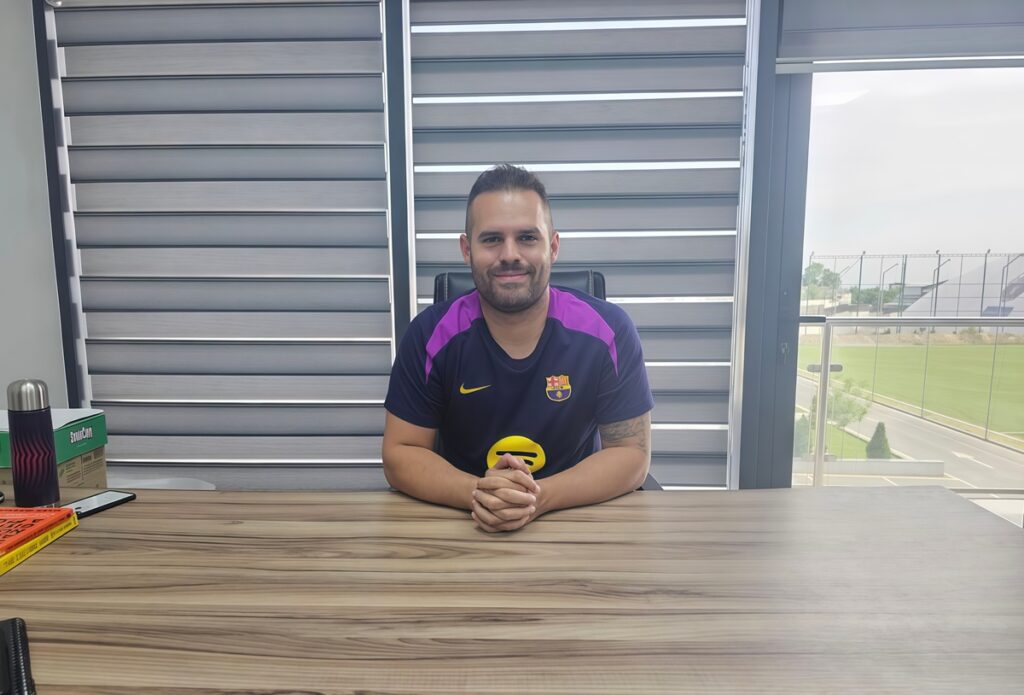
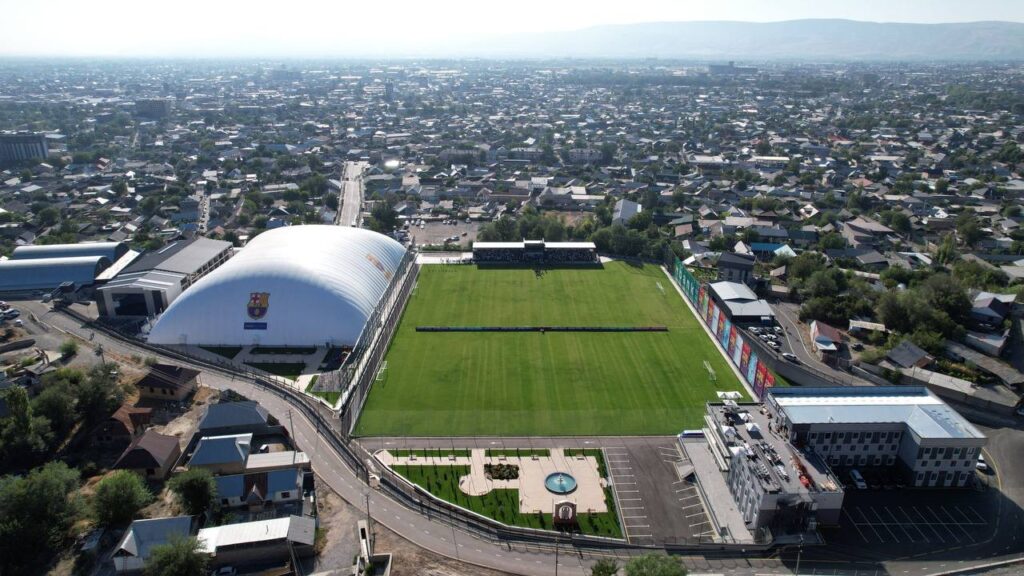
The arrival of Barcelona Academy Manas (formerly named Jalal-Abad) is a unique development. It is an important, if not fundamental, part of the wider project to transform Kyrgyzstan into a footballing nation.
In many ways, it is a miniature version of La Masia in Central Asia.
The academy’s founders stress that it is not simply a commercial football school operating under the Barça Academy brand. Instead, it is a full-scale project built around Barcelona’s methodology, with coaches working daily to implement the club’s principles.
Within the project itself, it is described as only the second academy of its kind after Miami.
Hundreds of children train at the academy, not only from Kyrgyzstan but also from neighbouring countries.
The coaching staff is equally diverse, bringing together local Kyrgyz coaches alongside specialists from Uzbekistan and Europe.
Between Two Mountain Nations
Roca’s journey to Kyrgyzstan was far from straightforward.
The former Andorra international was working in his homeland but had long dreamed of becoming part of Barcelona’s academy network.
“When I was in Andorra, I always wanted to be part of Barcelona. It was my dream,” he says.
Several opportunities emerged. He first worked with Barcelona’s academy project in Jordan. A move to Miami was also on the table, but personal circumstances ultimately ruled it out. He later spent time in Hong Kong as technical director of Eastern before an unexpected opportunity arose in Kyrgyzstan.
“Then the option of Kyrgyzstan appeared. I came here, saw the project and realised there was a reason to stay and work.”
What he found convinced him to remain.
“I liked the people, I liked the idea and I liked the way football is treated here. It’s a big project and I felt I could be useful.”
That feeling has only strengthened since his arrival.
“Yes, I’m happy here,” Roca says. “Kyrgyzstan has huge potential.”
While the move initially brought a degree of culture shock, he insists it was positive rather than negative.
“Everything is different, but in a good way.”
Surprisingly, he sees similarities between Kyrgyzstan and his native Andorra.
“I like that everything is close. In some ways it’s similar to Andorra: the mountains, the snow, the nature and the seasons.”
More importantly, he believes the country possesses something essential for football development.
“For me, it’s a good place to live. But the main thing is that I see a desire to improve. People want football to grow. That’s very important.”
Building Independent Footballers
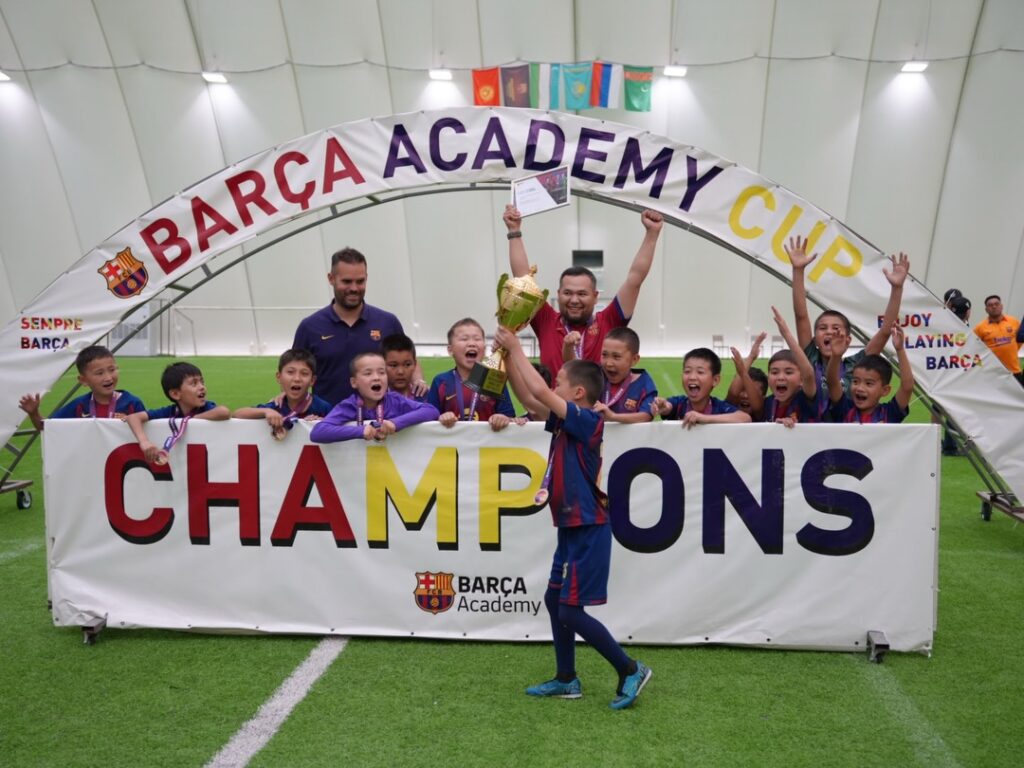
Roca sees plenty of potential in the young players coming through the academy.
“They love football,” he says. “They have passion and they want to learn. That’s a very good foundation.”
At the same time, he believes there are important differences between young players in Kyrgyzstan and those he has worked with in Spain and Andorra.
“Football always depends on culture, on the environment and on relationships between people.”
In his view, Spanish youngsters tend to develop greater independence on the pitch from an early age.
“They play more, they interact more and they make more decisions for themselves.”
By contrast, football in Kyrgyzstan remains more coach-driven.
“Very often a player is waiting for instructions. What will the coach say? Where should I run? What should I do?”
As a result, players can sometimes become focused on following directions rather than understanding the game for themselves.
“Sometimes it feels like a player is carrying out instructions rather than feeling the game. That’s not good or bad. It’s simply a stage of development.”
One of the academy’s main objectives is to change that mindset.
“We want players to be freer on the pitch. We want them to think, understand the game and make decisions.”
That philosophy sits at the heart of Barcelona’s methodology, but Roca is quick to stress that such changes cannot happen overnight.
“You can’t just arrive and say: ‘Now everything will be different.’ Football doesn’t work like that.”
Instead, the academy focuses on the areas it can control: training sessions, methodology, coach education and the way young players are treated.
“The wider environment, the competitions, the clubs, the overall football culture and habits, those things change slowly.”
That reality also shapes how Roca answers perhaps the most common question he receives from local parents and supporters.
Don’t Expect a Kyrgyz Yamal
One question Roca hears regularly is whether Kyrgyzstan will one day produce its own version of Lamine Yamal.
He understands the excitement, but believes people are focusing on the wrong target.
“I understand the question,” he says. “But I would think about the system before thinking about Yamal.”
In his view, Kyrgyz football is still in the early stages of building the foundations needed to consistently develop elite players.
“The federation, academies and clubs are still building their structures.”
He points to Spain as an example of what a mature football ecosystem looks like. From a young age, players compete every week in strong leagues, facing constant competition and pressure.
“You win, you lose and then you go out and play again. That is what forms a player.”
Those conditions cannot be created overnight.
“Coaches, structure, regular competitions and a strong environment are all necessary.”
Within Barcelona Academy Manas, Roca believes progress can be made by building those habits internally. The academy fields numerous teams and can replicate many of the competitive environments young players need.
But producing top-level footballers requires more than a single academy.
“For a great player to emerge, the entire football ecosystem matters.”
That is why he rejects the idea that talent development can be treated like a production line.
“Football is not a machine. We work with people.”
While coaches can provide knowledge, support and the right environment, there are no guarantees.
“We can create good conditions. We can help children develop. But nobody can say that in five years there will definitely be a new Yamal. Football doesn’t work like that.”
Instead, Roca prefers a different analogy.
“You shouldn’t expect fruit every day. First you have to plant the tree.”
“You water it, take care of it and allow it to grow. Only then do the fruits appear.”
For now, he believes that growing the tree is the most important task facing Kyrgyz football.
And while he is cautious about making predictions, he is confident that academy graduates can eventually strengthen the domestic game.
“I believe we will have players who help Kyrgyz football in the future. Some will play in the local league, some may go further.”
More important than where they play, however, is how they play.
“The main thing is that they become footballers who understand the game.”
“Not just players who run and compete, but players who understand what is happening on the pitch.”
Coaching the Coaches
For Roca, developing players is only half of the academy’s mission.
“Coaches are the foundation. Without them, it is impossible to develop players.”
Alongside daily work with young footballers, Barcelona Academy Manas invests heavily in coach education. Workshops, training sessions and regular discussions on methodology form a key part of the project.
“For coaches, this is also a journey,” Roca says.
“They all come from different backgrounds, different football cultures and different habits. It isn’t always easy. But I see a desire to learn, and that is very important.”
Roca believes the academy should not become a closed system. Ideally, coaches will eventually leave and take what they have learned into the wider game.
“For me, the academy is not a place where people should stay forever.”
He points to coaches such as Uzbek Rafael Muslimov and Kyrgyz Kelechek Kasymov as examples.
“One day Rafael might work at Andijon, and Kelechek might go to Alay Osh. That would be normal. Even good.”
What matters is not that they take specific exercises with them, but a broader understanding of the game.
“They take the methodology, the understanding of football and the way players are treated. That is how football culture spreads.”
Crucially, Roca does not believe coaches should abandon everything they already know.
“We don’t want to break anyone.
“Our job is not to tell people to forget everything from the past. We want to give them tools.”
If coaches are willing to learn, he believes they can combine Barcelona’s ideas with their own experiences and eventually help influence clubs across the country.
In many ways, Roca argues, developing coaches can have an even greater impact than developing a single talented player.
“A player does not develop by himself. Around him there must be people who understand football and understand the process.
“You cannot change everything at once. But you can inspire people.”
Why Khusanov Fits Guardiola’s Football
Roca believes Abdukodir Khusanov’s rise offers an encouraging example for the entire region.
Having worked within Barcelona’s system, he has seen first-hand the influence Pep Guardiola has had on modern football.
“For me, Guardiola is a coach who changed football,” he says.
“He changed the understanding of the game at Barcelona and then continued to develop those ideas elsewhere. His teams play at the highest level.”
That is why Khusanov’s development at Manchester City will be particularly fascinating to follow.
Roca believes the Uzbek defender already possesses several qualities that suit Guardiola’s demands.
“He is strong, quick, comfortable defending space and capable of playing under pressure. For a modern centre-back, those qualities are very important.”
At the same time, he warns that succeeding at one of the world’s biggest clubs requires more than physical attributes alone.
“Manchester City is one of the best clubs in the world. The competition is enormous, the speed is enormous and the demands are enormous.”
Like any young player arriving at the elite level, Khusanov will need time to adapt.
“The qualities are there. Now it is about how he goes through the process.”
For Roca, Khusanov’s journey is already significant regardless of what comes next.
The defender overcame early setbacks in Uzbekistan before moving through Belarus and France on his way to the Premier League.
“It is a great example for the whole region,” Roca says.
“If a player from Uzbekistan can follow that path, then others can too. Perhaps scouts will start paying more attention to Central Asia.”
Yet he believes the next stage of Khusanov’s development will depend on qualities that Guardiola values above all else.
“At that level, it is not enough to be strong and fast.
“You need to understand the game, read situations and make decisions under pressure.”
In Guardiola’s teams, centre-backs are expected to do far more than defend.
“They start attacks, play through pressure and understand the structure of the team.”
If Khusanov can continue to develop those aspects of his game, Roca believes he can reach an even higher level.
“In Guardiola’s football, understanding the game, decision-making, work on the ball, body position and control of space are all important.
“Khusanov has the foundation. The rest depends on work, time and adaptation.”