
Former Juventus and Genoa midfielder Ilyas Zeytullaev has spent much of his life between two very different footballing worlds, Italy and Uzbekistan.
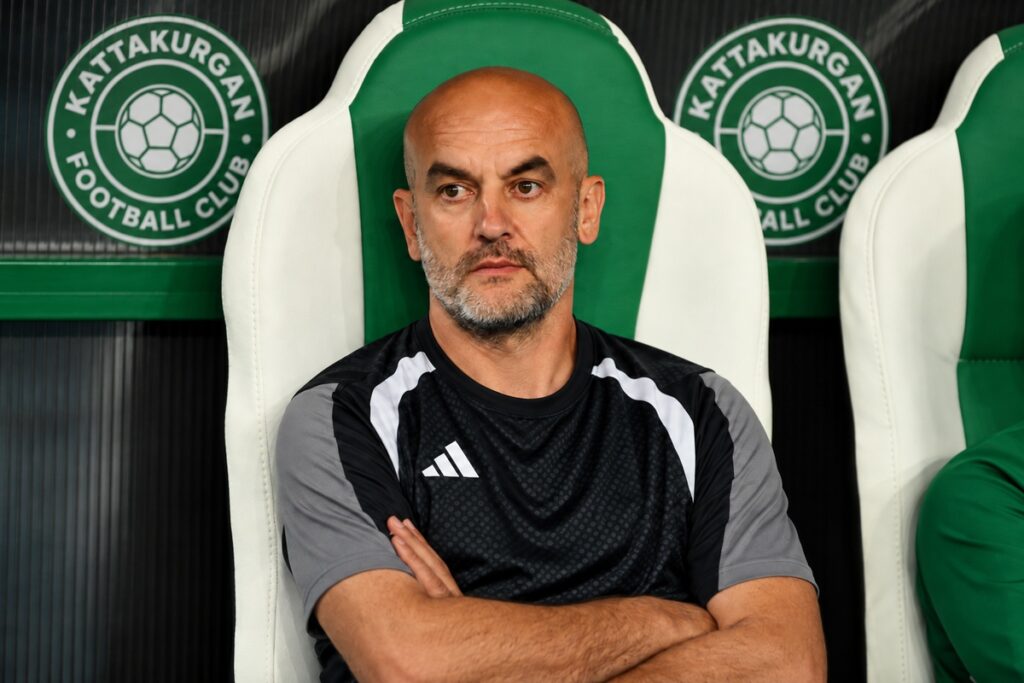
Since returning to his homeland, the 42-year-old has spent three years attempting to build a modern, youthful Bunyodkor side and has now taken on a very different challenge with second-tier Kattakurgan in the Samarkand region.
Speaking to Eurasia Football, Zeytullaev discussed what he learned at Bunyodkor, his ambitions for Kattakurgan and why foreign coaches must leave more than results behind in Uzbekistan. He also spoke about Fabio Cannavaro and Uzbekistan’s World Cup campaign, Eldor Shomurodov’s career in Europe and why a growing number of Uzbek players are attracting attention from clubs across the continent.
A new challenge in Uzbekistan’s second tier
The former Uzbekistan international arrived at Kattakurgan late in the season, with immediate results expected despite his longer-term remit.
Yet the former Uzbekistan international insists his decision to drop into the First League was about more than simply taking his next coaching job.
He believes he could have waited for an opportunity in the Uzbekistan Super League, but was convinced by Kattakurgan’s longer-term ambitions.
“I understood that if I waited a little longer, I might have received offers from the top division. But for me, it isn’t about whether it’s the First League or the Super League. This project is a very serious challenge for me as a coach.
“I’ve always wanted to develop football somewhere that genuinely wants to develop it and where I’m given the opportunity to do so. There is a platform and a desire to do that here.
“Of course, the first priority is getting results. But at the same time, the management have asked me to lay the foundations and create an identity for the team, its own values and its own style.”
Kattakurgan is based in the Samarkand region, and the club’s ambitions extend beyond the first team. Zeytullaev was particularly attracted by plans to develop football in the surrounding area and establish the club as a focal point for the local game.
“When I held negotiations, I spoke directly with the people behind the club and they convinced me that their intentions were serious.
“It isn’t only about today’s result. I liked their vision for developing football in the Samarkand region. They want Kattakurgan to become a starting point for the region, for children here to fall in love with football and for the necessary expertise to gradually develop.
“For me, that’s the right vision. Some of the foundations are already there.”
Players are people, not just footballers
That philosophy also extends to how he manages individual players.
He believes footballers are too often quickly labelled as lazy or unsuccessful without considering the circumstances behind their performances, particularly foreign players adapting to a new country.
“Sometimes we’re too quick to jump to conclusions about a player. We say he’s lazy, that he doesn’t want to work or that things simply haven’t worked out for him. But that’s only the tip of the iceberg.
“A player can arrive in another country, find himself in a completely new environment and face a different culture, different demands and different expectations. People expect results immediately, but he may need time to adapt both psychologically and physically.”
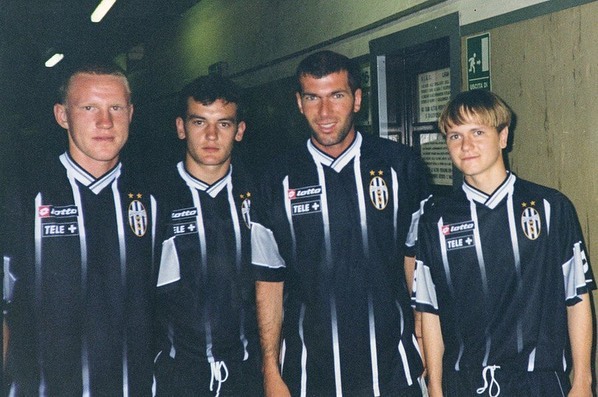
It is something Zeytullaev experienced himself during a playing career spent predominantly in Italy. After joining Juventus as a teenager, the Uzbek midfielder later represented several Italian clubs, including Genoa.
“When I left Juventus and moved to other clubs, people immediately expected a lot from me simply because I’d come from Juventus.
“But a footballer is a human being. He has to be ready psychologically and physically, and all kinds of things can be happening in his life. You have to look at the wider situation rather than judge someone on one thing.”
Building a specialist coaching team
Much of his previous coaching team has also followed him to Kattakurgan.
Uzbek coaches Bobur Zukhriddinov and Alexey Nikolaev have joined him, alongside fitness specialists Alessandro Spinoglio and Argentine coach Andres Mauro, while Marco Nicodemo is responsible for the goalkeepers. Alessandro Sarracco, who was already working at Kattakurgan before Zeytullaev’s appointment, has remained to assist the new staff.
Employing several specialists is not excessive in his view, with individualised physical preparation an area in which he believes Uzbek football can continue to develop.
“The higher the level of football, the greater the specialisation and attention to detail. One fitness coach simply can’t do everything.
“There is general work with the team and there is individual preparation. For Uzbek football, I think that’s very important. You have to build those foundations from a young age so they can help a player when he reaches senior professional football.”
But his wider ambition is not simply to fill Kattakurgan’s staff with foreign expertise. He wants those coaches to pass their knowledge on to Uzbek colleagues, creating something that remains after they eventually leave.
“Foreign specialists shouldn’t come here simply to work, earn money and leave. I want them to leave their knowledge behind.
“I’d like foreign specialists to pass their knowledge on to local coaches, and then for our coaches to pass it on to the next generation, both professional and youth coaches.
“That’s where I see the benefit for the development of Uzbek football. Foreigners should share the details, methods and systems they know. The exchange has to work both ways.”
What Zeytullaev tried to build at Bunyodkor
Kattakurgan is not the first place where those ideas have been put into practice. During three years in charge of Bunyodkor, he sought to combine influences from his career in Italy with lessons accumulated much earlier in his life.
His interest in coaching stretches back to childhood. His father was also a coach, while he recalls travelling to matches and spending time around dressing rooms from the age of five or six.
“I’ve had many coaches throughout my career. I took something from each of them and left other things behind. Gradually, I developed my own vision of football.
“At Bunyodkor, together with the management, we did what we could within the conditions we had. In terms of structure, playing philosophy, physical preparation, infrastructure and the principles of the game, I probably would have followed a similar path in Italy. The organisational possibilities there would simply have been very different.”
Those limitations are particularly significant at a club whose name remains associated with one of the most extravagant periods in Uzbek football.
Bunyodkor famously attracted the likes of Rivaldo and former Brazil coach Luiz Felipe Scolari during the late 2000s. However, the financial reality he inherited was markedly different.
“Sometimes people compare the old Bunyodkor with the team of recent years, but that’s wrong.
“There was a time when one player or one coach could earn as much as our entire team later earned in a year. You simply can’t compare those periods.”
Building from the foundations
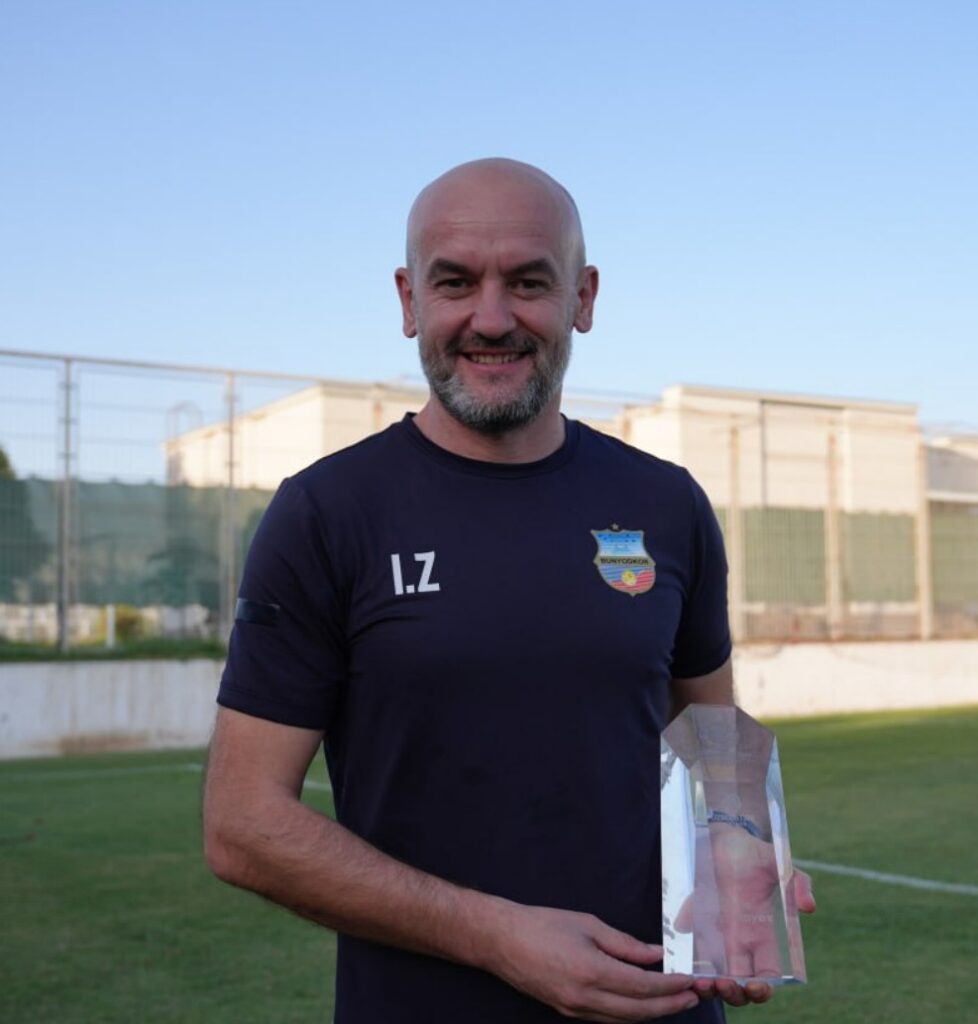
Despite this, spending three years at the club, only a fraction of his wider vision could be implemented.
“I think we achieved maybe 10 or 15 per cent of what was potentially possible.
“At first, it was very difficult to explain the importance of a modern approach to physical preparation, developing professionalism among the players and individual work.
“I describe it as moving from the roots to the fruit, or from the foundations to the roof. You can’t start with something big without first building the foundations.”
Progress came gradually. By his second season, Bunyodkor had allowed him to add another fitness specialist and invest in Italian training equipment used by clubs at a higher level.
“Simply bringing in equipment isn’t enough. You need to understand how to use it. How many kilograms should you give a particular player? On which day? What workload does he specifically need?
“You need expertise and people who know how to work with it.
“In Italy, that’s easier because you don’t have to explain why these things are important. Everyone already understands. Here, initially, we had to explain why you can’t reach the world level without them.”
Much of that work was directed towards Bunyodkor’s young players. As a result, its real impact may only become apparent several years later.
“I wanted Bunyodkor’s young players to already be working within that system. But you can’t see the results after one or two months.
“You’ll see the fruits after three, four or five years if the work is consistent and systematic.
“That’s why I think we only implemented a small part of what was potentially possible at Bunyodkor. But those three years were very productive for me, both in terms of working with the players and my own development as a coach.”
Cannavaro, foreign influence and Uzbekistan’s World Cup lessons
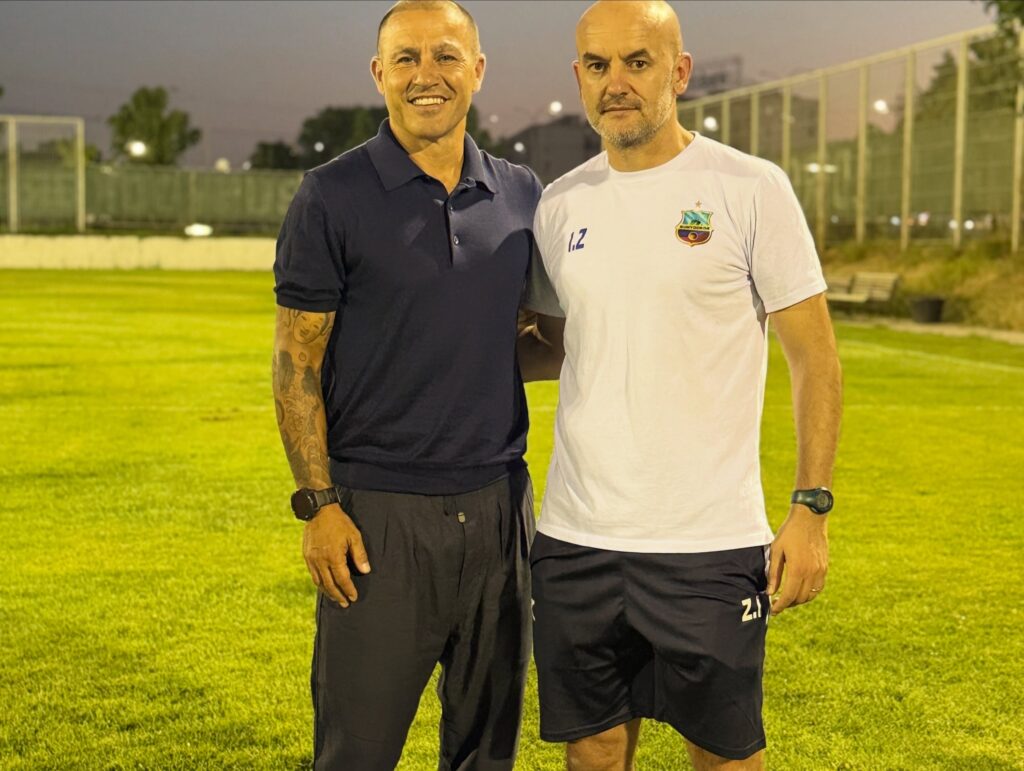
The growing Italian influence on Uzbek football is difficult to ignore. Zeytullaev himself spent most of his playing career in Italy, while Fabio Cannavaro arrived with an Italian coaching staff when he took charge of the Uzbekistan national team.
“I think it’s more of a coincidence. Cannavaro arrived with his Italian staff and, of course, brought certain methods with him. But there are Spanish and Serbian coaches working in Uzbekistan as well, and I think that’s useful.
“We shouldn’t forget that there are good coaches in Uzbekistan too. Football wasn’t invented by the Italians, Spanish or Serbians.”
Bayern Munich’s appointment of Pep Guardiola in 2013 provides one example of how ideas can be imported without abandoning an existing footballing identity.
“The most useful thing is the exchange of ideas. If a Spanish or Portuguese specialist arrives and I’m open-minded, I want to understand how he works. What are his ideas? What trends are there in Portugal, Spain, England or Italy?
“You bring in a specialist, learn something from him and take certain ideas. Then he leaves, but the knowledge remains.
“That’s why having strong foreign specialists in Uzbekistan is a big positive. But our attitude matters too. If we immediately think, ‘He’s only come here to earn money and leave,’ then we won’t learn anything from him. Both sides have to be open.”
That exchange of ideas has become particularly relevant for the national team following Uzbekistan’s historic first appearance at a World Cup.
“The World Cup doesn’t lie. It shows you where you really are in relation to world football.
“In Asia, we’ve already established ourselves among the strongest national teams. We have very good young players, strong senior players and some playing for major clubs abroad. We already know Uzbekistan can compete with South Korea, Japan and Iran.
“But the World Cup is a completely different level. You’re facing players who compete every week in England, Italy, France and Germany. The rhythm is completely different.”
Uzbekistan’s historic qualification was achieved during a period of significant change. Srečko Katanec stepped down in January 2025 because of health problems, with Timur Kapadze taking charge and completing the qualification campaign before Cannavaro was later appointed.
“Under Katanec, a lot was already established. The players understood what they had to do and knew the structure.
“Then Timur Kapadze took over at a very important moment. He deserves a lot of credit. To take over the national team at that point, guide it through and qualify for the World Cup was a very serious achievement.
“The World Cup then gave us material to analyse. What mistakes were made? What do we need to work on? Where might the national team need rejuvenating? What new details can be added? There is a lot of work to do.”
Cannavaro’s appointment has inevitably come under scrutiny following Uzbekistan’s World Cup campaign.
“Cannavaro has enormous experience. He’s a World Cup winner, he didn’t just come from nowhere. Now the important thing is making sure that experience benefits us.”
Why Uzbekistan struggled with the World Cup intensity
The idea of a single, recognisable “Italian” approach has itself become increasingly difficult to define.
“What does ‘Italian football’ even mean today? The Italians themselves aren’t standing still. They’re looking at why they’ve had problems qualifying for World Cups and what needs to change. They don’t play the way they once did.
“Italian coaches understand perfectly well that football is changing. They study the Spanish, Portuguese and Germans very carefully. So it’s wrong to judge the Italian coaching school purely by the results of the national team. Italian coaches remain very strong.”
One of the clearest lessons from the World Cup was the gap in intensity between Uzbekistan’s domestic game and elite European football.
While players can be made physically fitter in training, reproducing the speed and intensity of top-level competition is considerably more difficult.
“The intensity of the Uzbek league is still below the world’s leading championships. You see situations where a goalkeeper collects the ball, holds onto it and delays the restart, and immediately the rhythm of the game drops.
“You can prepare someone physically. Cannavaro has a very strong staff and very good fitness coaches. But you can’t replace the rhythm of playing for 90 minutes. A match is a match.”
At a World Cup, that difference becomes considerably harder to hide.
“You’re facing a player who competes at enormous intensity every week, in one of the strongest leagues and in the Champions League.
“Then suddenly you’re exposed to that intensity. It’s a very subtle thing that someone who has played football understands particularly well. The first three steps, the first challenge, you immediately feel the difference.”
“I think that factor played a big role. In those circumstances, the national team did what it could. Of course, there were areas where we could have done better, but above all the World Cup showed us what we need to work on, where resources need to be invested and what deserves more attention.
“Sometimes difficulties tell you much more than victories because they show you what you need to improve. Sometimes you win a match you didn’t deserve to win and the result hides your weaknesses. Sooner or later, though, they appear.
“I’m very happy with the level Uzbekistan has already reached, but there is still a lot of work to do. Overall, I think Uzbekistan is on the right path.”
Shomurodov has already proved his European quality
Zeytullaev knows first-hand the challenge of moving from Uzbekistan to Italian football, and he took a particular interest in Eldor Shomurodov when the striker followed a similar path by joining Genoa.
The pair spoke shortly after Shomurodov arrived in Italy, with the move carrying added significance because of his own history with Genoa.
“We spoke on the phone when he arrived at Genoa. My son supported him and I wished Eldor good luck because he’d joined a club that I’d played for myself. It was nice for me.
“We later bumped into each other in Tashkent. We know each other, he’s a very good guy.”
The Uzbekistan captain joined Roma from Genoa in 2021 and never established himself as an undisputed starter in the Italian capital.
“I wouldn’t say things didn’t work out for him in Italy at all. He had very good numbers. To reach Roma and play for Roma isn’t something everyone gets to do.
“He performed well there too. I think moving to Turkey was primarily Eldor’s own choice because he wanted to play regularly.”
His departure also came shortly after Gian Piero Gasperini’s appointment at Roma.
“I thought Eldor would play under Gasperini because he usually likes that type of footballer.
“Gasperini might be kicking himself a little now when he sees Shomurodov playing and scoring in Turkey.
“Eldor is a player of European quality. He’s already proved that. So I’ll say it again: things did work out for him in Italy. Moving to Turkey was most likely his personal choice.”
European clubs are watching Uzbekistan’s next generation
Shomurodov may not remain an exception for much longer.
Zeytullaev’s connections in Italian football mean he is occasionally asked for his assessment of emerging Uzbek talent.
“There are players who can play in Serie A and Serie B if certain aspects of their development and the move itself are handled properly.
“I don’t specifically offer anyone myself. But if representatives of Italian clubs or people I know ask for my opinion, I can recommend someone.
“I’ve seen players in my own team and at other Uzbek clubs who are capable of playing at European level.”
And that interest already stretches well beyond Italy.
“Of course European clubs are interested. Italian clubs, coaches and scouts are watching, and not only Italians. I know scouts who work with English and Spanish clubs.
“Many of our players are already on the radar of representatives from Europe’s top leagues.
“They’re not only asking about physical qualities. They want to know about a player’s character, personality, behaviour, attitude towards work and understanding of the game. They assess the footballer as a whole.”
Bunyodkor have a strong reputation for producing young players, with Manchester City and Uzbekistan defender Abdukodir Khusanov among the most prominent recent graduates of the club’s academy.
During his three years in charge, Zeytullaev placed a strong emphasis on youth and highlighted two players from the next generation who could eventually follow that pathway abroad.
Muhammad Khakimov is still only 16 and made his professional debut under Zeytullaev, while Azizbek Tulkinbekov has already attracted international recognition, having been included in The Guardian’s Next Generation 2024 list of 60 of the world’s best players born in 2007.
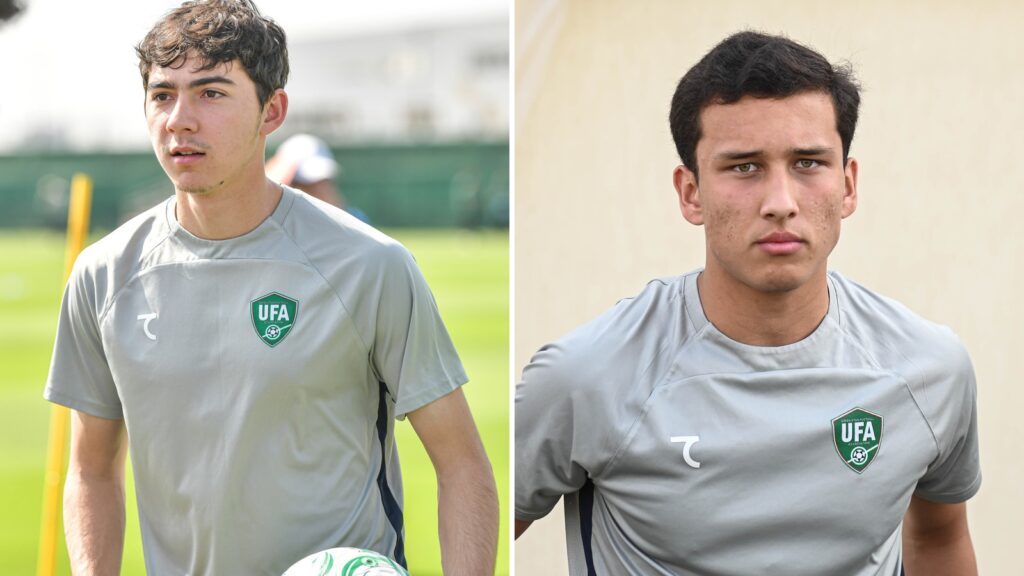
“Khakimov is a good young player. He has the potential to play abroad in the future.
“Tulkinbekov is a very talented footballer. If he continues working, he has every chance of playing for a foreign club in the future. But there are certain things he needs to understand and correct as quickly as possible. If he does that, he has very good prospects.”
The talent pool is not limited to Bunyodkor either.
“There are another two or three players who have already attracted interest. And I’m not only talking about Bunyodkor, there are some very interesting young players at other clubs in Uzbekistan who are attracting attention from abroad.”
When money becomes a barrier to Europe
Growing investment in Uzbek football has allowed clubs to offer increasingly attractive contracts and retain some of the country’s best players, while also creating a potential dilemma for those considering a move abroad.
“Good salaries can raise the level of the domestic league. If there is investment, good foreign players come here and local players develop alongside them, that’s a positive.
“But there are different models. You can spend enormous amounts bringing in famous players, as China did and as we’ve subsequently seen in Saudi Arabia. It gives the league huge publicity, but that model depends heavily on money.
“There is another path which is much longer and more difficult, and personally I prefer it. Japan developed its own players and built a structure around youth coaches, training methods and developing intelligent footballers.
“Foreign specialists came in and taught local coaches, who could then work with the next generation. The resources remain within football in the form of knowledge and a system.”
For established internationals, the financial equation can be very different.
“Why shouldn’t a top Uzbek player be paid good money to stay here and maintain the level of the league?
“Take Hamrobekov. He’s a top player. Why should we necessarily want him to leave? If there are people investing in football who can keep players like that in the league, that’s only a positive.
“If you don’t pay a good player properly, he’ll simply leave and strengthen another league. We lose from that.”
The dilemma facing Uzbekistan’s young players
The equation changes, however, when the same financial incentives are offered to players at the beginning of their careers.
“That’s where there really is a problem. If a talented young player is offered a lot of money by an Uzbek club and, for example, a Portuguese club offers significantly less, if I were him, I’d go to Portugal.
“A young player can choose the big money here, buy a car, solve his financial problems, lose that hunger and stop developing at Uzbekistan Super League level.
“Sometimes it’s better to go to Spain or Portugal for €5,000 or €7,000 because you might build a European career. After that, everything depends on you. It’s a very difficult road and there are no guarantees.”
Those around a young footballer can also have a major influence on that decision.
“The love of money is the root of many evils.
“The player himself might want to go, but his father, brother or agent says: ‘Why do you need to go anywhere? You’re being paid well here.’ And that’s how you can damage a career.
“If an agent is genuinely working for the footballer, he should advise him on the right path, the one that’s best for his development. But if the agent is primarily thinking about his own percentage, it’s a different story.”
Yet choosing the larger contract is not necessarily a simple failure of ambition.
Having experienced the realities of a professional career himself, he acknowledges that turning down a life-changing contract is considerably easier to advocate from the outside.
“Now that I’ve finished my career, it’s easy for me to look at these things from the outside. But imagine you’re offered €5,000 in one place and €50,000 somewhere else. I’d like to see how any of us would react in that situation.
“You go home and have to think about it. You have a family, you have needs and you have your own life.
“We can sit here and discuss which option is right, but the footballer has his own life, his own family and his own circumstances. The final decision will always be his.”